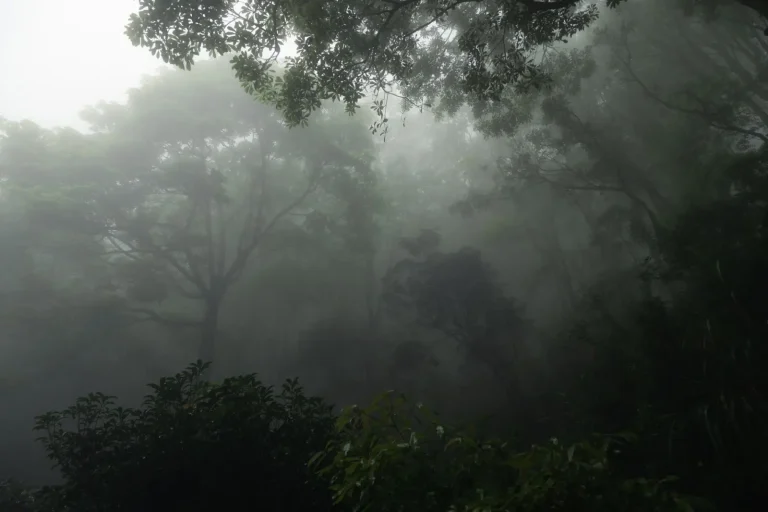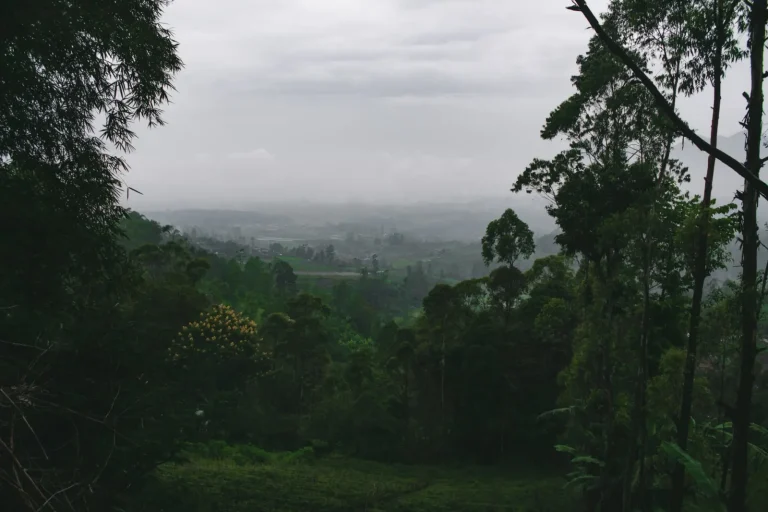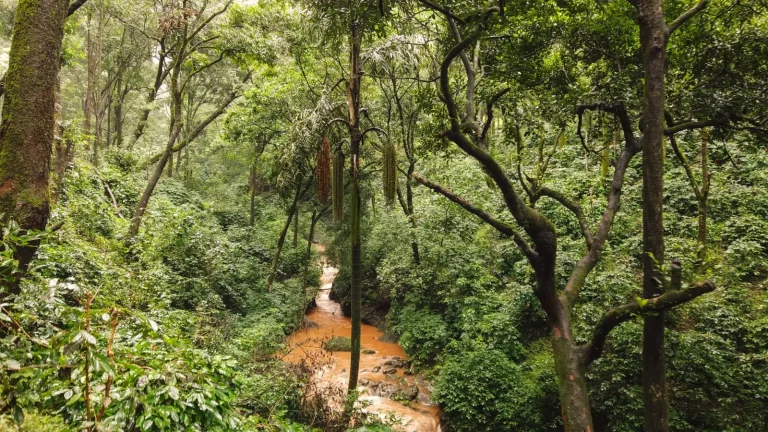
The first time I encountered a rainforest growing in the middle of a desert, I almost dismissed it as a misreading of the map. The landscape around it was unmistakably arid – sparse vegetation, bleached earth, the kind of heat that makes you move slowly. Then the forest appeared, dense and green, with moisture hanging in the air like it had been transplanted from an entirely different continent. It hadn’t been. It was simply following the rules of geography and weather that most people never think about until they’re standing at the edge of one.
These rainforest islands exist across multiple continents, and they’re far more common than casual travelers realize. What makes them remarkable isn’t their existence – it’s how they persist in environments that seem fundamentally hostile to their survival. The mechanics behind this are straightforward once you understand them, but the first-hand experience of moving between a dry landscape and a wet one within hours of travel is something that changes how you think about climate and geography.
How Rainforests Survive in Dry Regions
The key to these isolated rainforests lies in elevation and proximity to water sources. High mountains or plateaus create what’s called a rain shadow effect, but they also create microclimates. When moist air from oceans or large water bodies is forced upward by mountains, it cools and releases its moisture as rain on the windward side. The leeward side becomes dry. But on the windward side, or in valleys and canyons where moisture gets trapped and concentrated, rainforests can flourish even if the surrounding lowlands are desert.
I’ve walked through several of these ecosystems, and the transition is always abrupt. You’ll be hiking through scrubland, seeing hardy shrubs adapted to minimal water, and then suddenly the vegetation becomes lush. The air temperature drops noticeably. Humidity spikes. The canopy closes overhead. It’s not gradual – it’s a shift that happens over a few hundred meters of elevation gain or a turn around a canyon wall.
Another mechanism at work is groundwater. Some rainforest islands sit above aquifers or underground water sources that feed springs and streams year-round. This is particularly true in regions like parts of the Andes, where ancient geological formations channel water through otherwise dry landscapes. The rainforest doesn’t depend on local rainfall alone – it’s sustained by water moving through the earth itself.
Geography and Real Travel Constraints
Accessing these places requires understanding that “rainforest island” doesn’t mean easy access. Most of these ecosystems are remote by design. They exist in mountains, canyons, or plateaus that aren’t on the main tourist routes. Getting there often means unpaved roads, limited transportation, and planning around rainy seasons that can make certain routes impassable.
The timing matters enormously. I’ve been to several of these places during dry season and wet season, and the experience is completely different. During the dry season, the forest is still lush, but trails are passable and the air is clearer. During the wet season, the forest is even more vibrant, but roads can become unreliable, visibility drops, and travel times lengthen significantly. Most people don’t account for this when planning. They see “rainforest” and assume it’s always accessible, then arrive during the rainy season and find themselves stuck or rerouted.
Accommodation near these forests tends to be basic. You’re not finding five-star resorts next to isolated rainforest islands. What you’ll find are small lodges, guesthouses run by local families, or basic camping facilities. This isn’t a drawback – it’s simply the reality of the location. These places haven’t been developed for mass tourism, and that’s largely why they still exist as intact ecosystems.
The Biodiversity Paradox
What strikes most visitors is how much life concentrates in these small areas. A rainforest island in an arid region often has species diversity that rivals much larger rainforests. The isolation creates evolutionary pressure. Species adapted to these specific microclimates exist nowhere else on Earth. This is why these places matter scientifically, and why they’re increasingly protected.
But this concentration also means these ecosystems are fragile. They’re not buffered by surrounding forest. Climate fluctuations that a large rainforest might absorb can devastate an isolated one. Water sources that feed them can be disrupted by upstream development or drought. I’ve seen small rainforest islands that were thriving ten years ago now showing signs of stress – reduced water flow, changes in plant composition, shifts in animal populations.
For travelers, this means being respectful about impact. These aren’t resilient ecosystems that can absorb heavy tourism. Guides matter. Staying on marked trails matters. Not collecting specimens or disturbing water sources matters. The people living near these forests understand their fragility intimately, and they can usually tell you within minutes whether a visitor is going to help or harm.
Practical Realities of Visiting
Physical fitness is more relevant here than in many tourist destinations. The elevation gain to reach these forests is often significant, and the terrain is uneven. I’ve seen fit people struggle with altitude, and I’ve seen people in average condition handle it fine – it depends on acclimatization and how your body responds to elevation. The assumption that “it’s just a forest” leads people to underestimate what’s required.
Weather changes rapidly in these microclimates. Mornings can be clear and warm. By afternoon, clouds roll in, temperature drops, and visibility vanishes. This isn’t unusual or dangerous if you’re prepared for it, but it’s disorienting if you’re not. Bring layers. Bring rain gear. Plan shorter hiking distances than you think you need – you’ll move slower than you expect, and visibility might reduce your options.
Water is abundant in the forest itself, but it’s not always safe to drink untreated. Giardia and other parasites exist in these ecosystems. Carry a water filter or purification tablets. Local guides know which water sources are safe, but don’t assume all flowing water is potable.
The insects are real. Mosquitoes, biting flies, and other creatures are present. Insect repellent helps, but long sleeves and pants in the early morning and evening hours are more effective than any spray. This isn’t a reason to avoid these places – it’s just part of being in a rainforest, even an isolated one.
Why These Places Matter Beyond Tourism
Rainforest islands in arid regions are disproportionately important for understanding how ecosystems respond to climate stress. Scientists study them because they’re essentially natural laboratories. What happens to an isolated rainforest as temperatures rise and water availability changes tells us things about resilience and adaptation that we can’t learn from larger, more buffered ecosystems.
They also matter culturally. Many of these forests are home to indigenous communities or have been used sustainably by local populations for centuries. The knowledge these communities hold about managing these ecosystems is often more sophisticated than external conservation efforts. Visiting respectfully means engaging with local guides and operators, not bypassing them to experience the forest “authentically.”
The economic incentive for preservation comes partly from tourism, but it’s a delicate balance. Too much tourism degrades the ecosystem. Too little, and local communities have no economic reason to protect it rather than clear it for agriculture or other uses. This tension exists in every rainforest island I’ve visited, and there’s no perfect solution – only ongoing negotiation between preservation and livelihood.
These forests exist because of specific geographical and climatic conditions that are increasingly rare as climate patterns shift. Visiting them now, with awareness of their fragility and their importance, is different from visiting them as a casual tourist attraction. You’re witnessing something that might not persist in its current form for much longer. That’s worth understanding before you go.