
Walking through a rainforest at night is fundamentally different from the daytime experience, and the difference isn’t simply about reduced light. The forest transforms. Sounds dominate. Your eyes adjust poorly and then plateau at a frustrating middle ground where you see shapes but not details. Temperature and humidity feel heavier in darkness. The ground beneath your feet becomes uncertain. After doing this regularly – both guided and unguided – I’ve learned that night rainforest walking reveals constraints that daylight hides.
Most people underestimate how much they rely on vision in a forest, even during the day. At night, that dependency becomes obvious within the first hundred meters. A headlamp or flashlight creates a tunnel of visibility, typically 10 to 15 meters ahead depending on the beam quality. Beyond that cone of light, the forest is effectively invisible. This matters because your brain wants to anticipate obstacles. You want to see the root before your boot catches it. In darkness, that’s not possible. You move slower. Your stride shortens. Your body tenses slightly because the ground is always a surprise.
Sound and Orientation
The acoustic environment changes dramatically. Daytime rainforest noise – birds, insects, rustling canopy – gets replaced by a different set of sounds. Some animals are nocturnal and more vocal. Others go quiet. The effect is disorienting if you’re not expecting it. Frogs become louder. Certain insects produce sounds that seem to come from everywhere and nowhere. In darkness, sound becomes your primary navigation tool beyond the flashlight beam. You listen for the path, for water, for other people. A guide walking ahead becomes a sound you follow as much as a figure you see.
Humidity intensifies at night in rainforests. The canopy traps moisture more effectively when there’s no sun driving evaporation upward. Your clothes become damp not from rain necessarily but from the sheer saturation of the air. This affects grip – on handholds, on the ground, on your own body’s stability. Sweat and ambient moisture mix. Skin becomes slippery. Boots lose traction more easily. I’ve noticed that night walking requires more frequent hand contact with guide ropes or vegetation, not just for balance but for reassurance. Your body is seeking tactile confirmation that the ground is solid.
Wildlife Encounters and Behavior
The animals you encounter at night are different from daytime wildlife. Some species are genuinely nocturnal and more active. Others are disturbed by your light and react unpredictably. Snakes, for instance, are often less visible at night because they’re less likely to be crossing open areas. But when you do encounter one, the encounter is more sudden because your light picks it up at close range. Spiders are more visible at night – their eyes reflect light. Insects swarm toward artificial light sources. This creates a strange dynamic where your headlamp, which helps you see, also attracts attention and changes animal behavior around you.
I’ve walked through rainforests at night in Central America, Southeast Asia, and parts of Africa. The pattern holds: nocturnal animals are generally less interested in humans than daytime animals, but they’re also less predictable because they haven’t evolved the same avoidance behaviors. A jaguar or leopard at night is more likely to avoid you than a daytime monkey, which may be curious or defensive. But the uncertainty itself creates tension. You’re moving through an environment where the primary inhabitants are adapted to darkness and you are not.
Navigation and Disorientation
Staying oriented is harder than it seems. Without visual landmarks – without the ability to see distant trees or terrain features – the forest becomes a maze of immediate obstacles. A guide becomes essential not just for safety but for direction. I’ve been on night walks where the path was marked with reflectors or rope, and even then, it’s easy to lose the thread if you’re not paying constant attention. Your mind wants to wander because the visual input is limited and repetitive. The same tree, the same ferns, the same root patterns appear in your headlamp beam over and over.
Fatigue arrives faster on night walks than day walks of the same distance. This is partly physical – the constant tension in your legs and core as you move carefully over uncertain ground – but mostly cognitive. Your brain is working harder to process limited sensory information and maintain orientation. After an hour or ninety minutes, concentration drops noticeably. This is why commercial night walks in rainforests are typically short, usually 1.5 to 2 hours. Beyond that, the risk of accidents increases and the experience becomes less enjoyable.
Temperature management is also different. The rainforest at night is cooler than during the day, but the humidity makes it feel warmer than it actually is. You’re not sweating from heat but from exertion and the saturated air. Layering becomes important, but you can’t easily adjust layers while walking. Most people dress slightly cooler than they’d dress for daytime hiking, knowing they’ll warm up with movement and humidity.
Practical Realities
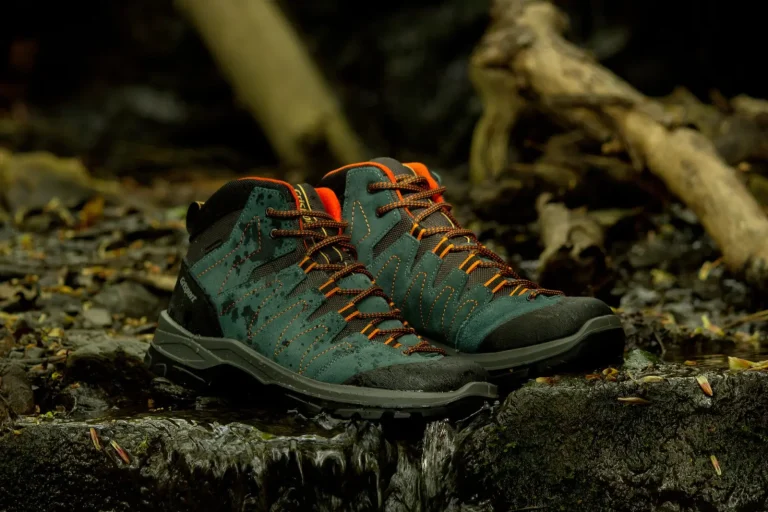
Equipment matters more at night than people typically acknowledge. A quality headlamp with sufficient brightness and battery life is non-negotiable. Cheap headlamps with weak beams create more problems than they solve. Closed-toe boots with good grip are essential, not optional. Insect repellent becomes more important because many biting insects are more active at night. A walking stick or trekking pole changes the experience significantly – it lets you test the ground ahead before committing your weight.
The social experience of night rainforest walking is quieter and more introspective than daytime walks. People talk less. The novelty of darkness and unfamiliar sounds tends to make groups more cautious and focused. There’s less of the casual observation and commentary that happens during day walks. This can be either peaceful or slightly claustrophobic depending on your temperament.
Night rainforest walking is not inherently dangerous if approached with realistic expectations and proper preparation. It’s uncomfortable in specific ways – the reduced visibility, the uncertainty, the sensory overload of unfamiliar sounds. But these discomforts are manageable. What matters is understanding that you’re moving through an environment optimized for other creatures, in conditions where your primary advantage – vision – is severely compromised. Accepting that constraint, rather than fighting it, makes the experience less stressful and more interesting.