
The forest around Nandroya Falls reveals itself differently depending on when you arrive and how long you stay. Most people come for the waterfall itself – a clean drop into a pool that photographs well and takes maybe twenty minutes to reach from the car park. But the surrounding rainforest is where the real character emerges, and it’s worth understanding before you commit to more than a quick walk.
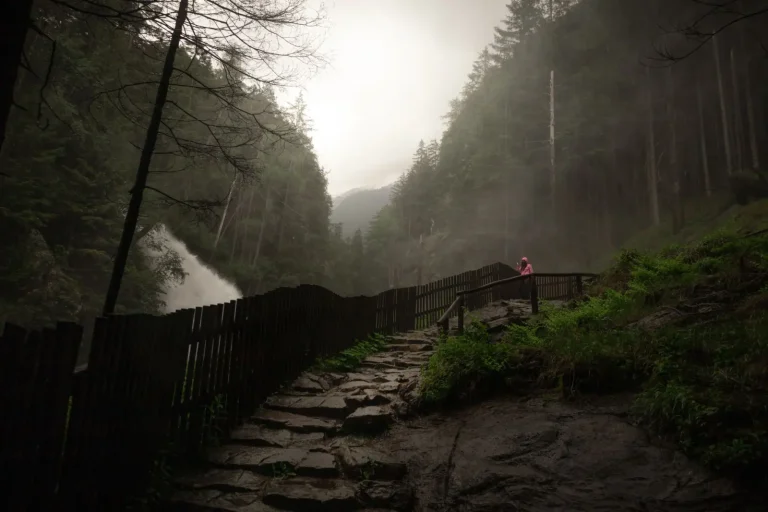
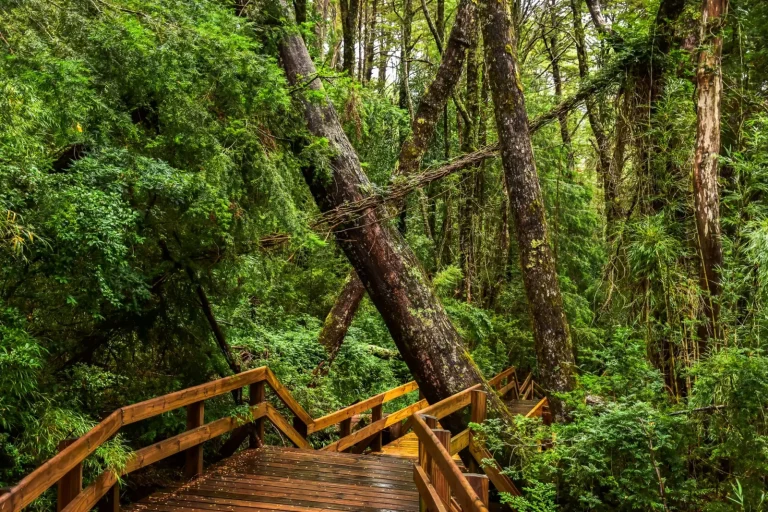
The approach to the falls follows a maintained track that starts in dry eucalyptus woodland and transitions into closed rainforest. This shift happens gradually, not abruptly. The canopy thickens, light softens, and the air becomes noticeably more humid. The track itself is well-graded and reasonably clear, but the forest floor is consistently damp – not waterlogged, but slippery enough that proper footwear matters. I’ve watched people in runners struggle on sections that would be trivial in hiking boots. The rock is volcanic, and when wet it becomes almost polished.
Water Conditions and Timing
The falls respond quickly to rainfall, and this is the single most important variable for exploring the wider forest. After heavy rain, water volume increases dramatically, and the creek becomes a genuine obstacle. The pool at the base of the falls can swell from a calm bathing spot to a churning brown torrent in hours. If you’re thinking about exploring upstream or downstream from the falls, water level determines whether that’s feasible or foolish.
The dry season (roughly May to September) offers the most stable conditions. Water is lower, the creek is crossable at multiple points, and the forest floor is firmer underfoot. This is also when the humidity feels less oppressive, though “less oppressive” in a tropical rainforest still means significant moisture. Wet season exploration (November to March) is possible but requires different expectations. The forest becomes genuinely saturated, creek crossings become serious, and the risk of slipping or twisting an ankle increases noticeably.
Early morning visits tend to feel less crowded, though the car park can fill quickly on weekends. The light quality is also better for seeing into the forest rather than just looking at the falls. By mid-afternoon, the sun angle makes the rainforest interior quite dim, and the glare off the water makes it harder to assess conditions.
Beyond the Falls: What the Forest Actually Offers
The maintained track ends at the falls, but the forest continues in all directions. Upstream, the creek winds through dense vegetation with occasional rocky sections and small pools. This area is less trafficked than the main falls, and the walking is more technical. You’re moving through genuine rainforest terrain – not a groomed path but a real creek bed with obstacles, root systems, and uneven footing. The canopy is thick enough that you lose sight of the falls quickly, and the sense of isolation grows fast.
Downstream is less appealing for walking. The creek widens and the forest becomes denser and wetter. There’s less reason to push in that direction unless you’re specifically exploring, and most people don’t. The real interest lies in the upstream section, where the creek is more navigable and the forest feels less like a wall.
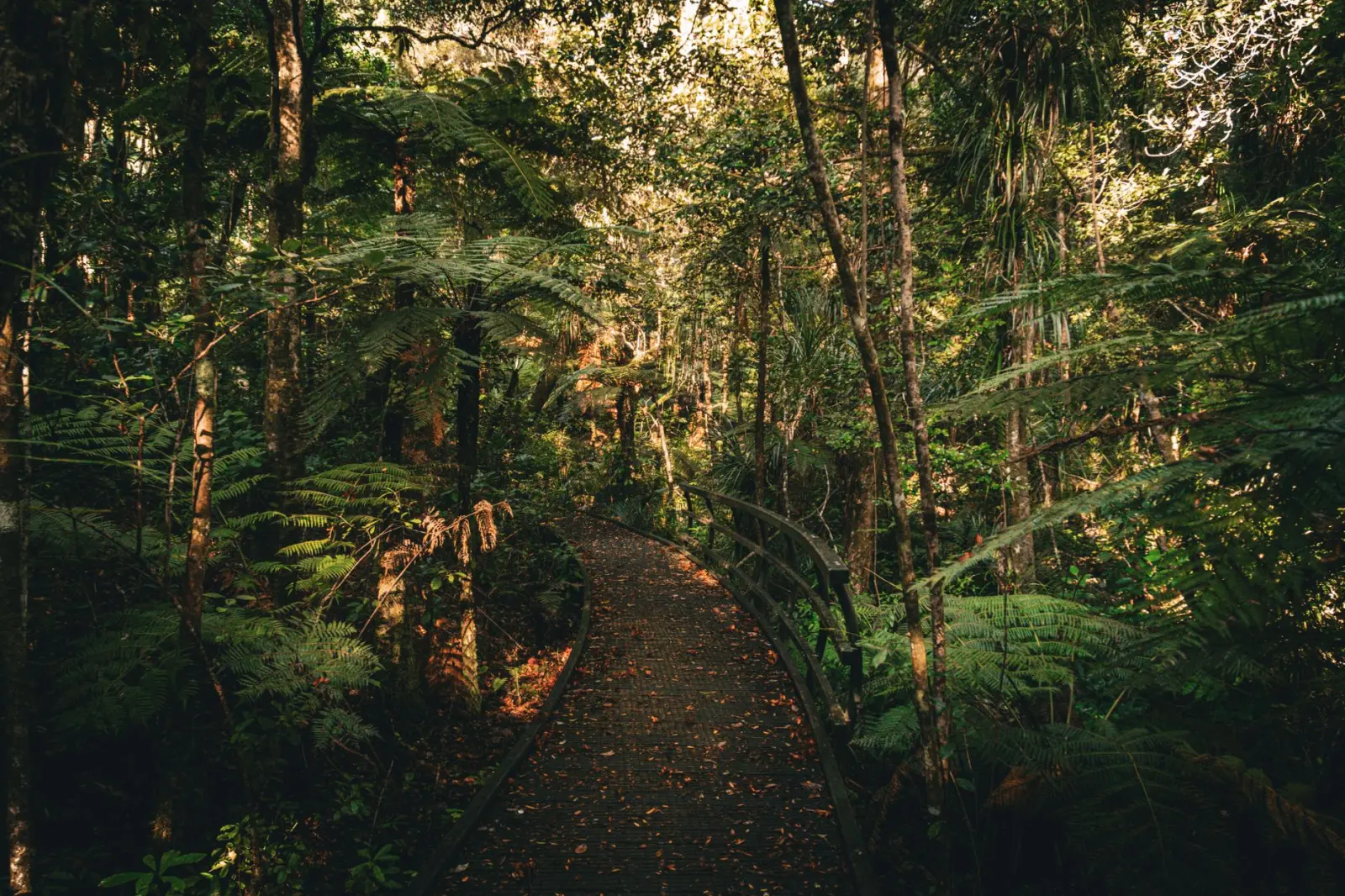
The vegetation itself is the dominant feature. You’re in tropical rainforest with all the complexity that entails – multiple canopy layers, vines, epiphytes, and dense understory. The diversity is high, but it’s not immediately obvious to casual observation. Most visitors see “green forest” rather than the specific ecology. The trees are substantial, the ferns are abundant, and the sense of biological density is real. It’s not a place where you can move quickly or easily off-trail.
Practical Realities of Extended Exploration
If you’re planning to spend more than an hour in the forest, several things become relevant. First, the humidity is relentless. Even in the dry season, you’ll be sweating within minutes of walking uphill. Dehydration is a real risk because the moisture in the air makes you feel less thirsty than you actually are. People regularly underestimate how much water they need in rainforest conditions.
Second, the forest is disorienting. The terrain looks similar in multiple directions, landmarks are subtle, and it’s easy to lose your sense of where you came from. The creek is your reference point, but if you move away from it or the light changes, navigation becomes less certain. A GPS unit or good map awareness is genuinely useful here, not just a nice-to-have.
Third, the creek itself is cold. The water temperature stays low year-round because of the rainforest shade and the volume of water flowing through. If you slip and go in, or if you’re crossing and lose your footing, the shock is significant. The rocks are slippery, and the current can be stronger than it appears, especially after rain.
Insects are present but not overwhelming. Mosquitoes are more of a concern in the wet season and at dawn/dusk. Leeches appear after rain and are annoying rather than dangerous. The forest floor hosts spiders and various invertebrates, but serious encounters with dangerous wildlife are rare. The real issue is the physical demands of moving through the terrain, not the fauna.
What Makes This Forest Different from Easier Walks
Nandroya isn’t a difficult walk by serious hiking standards, but it’s not a stroll either. The gap between the main falls and extended exploration is significant. The maintained section is accessible to most people with basic fitness. Moving upstream or spending time in the wider forest requires comfort with uneven terrain, slippery conditions, and navigation uncertainty. You need to be comfortable being slightly lost, able to move carefully on unstable ground, and willing to accept that you might turn back if conditions deteriorate.
The forest also doesn’t reward rushing. If you’re moving quickly, you miss the detail and increase the risk of slipping or misjudging a crossing. The pace that works here is deliberate – moving slowly enough to see where you’re placing your feet and to notice the forest itself. This is one of those places where slowness is a feature, not a limitation.
Most people visit Nandroya for the falls and leave satisfied. The waterfall is genuinely worth seeing, and the walk is straightforward. But if you’re curious about what lies beyond the obvious destination, the forest around it offers something more complex and less predictable. It requires different preparation and different expectations, but it’s where the real character of this part of Far North Queensland becomes apparent.