
Lake Eacham sits in the crater of an extinct volcano in Far North Queensland, surrounded by dense rainforest that has been regenerating for over a century. The wildlife here follows rhythms that most casual visitors miss. You can spend an afternoon at the lake and see almost nothing, or you can be there at the right time and encounter animals in genuine abundance. The difference comes down to understanding when and where they actually move through this landscape.
The lake itself is the anchor point, but the real activity spreads across the surrounding forest. Most people arrive expecting to see wildlife from the picnic areas or walking tracks, which is where the disconnect begins. The animals here aren’t performing for observation. They’re responding to temperature, light, food availability, and the presence of humans. If you’re standing in the open near the water at midday, you’re working against every natural behavior pattern these creatures follow.
Early morning is when the forest actually functions
The first two hours after dawn produce the most reliable wildlife encounters. Cassowaries move through the understory, often in pairs or small family groups. You might hear them before you see them – a low rumbling call or the sound of heavy movement through fallen branches. The birds here are generally accustomed to human presence but remain unpredictable. They’re not aggressive by nature, but they’re large, powerful, and will defend themselves if they feel cornered or if chicks are nearby. The critical detail most people overlook is that cassowaries are most active when the forest floor is still cool and when insects and fallen fruit are most accessible.
Rainforest pigeons – the large wompoo and smaller topknot varieties – feed in the canopy during early morning, creating noise that draws attention upward. Their feeding activity is visible and audible, which makes them useful indicators of broader forest activity. When the pigeons are quiet, the forest has typically entered a dormant phase.
Wallabies appear in small numbers near the lake margins, particularly in areas where grass meets forest edge. They’re most visible in the hour before and after sunrise. During my years observing this lake, I’ve noticed they follow the same routes repeatedly, moving between feeding grounds and shelter. They’re not difficult to see if you’re positioned correctly, but they bolt at sudden movement or loud noise.
What changes between seasons
The wet season, roughly November through March, brings different species into prominence and changes the behavior of resident animals. Fruit availability increases dramatically, which draws more cassowaries and pigeons into active feeding. The forest floor becomes saturated, which affects small mammal activity and brings reptiles into different microhabitats. During this period, you’re more likely to encounter pythons and smaller snakes in unexpected places, sometimes near human areas, because their normal refuges are flooded or waterlogged.
The dry season creates scarcity. Water becomes more concentrated around the lake, which should theoretically increase wildlife visibility near the shore. In practice, the animals here have adapted to this reality for generations. They know where water persists and adjust their movements accordingly. Cassowaries and wallabies may spend more time near the lake during prolonged dry periods, but they also become more cautious because the reduced vegetation cover makes them more exposed.
The animals people expect but rarely see
Platypuses inhabit the streams that feed the lake, but sightings are uncommon. They’re nocturnal, solitary, and prefer undisturbed water. The lake itself receives enough recreational activity that platypuses tend to retreat into tributary streams where human presence is minimal. If you want any chance of seeing one, you need to be in the water or on the bank before dawn, moving slowly and quietly. Most people never see them because they’re looking in the wrong place at the wrong time.
Tree kangaroos are present in the surrounding forest but are genuinely difficult to spot. They’re arboreal, nocturnal, and solitary. During daylight hours, they’re resting in the canopy, and their coloration makes them nearly invisible against bark and foliage. I’ve spent considerable time in this forest and have seen tree kangaroos perhaps half a dozen times, usually by accident, usually when I wasn’t actively searching. They’re not rare, but they’re genuinely cryptic.
Possums and gliders are abundant but nocturnal. Brushtail possums, sugar gliders, and feathertail gliders all inhabit the forest canopy. You won’t see them during daylight. If you stay near the lake after dark, you might hear them moving through branches or see the brief silhouette of a glider launching from one tree to another, but observing them clearly requires patience and low light conditions that most visitors don’t accommodate.
The reptiles and smaller creatures
Pythons are present year-round. Carpet pythons and amethystine pythons both occur here, along with smaller species. They’re generally encountered by chance – near the picnic areas, on walking tracks, or occasionally in shallow water. They’re not aggressive, but they’re also not interested in human interaction. Most encounters end with the snake moving away or remaining motionless until the human passes. The key detail is that snakes are more visible during the wet season and after rain, when they’re active and hunting.
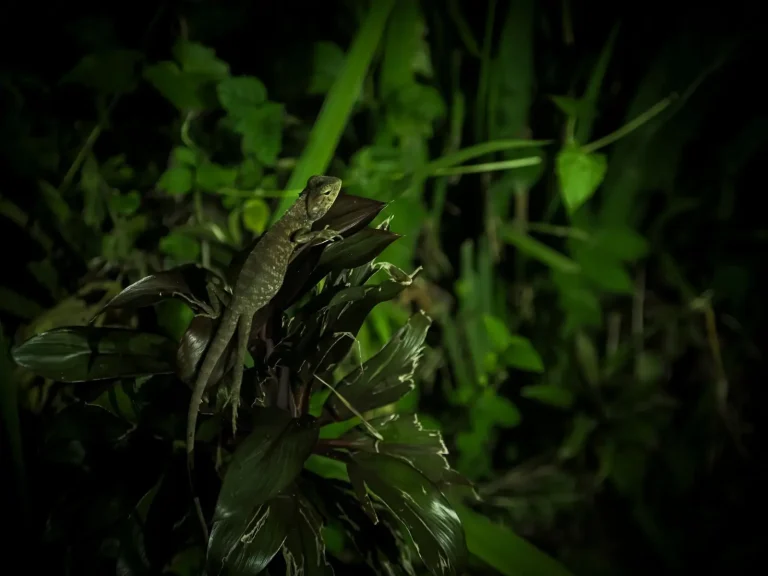
Lizards are abundant and visible. Blue-tongue lizards, various monitor species, and smaller skinks appear regularly on warm days. They’re harmless and relatively indifferent to human presence. If you sit quietly near the lake edge on a warm afternoon, you’ll almost certainly see lizards moving through leaf litter or basking on rocks.
Frogs are present in enormous numbers, particularly during the wet season. The lake itself and surrounding swampy areas support dozens of species. Their calls dominate the soundscape at dusk and into the evening. Most people hear them but don’t consciously register what they’re hearing. The acoustic environment of the lake is primarily frog activity, punctuated by bird calls and the occasional larger animal movement.
Why timing and positioning matter more than luck
The difference between a productive visit and a disappointing one rarely comes down to luck. It comes down to being in the right location at the right time and understanding what behavior patterns you’re actually observing. The lake margins at dawn produce consistent encounters. The walking tracks through the forest yield different species at different times. The water itself is less productive for wildlife viewing than the surrounding forest, despite being the obvious focal point.
Most visitors spend their time in the open areas near the water because those are the accessible, comfortable spaces. The actual wildlife activity is distributed across the forest, along edges, in understory vegetation, and in areas that require some effort to reach. The animals here have learned to avoid the busy areas and concentrate their activity in quieter zones.
Sound is another overlooked factor. The forest here is loud with animal activity, but most of it is below the threshold of casual attention. Learning to distinguish between different calls, movement patterns, and forest sounds dramatically increases your ability to locate and observe animals. A cassowary call is distinctive once you’ve heard it, but many people never recognize it because they’re not listening for it.
Lake Eacham’s wildlife is neither scarce nor particularly elusive. It’s simply behaving according to patterns that don’t align with how most people approach wildlife viewing. The animals are there. They’re active. They’re moving through predictable spaces at predictable times. The challenge is matching your presence to their rhythms rather than expecting them to accommodate yours.