
The forest around Wentworth Falls pulls you in differently depending on which direction you walk and what time of year you arrive. After many trips through these trails, the experience doesn’t simplify into a neat narrative. What changes is your awareness of what the forest is actually asking of your body and attention.
The walks here are not long by absolute measures. The main circuit around the falls and down to the base sits somewhere between eight and twelve kilometres depending on your exact route, and most people complete it in three to four hours. But distance is a poor predictor of how you’ll feel at the end. The terrain does the real work. Steep sections of stone steps, loose gravel descents, and uneven ground covered in roots demand constant foot placement adjustment. Your legs tire not from the total metres walked, but from the repeated micro-corrections required to stay upright on unstable surfaces.
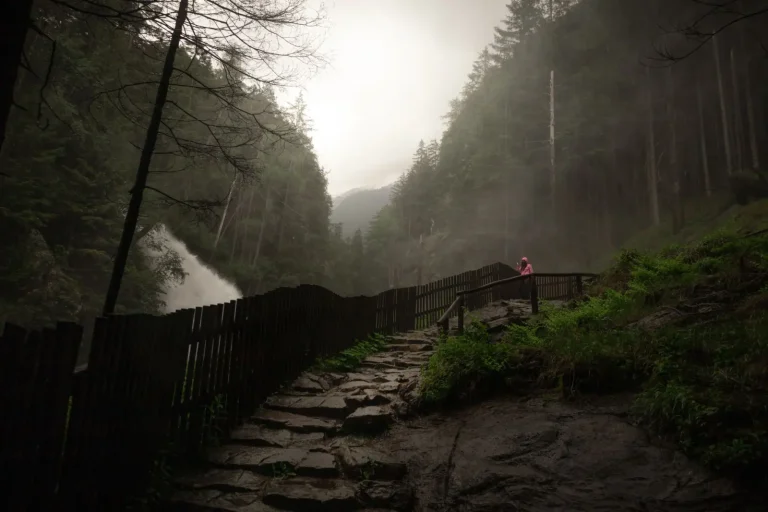
The descent toward the falls themselves is where most people notice the shift. The initial walk from the car park is gentle, almost deceptive. You move through open forest with decent sight lines, and the gradient feels manageable. Then the track narrows and steepens. The stone steps become more frequent and more worn. Some sections have been reinforced with newer stone work, but others show the raw erosion of thousands of footfalls. Your knees begin to register the repeated impact. This is the point where people often realize they’ve underestimated the walk’s physical demand.
The Return Journey Changes Everything
Coming back up is a different animal entirely. The same steps that felt like a controlled descent now demand sustained effort. Your legs are already fatigued from the downhill work, which paradoxically leaves them less stable. The muscles that control descent are different from those that power ascent, and by the time you’re climbing out, you’ve already used both groups. This is when people move slower, take more breaks, and sometimes discover they’ve misjudged their fitness or energy reserves for the day.
The timing of your walk matters more than you might expect. Morning walks, starting before nine, tend to feel smoother. The temperature is cooler, the track is less crowded, and you haven’t yet accumulated fatigue from the day. Afternoon walks, especially those starting after one o’clock, often feel heavier. The ground may be slightly drier, which sounds like an advantage, but it also means less grip on loose sections. Your energy is lower. The light begins to shift earlier than you anticipate, and the forest canopy becomes denser as afternoon progresses, reducing visibility on the track.
Weather and Ground Conditions Shape the Experience
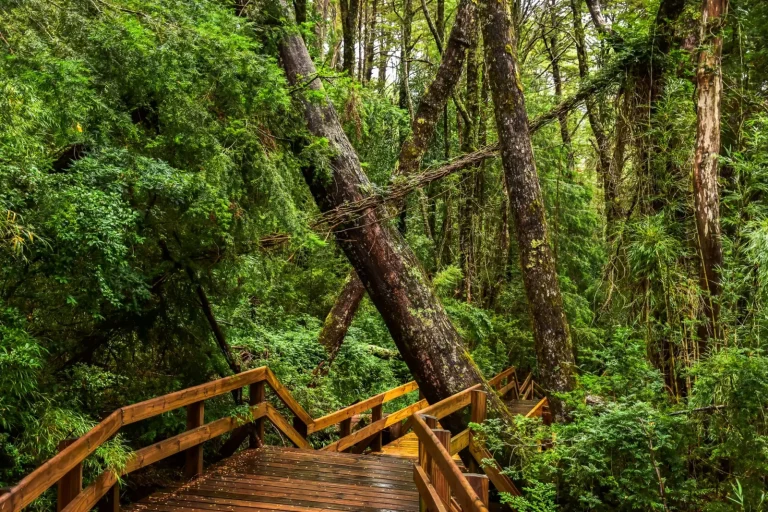
Rain changes the entire character of these walks. Wet stone steps become genuinely slippery, not just uncomfortable. The handrails, where they exist, become essential rather than optional. Wet gravel on descents loses all traction. I’ve watched experienced walkers move carefully on sections they’d normally navigate without thought. The walk doesn’t become impossible, but it demands more attention and moves slower. A walk that takes three hours in dry conditions can stretch to four or more hours when wet.
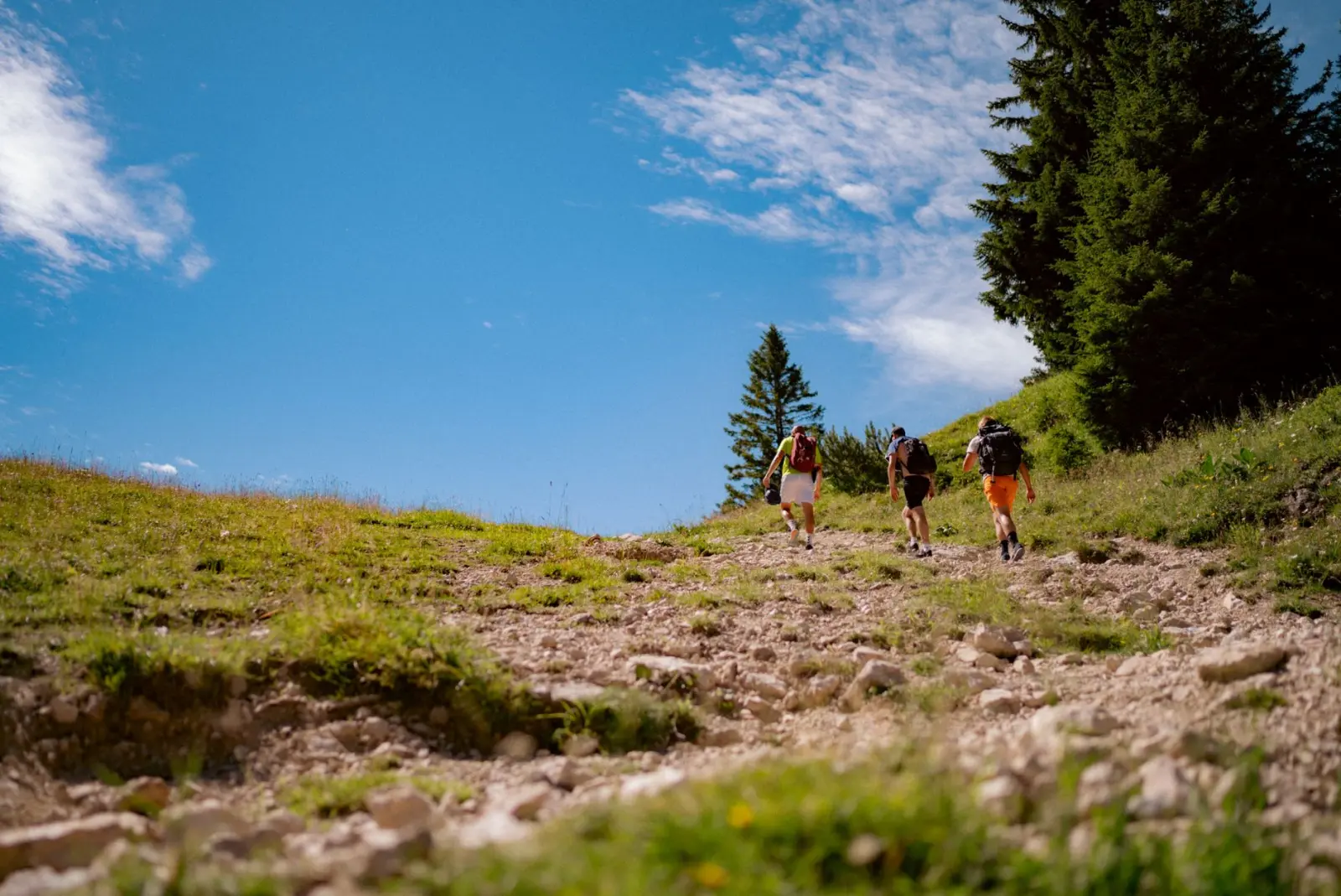
Dry periods bring their own complications. Dust accumulates on the stone steps, creating a thin layer that reduces friction. Loose gravel becomes more mobile underfoot. The ground hardens, which means less give when your foot lands, transmitting more impact through your joints. The psychological difference is subtle but real. Dry conditions feel faster and easier until your body registers the accumulated impact.
The forest floor itself varies significantly across different sections of the walk. Some areas are heavily mulched with leaf litter and soft ground, which is easier on joints but hides uneven surfaces and roots. Other sections are pure exposed stone or compacted earth with minimal cushioning. Your feet and legs adapt differently to each surface type. A walk that moves between these different ground conditions demands more neuromuscular adjustment than a consistent surface would require.
Crowds and Navigation Realities
Popular times bring other walkers, which affects the experience in ways that aren’t immediately obvious. The track becomes more worn in high-traffic areas, which can actually make footing less stable. People stop at scenic points, creating bottlenecks on narrow sections. You find yourself adjusting your pace to navigate around others rather than moving at your own rhythm. This constant micro-adjustment adds fatigue that doesn’t show up in any fitness measurement.
The track itself is well-marked, but “well-marked” is relative. In dry conditions with good light, navigation is straightforward. In overcast conditions or late afternoon, the forest canopy makes everything dimmer, and the track becomes less obvious. I’ve watched people hesitate at junctions that seemed clear in daylight. The actual walking difficulty stays the same, but the mental load of navigation adds fatigue.
Water sources are present but not abundant. There’s water at the base near the falls, and some sections have small streams, but you can’t rely on refilling at regular intervals. Most people carry what they need from the start. Running out of water on the return climb is more common than it should be, and it’s entirely self-imposed. The physical demand of the ascent with insufficient hydration becomes noticeably harder in the final sections.
The forest around Wentworth Falls doesn’t present technical challenges. There’s no scrambling, no navigation complexity, no exposure. What it does present is sustained effort on uneven ground with elevation change. Your legs know the difference between walking eight kilometres on flat pavement and eight kilometres of forest trails with significant descent and ascent. The second one leaves you more tired, even if you’re reasonably fit. This isn’t a limitation; it’s just how the terrain works. Understanding that difference before you start changes how you approach the walk and what you expect from yourself at the end.