
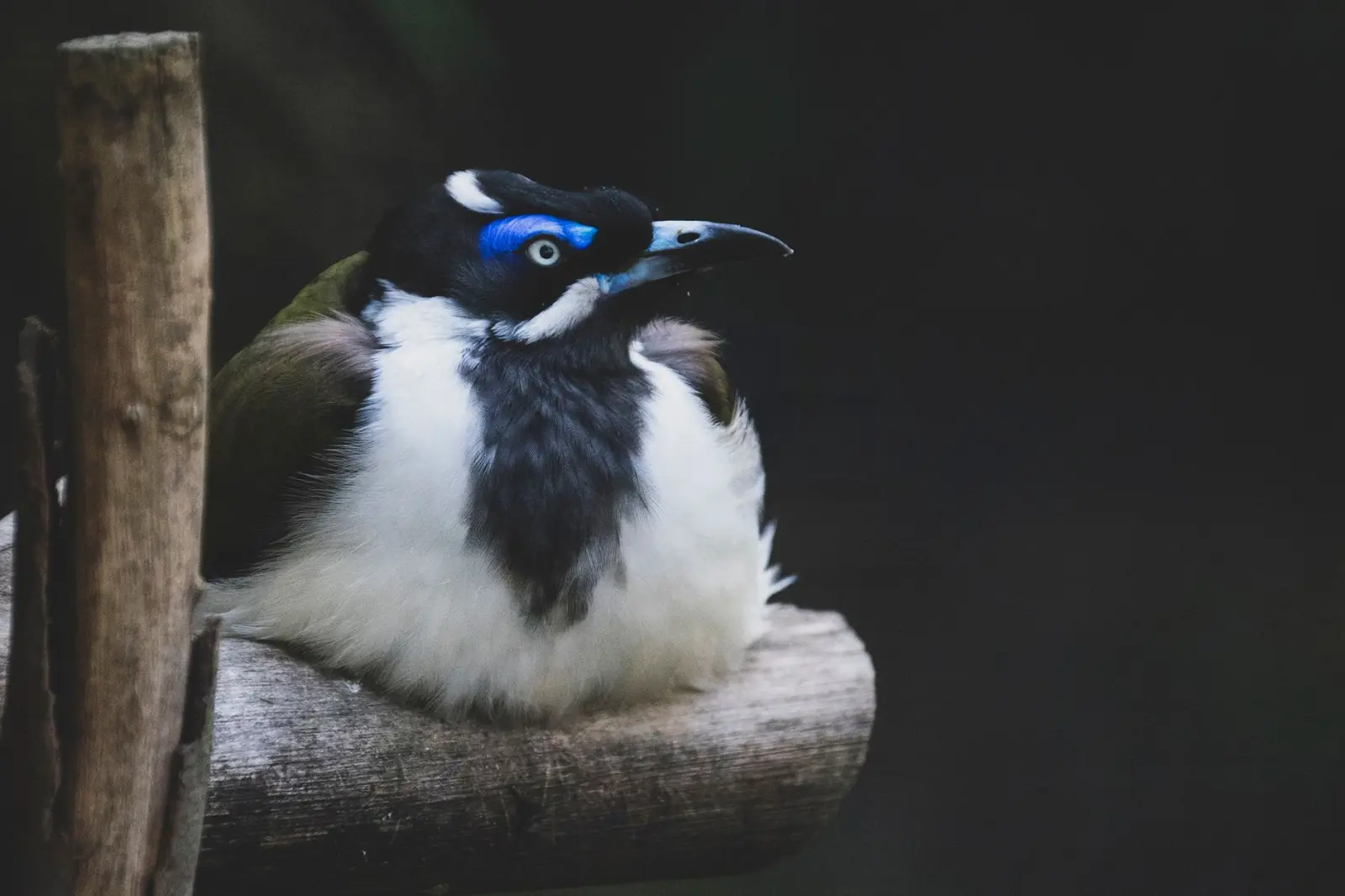
Spending time in Australian rainforests, you notice honeyeaters before you see them clearly. Their calls cut through the canopy – sharp, insistent, territorial. They move with purpose, rarely still for more than a few seconds. These birds are among the most visible and vocal inhabitants of the forest, yet their behaviour reveals patterns that most casual visitors miss entirely.
Honeyeaters are not a single species. The rainforests of eastern Australia host multiple honeyeater species, each with slightly different feeding strategies, preferred flowering plants, and seasonal movements. The Lewin’s Honeyeater, the Scarlet Honeyeater, the Olive-backed Sunbird, and several others coexist in the same space, but they rarely compete directly because they’ve partitioned the resource. This is one of the first things you learn when you stop watching them as a collective and start tracking individual species over time.
Feeding Ecology and Flower Dependency
Honeyeaters live on nectar, insects, and occasionally fruit. The nectar component is non-negotiable – it’s their primary energy source, and they need it consistently. What strikes you after observing them for weeks is how utterly dependent they are on flowering cycles. A rainforest in full flower supports dense honeyeater populations. The same forest two months later, when flowering has slowed, feels noticeably quieter. Birds either move to other flowering patches or become more dispersed and harder to locate.
This dependency creates a real vulnerability. In fragmented rainforests – which describes most of eastern Australia now – honeyeaters face gaps between suitable feeding areas. A bird cannot simply move through cleared land or plantation as it would through continuous forest. The journey between patches costs energy, and if the timing is wrong, a honeyeater may arrive at a flowering site only to find competitors already there or the flowers already depleted. This is not a theoretical problem. You see it in their behaviour: birds become more aggressive during lean periods, more territorial, and more prone to chasing each other away from productive trees.
The insects they hunt, particularly lerps and small arthropods on leaves, supplement nectar but don’t replace it. Some species – the Scarlet Honeyeater, for instance – seem to forage for insects more actively than others. But even these birds will abandon insect hunting if nectar is abundant and accessible. The energy return on nectar is simply too good to ignore.
Territorial Behaviour and Seasonal Patterns
Honeyeaters are territorial, and the intensity of that territoriality varies with season and food availability. During breeding season, a pair will defend a territory around their nesting site aggressively. Males sing from exposed perches, and both birds chase intruders. The territory size fluctuates. In a forest with scattered flowering trees, a pair might defend a large area. In a forest with concentrated flowering patches, territories compress.
What’s often overlooked is that some honeyeater populations are partially migratory. Not all individuals leave, but some do, particularly younger birds or individuals from lower-quality territories. The timing of these movements is tied to local flowering phenology. A dry spell that suppresses flowering can trigger earlier-than-usual departures. Conversely, an unusually productive flowering season may retain birds that would normally move on. This creates year-to-year variation that makes population monitoring difficult and sometimes misleading.
Nesting happens in spring and early summer for most species. Females build small cup nests, often in dense vegetation or on thin branches where predators struggle to reach them. The nests are remarkably exposed once you know where to look, but they’re placed deliberately in locations that offer some protection through concealment rather than structural strength. Incubation and fledging periods are relatively short – around two weeks each for many species. This rapid breeding cycle allows some pairs to attempt second broods if conditions remain favourable, though success rates for second broods are lower.
Adaptation to Fragmented Landscapes
The reality of modern rainforest honeyeaters is that they live in a fragmented world. Continuous forest is rare. What remains is often broken into patches separated by cleared land, plantations, or suburban areas. Honeyeaters show varying tolerance for these gaps. Some species, like the Lewin’s Honeyeater, seem relatively confined to rainforest proper and rarely venture into adjacent habitats. Others, particularly the Scarlet Honeyeater, are more flexible and will move through open woodland or even gardens if flowering plants are present.
This flexibility matters for survival, but it comes with costs. Birds moving through open areas are more exposed to predation and weather. They expend more energy on the journey between patches. In urban or semi-rural settings, they face additional hazards: window strikes, cats, and pesticide use that reduces insect availability. Over time, you notice that honeyeater populations in fragmented landscapes tend to be lower in density and more variable in presence than those in larger continuous forest blocks.
Some honeyeaters have adapted by shifting their diet slightly. In areas where native flowering plants are sparse, they will visit introduced ornamental plants in gardens or cultivated areas. This is neither wholly positive nor wholly negative. It allows them to persist in human-modified landscapes, but it also creates dependency on human-maintained gardens, which can be unreliable sources of food if owners change plantings or use pesticides.
Vocal Communication and Social Dynamics
The calls of honeyeaters carry meaning beyond simple territorial advertisement. Alarm calls differ from contact calls. Feeding birds make soft, conversational sounds. Breeding males produce louder, more elaborate vocalizations. Listening carefully to these sounds over time reveals social dynamics that are invisible if you’re only watching visually. A sudden increase in alarm calling might indicate a predator in the area, or it might signal the arrival of an unfamiliar honeyeater that’s triggered defensive responses.
Mixed-species flocks form occasionally, particularly outside breeding season. A feeding flock might include multiple honeyeater species plus other bird families. These associations are temporary and seem to offer advantages through increased vigilance against predators and shared information about food sources. However, they also increase competition at any given feeding site, which is why they tend to be brief.
Honeyeaters are intelligent and adaptable, but these traits have limits. They cannot adapt to the absence of flowering plants, and they cannot thrive in completely cleared landscapes. What they can do is persist in fragmented forests if those fragments remain connected by suitable habitat corridors and if flowering plants continue to be available. Their presence or absence in a rainforest area is often a reliable indicator of forest health and connectivity. Where honeyeaters are abundant and diverse, the forest is generally intact enough to support other specialist species as well. Where they are scarce or absent, habitat degradation is usually advanced.