
Spending time in Australian rainforests teaches you quickly that wallabies and pademelons are not the animals you’ll reliably see. They exist in the forest. You know they’re there. But actually observing them requires patience, timing, and a fair amount of luck that most travelers don’t have built into their itineraries.
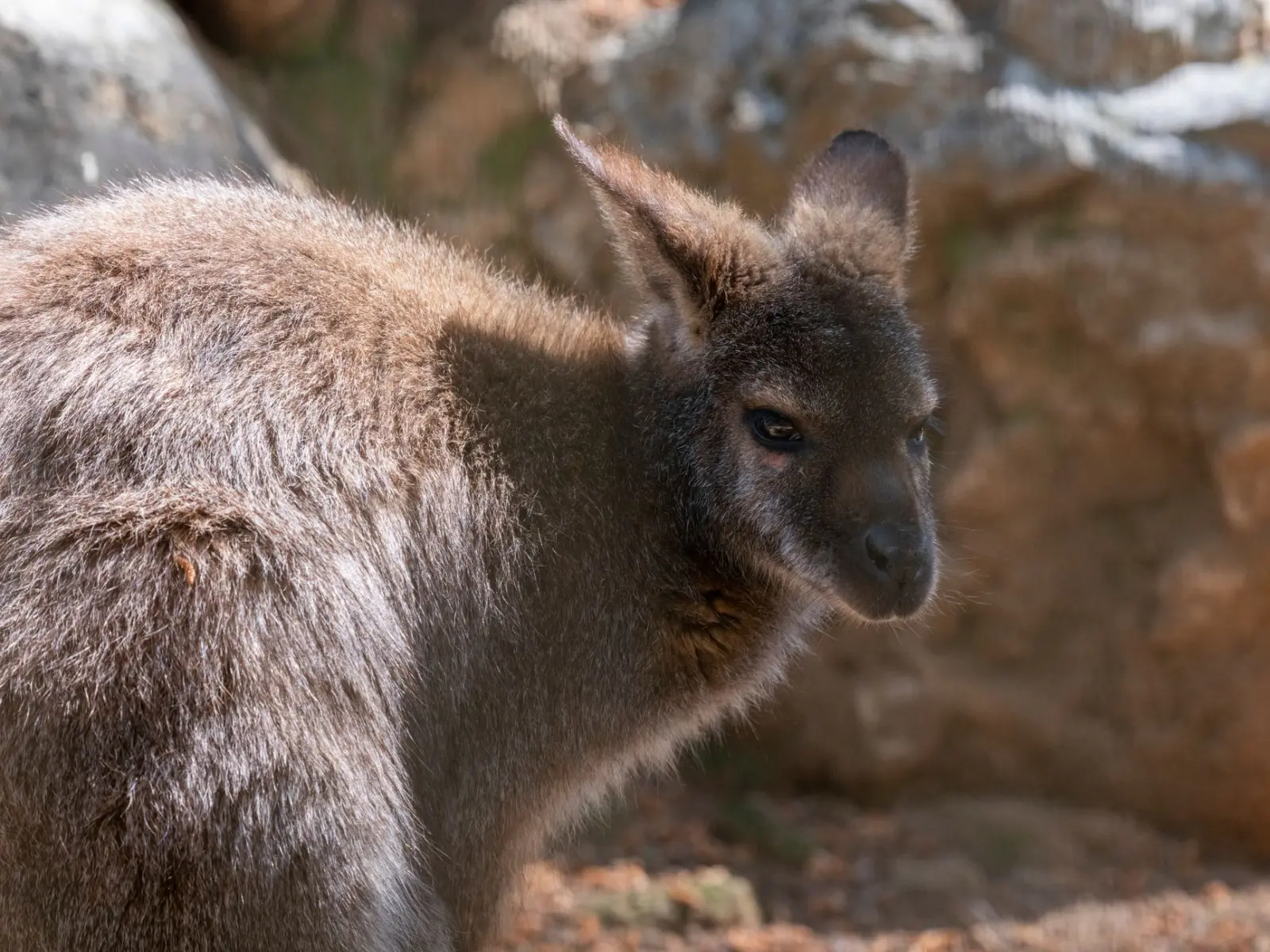
The distinction between wallabies and pademelons matters less than people think when you’re actually in the field. Both are macropods – marsupials with powerful hind legs and a characteristic hopping gait. Pademelons are smaller, typically weighing between 3 and 6 kilograms, while rainforest wallabies range from 5 to 15 kilograms depending on the species. In practice, when you glimpse one moving through dense undergrowth, the size difference is less obvious than you’d expect. What registers first is the movement itself: a sudden bound, a flash of fur, then the animal vanishing into the ferns.
The rainforests of northeastern Queensland and parts of northern New South Wales support several wallaby and pademelon species, but their distribution is patchy and their visibility is constrained by the same factors that make rainforests difficult to navigate. The dense canopy limits light. The thick leaf litter and complex root systems make movement slow and deliberate for humans. For the animals themselves, this density is exactly why they stay here – it provides cover and abundant food sources that open forest or grassland simply cannot match.
Why You Won’t See Them When You Expect To
Rainforest wallabies and pademelons are crepuscular and nocturnal. They feed most actively during dawn and dusk, and heavily at night. If you’re walking the rainforest during midday, which is when most organized tours operate, you’re moving through their resting period. The animals are bedded down in dense vegetation, often in the same spot for hours. They don’t advertise their presence. A wallaby at rest looks like a slight mound under ferns. A pademelon might be completely invisible ten meters from the track.
Early morning walks – genuinely early, starting before full light – increase your chances noticeably. The animals are still moving, still feeding, and they haven’t yet settled into daytime rest sites. Even then, you’re competing with the noise of your own footsteps, the sound of other tourists, and the general disturbance that a group of humans creates in a quiet forest. A solo walker or a very small group moves differently through the landscape. The animals sense this difference.
Weather affects visibility too. After rain, the forest floor becomes softer and the animals move more quietly. The increased moisture also triggers more feeding activity. Overcast days tend to produce more sightings than bright, sunny days, though this is not a reliable rule. The animals respond to humidity, temperature, and barometric pressure in ways that aren’t immediately obvious to a visitor.
Habitat Patterns and Where to Look
Rainforest wallabies and pademelons prefer areas with thick understorey vegetation and accessible ground-level food sources. They browse on leaves, shoots, and fallen fruit. They’re drawn to areas where the canopy opens slightly, allowing more light to reach the forest floor and supporting denser vegetation growth. These spots are often near creek beds, where moisture supports lusher plant growth, or in areas recovering from past disturbance where pioneer plants provide abundant forage.
If you’re walking a rainforest track and notice the vegetation changing – becoming denser, lower, more tangled – you’re moving through habitat that’s more likely to hold these animals. But “more likely” still means you might walk through it for an hour and see nothing. The animals are territorial and have preferred feeding routes, but those routes shift seasonally and don’t necessarily align with tourist tracks.
Guides who work the same rainforest sections repeatedly develop a sense for where animals are most likely to be on any given day. This knowledge comes from hundreds of walks, from noticing subtle signs – droppings, feeding marks on plants, the pattern of disturbance in leaf litter – that tourists simply don’t have the experience to recognize. Even with this knowledge, guides cannot guarantee sightings. They can increase probability. They cannot eliminate chance.
Behavior and What Happens When You Do See One
A wallaby or pademelon’s first response to detecting humans is usually to freeze. They assess the threat. If you’re moving slowly and haven’t made sudden movements, they might stay put for several seconds – long enough for you to see them clearly, if you happen to be looking in the right direction. More often, you’ll see them only as they bolt. The escape is explosive and efficient. They bound away through the undergrowth with a speed that seems impossible given the density of vegetation. Within seconds they’re gone.
The animals are not aggressive toward humans. They’re not curious in the way that some wildlife is. They’re wary, and their wariness is calibrated to the actual threats in their environment. A human is a threat. The appropriate response is avoidance. If you corner an animal or it feels trapped, it will defend itself with powerful hind legs. This is rare in normal circumstances, but it’s worth understanding. These are not tame animals. They’re wild animals tolerating your presence at best.
Vocalizations are uncommon but do occur. A stressed pademelon or wallaby might make a sharp clicking sound or a soft thump with its hind legs on the ground – a warning to other animals. These sounds carry through the quiet forest and can actually help you locate animals if you know what you’re listening for. Most visitors don’t recognize these sounds as animal communication. They hear a noise and move on.
Practical Realities for Travelers
If seeing rainforest wallabies or pademelons is a priority for your trip, commit time to it. A single guided walk has a low probability of success. Multiple walks across different times of day and different weather conditions improve your odds substantially. Early morning is genuinely better than afternoon. Smaller groups move more quietly and see more. Staying silent and moving slowly works better than walking at a normal pace while talking.
Bring binoculars. Most sightings happen at a distance, in poor light, or for a very short duration. Binoculars extend the viewing window and let you see detail you’d miss with naked eyes. They also let you observe the animals’ behavior without needing to move closer, which is better for both you and the animal.
Accept that you might not see them. This is not a failure of the rainforest or the guide or your effort. These animals are genuinely difficult to observe. They’ve evolved in an environment where visibility is limited and predation pressure is real. Staying hidden is a successful strategy. The rainforest is worth experiencing for its own sake – the sound, the moisture, the sheer density of life – regardless of whether you see a particular mammal.
Photographs of wallabies and pademelons in the wild are uncommon for a reason. They move quickly, they’re often in poor light, and they don’t cooperate with composition. If you see one clearly enough to photograph it, you’ve had a genuinely good encounter. Most people don’t get that far.