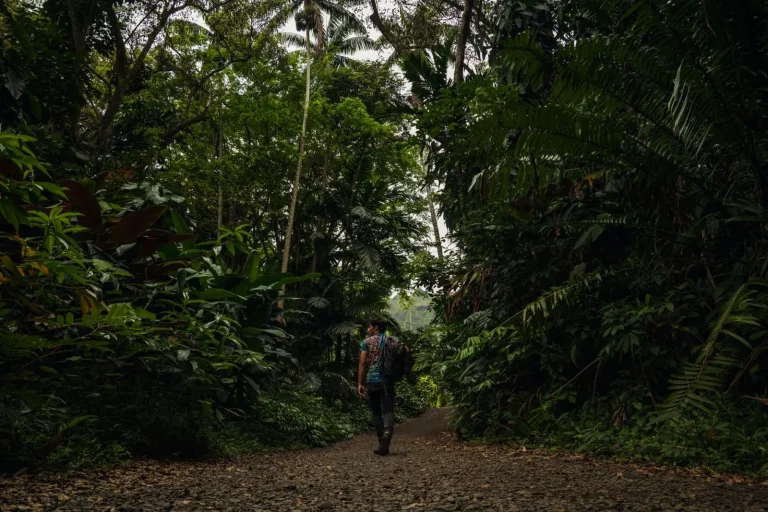

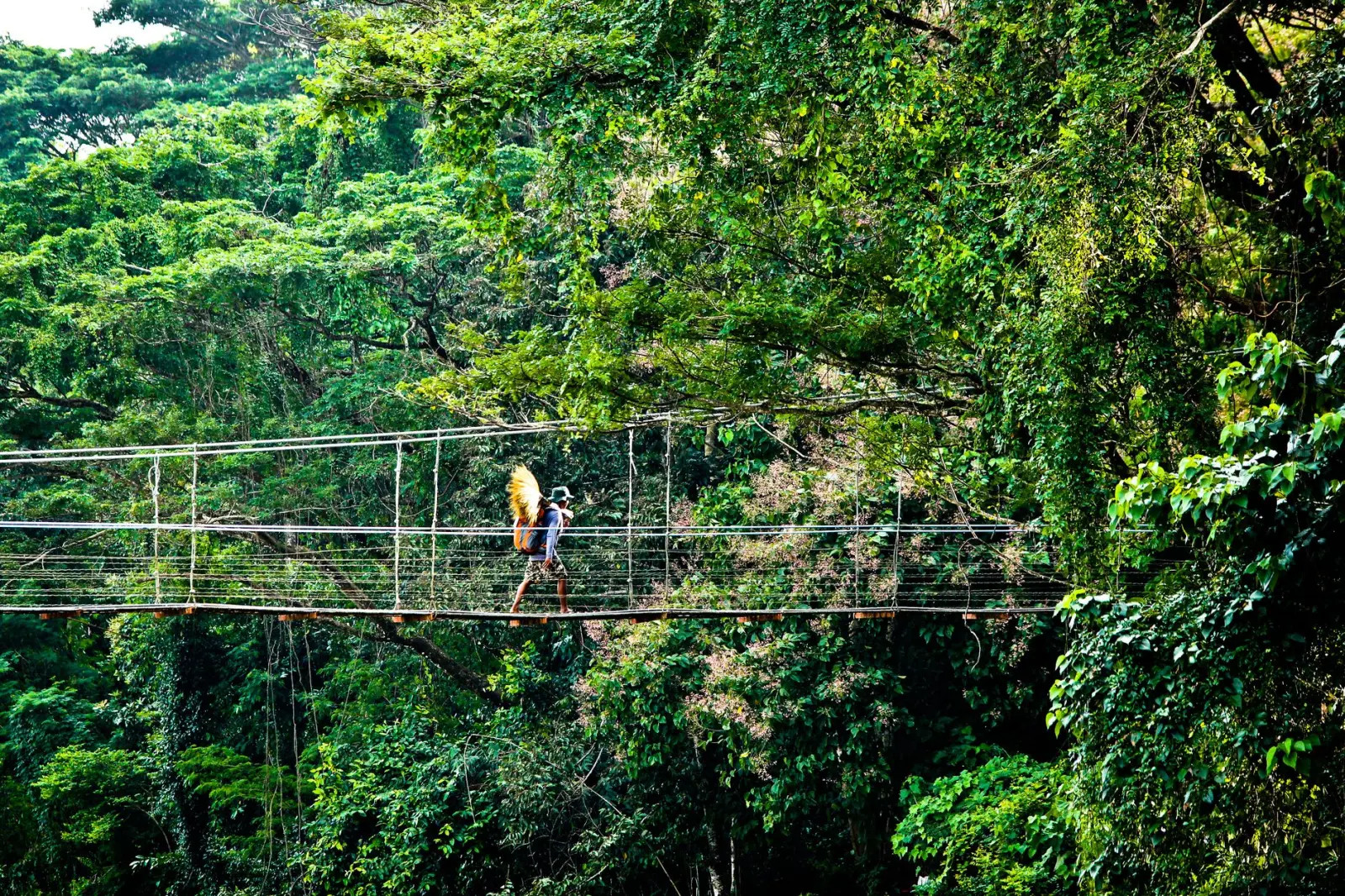
Suspension bridges in rainforests occupy a strange middle ground in travel. They’re neither as straightforward as a marked hiking trail nor as immersive as a full day of jungle trekking. What they offer is access to the canopy layer without technical climbing skills or a guide with rope experience. After years of walking these bridges across different continents, I’ve noticed that the experience hinges less on the bridge itself and more on the forest surrounding it, the time of day you cross, and whether the operation actually maintains what they’ve built.
The appeal is real enough. A suspension bridge puts you 100 to 150 feet above the forest floor, level with the canopy where most of the wildlife activity happens. From ground level, you see trunks, leaf litter, and shadows. From a bridge, you’re in the actual ecosystem. Birds move through branches at eye level. Monkeys sometimes pass overhead. The light changes. You notice the structure of the forest – how trees lean on one another, how vines create highways for movement, how the canopy isn’t solid but a complex lattice with gaps and corridors.
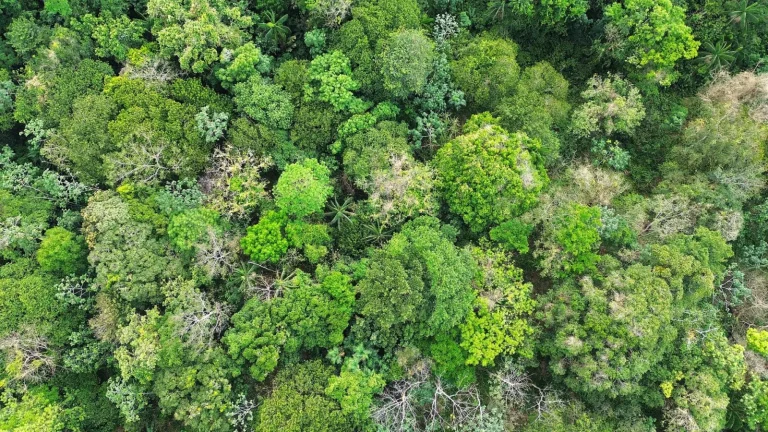
The problem is that many rainforest suspension bridge operations treat the bridge as the entire attraction, when it’s really just the access point. A 10-minute crossing over a well-maintained bridge in a forest that’s been logged or cleared loses most of its value. A 30-minute crossing through primary or old-growth forest where the canopy is intact and dense changes the entire experience.
What Separates Worthwhile Operations from Tourist Traps
The first thing to assess is forest condition. This is harder to determine before you arrive, but it’s the single most important factor. Ask directly: Is this primary forest or secondary growth? When was the last logging activity? How much of the surrounding land has been cleared? Operations in places like Costa Rica’s Monteverde Cloud Forest Preserve or Ecuador’s Mashpi Cloudforest have maintained relatively intact canopy. The bridges there work because the forest works. In contrast, some operations in Peru and Brazil operate bridges over forest that’s been fragmented or selectively harvested. The bridge is still technically there, but the ecosystem it passes through is diminished.
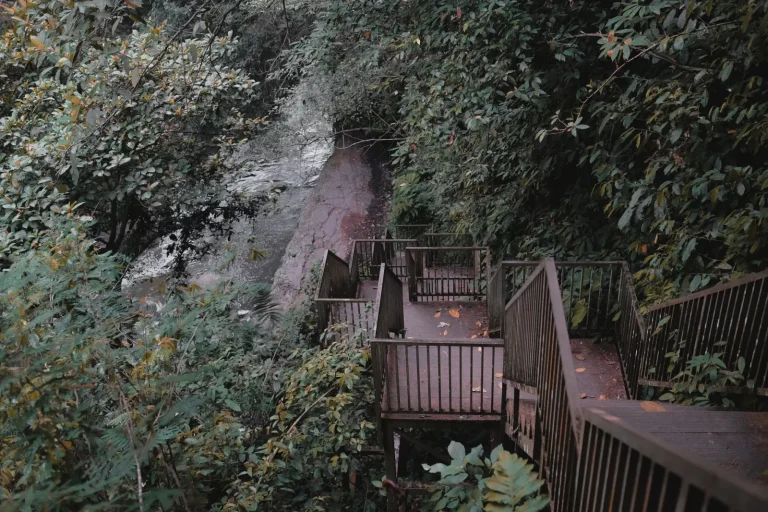
Maintenance matters more than you’d expect. Cables stretch over time. Wood planks rot in tropical humidity. Railings corrode. I’ve crossed bridges where the handrails were visibly degraded and the cable tension felt uneven. These aren’t immediately dangerous, but they signal an operation that’s under-resourced or not taking the infrastructure seriously. The best-maintained bridges I’ve experienced are in places with consistent visitor flow and established safety protocols. Smaller, remote operations sometimes have better forest but worse infrastructure. It’s a real trade-off.
The timing of your visit affects what you see dramatically. Early morning, especially in cloud forests, often means mist obscures much of the view. Late afternoon can be better for visibility but you’re racing the light. Midday is typically clearest but also when many animals rest in the heat. The “best” time depends on what you’re hoping to experience. If you want to see wildlife, early morning or late afternoon matters. If you want clarity and photos, timing around cloud patterns is more important than time of day.
Regional Differences and What to Expect
Costa Rica’s canopy walk operations tend to be the most polished. Monteverde, Arenal, and the Osa Peninsula all have established infrastructure. The bridges are well-maintained, guides are trained, and the experience is relatively comfortable. This also means higher costs and more structured group dynamics. You’ll likely be part of a small group, moving at a set pace, with a guide providing information. The forest experience is good, but it’s mediated.
Ecuador’s cloud forest operations, particularly around Mindo and Mashpi, offer denser canopy and more dramatic elevation changes. The bridges here often feel less polished than Costa Rica’s, but the forest surrounding them is often more intact. I’ve seen more wildlife in Ecuador’s canopy walks than anywhere else – tanagers, toucans, howler monkeys – though this varies by season and luck. The infrastructure is adequate but sometimes shows wear.
Peru’s operations vary wildly. The Tambopata region and areas around Puerto Maldonado have several canopy walk options, but quality and maintenance are inconsistent. Some are genuinely impressive; others feel like they were built once and haven’t been seriously maintained since. The forest itself is typically excellent – you’re in real Amazonian rainforest – but you need to research the specific operation carefully. Reviews from recent visitors matter more here than in established destinations.
Brazil’s canopy operations are less common than you might expect. The Amazon is vast, but most canopy walks are concentrated in specific lodges and tour operators. Those that exist tend to be good because they’re part of larger, more established eco-lodge operations. However, access is often limited to guests staying at the property, and prices reflect that.
The Physical Reality of Crossing
Suspension bridges move. Even well-maintained ones sway in wind and flex under weight. Some people find this thrilling; others find it unsettling. If you have significant height anxiety, a suspension bridge won’t cure it. The movement is noticeable, especially on longer spans. That said, the fear people anticipate is often worse than the actual experience. Once you’re on the bridge and moving, the rhythm of walking tends to override the anxiety.
The bridges are never slippery when dry, but rain makes them treacherous. Wet wood and wet metal railings reduce grip significantly. I’ve done crossings in light rain where I simply moved slowly and carefully. Heavy rain is different – visibility drops, the bridge sways more, and your footing becomes genuinely uncertain. Most operations will cancel or strongly discourage crossings in heavy rain, which is the right call.
Physical fitness matters less than you’d think. Most bridges are designed for a wide range of ages and abilities. The challenge isn’t climbing or endurance; it’s the psychological component of being suspended and the need to move carefully. Elderly visitors and people with moderate fitness levels cross these bridges regularly. What matters more is balance and comfort with heights.
Practical Considerations That Shape the Experience
Group size affects how much you actually see. Large groups move slowly, create noise that disturbs wildlife, and create congestion on the bridges themselves. Smaller groups – four to six people – allow for more flexibility, quieter movement, and better wildlife viewing. Many operations now limit group sizes, which is an improvement. If you’re booking, ask about group composition.
The presence of a guide matters. A good guide will know where to pause for wildlife, which birds are calling, which vines have medicinal uses, and how to read the forest. A guide who’s simply moving people across the bridge efficiently misses the point. The best guides I’ve worked with in rainforest canopy walks were naturalists first and logistics coordinators second.
Bring binoculars if you have them. Most people don’t, and they miss details. Birds in the canopy are often small and distant. A basic pair of binoculars transforms the experience. Similarly, a camera with reasonable zoom helps, though obsessing over getting the perfect shot often means missing the actual moment.
Expect to spend two to four hours total for a canopy walk experience, including transportation to the site, briefing, the actual crossing, and return. The crossing itself might be 30 to 45 minutes, but the full operation takes longer. Plan accordingly and don’t try to rush it into a busy itinerary.
The value of a rainforest suspension bridge walk depends entirely on what surrounds it. A bridge over intact, biodiverse forest in a well-maintained operation is genuinely worth the time and money. A bridge over degraded forest or through a poorly maintained operation is an expensive photo opportunity. The difference isn’t always obvious from descriptions or websites, which is why talking to recent visitors and asking specific questions about forest condition and maintenance matters more than any marketing material.