
After years of working across tropical regions, I’ve noticed something that doesn’t make it into most conservation discussions: the relationship between standing forest and functioning water systems is not metaphorical. It’s hydraulic. When you remove the canopy, you don’t just lose trees – you lose the mechanism that regulates how water moves through the landscape.
Most people think of rainforests as wet places that happen to have a lot of trees. The reality is inverted. The forest creates the wetness. The canopy intercepts rainfall before it hits the ground with destructive force. Leaves and branches slow water down, allowing it to drip gradually rather than cascade. This matters enormously for soil stability and infiltration. When rain falls on bare ground or degraded land, it runs off quickly, carrying topsoil with it. In an intact forest, that same rain soaks in, replenishing groundwater reserves that feed streams and springs during dry months.
How Canopy Structure Regulates Flow
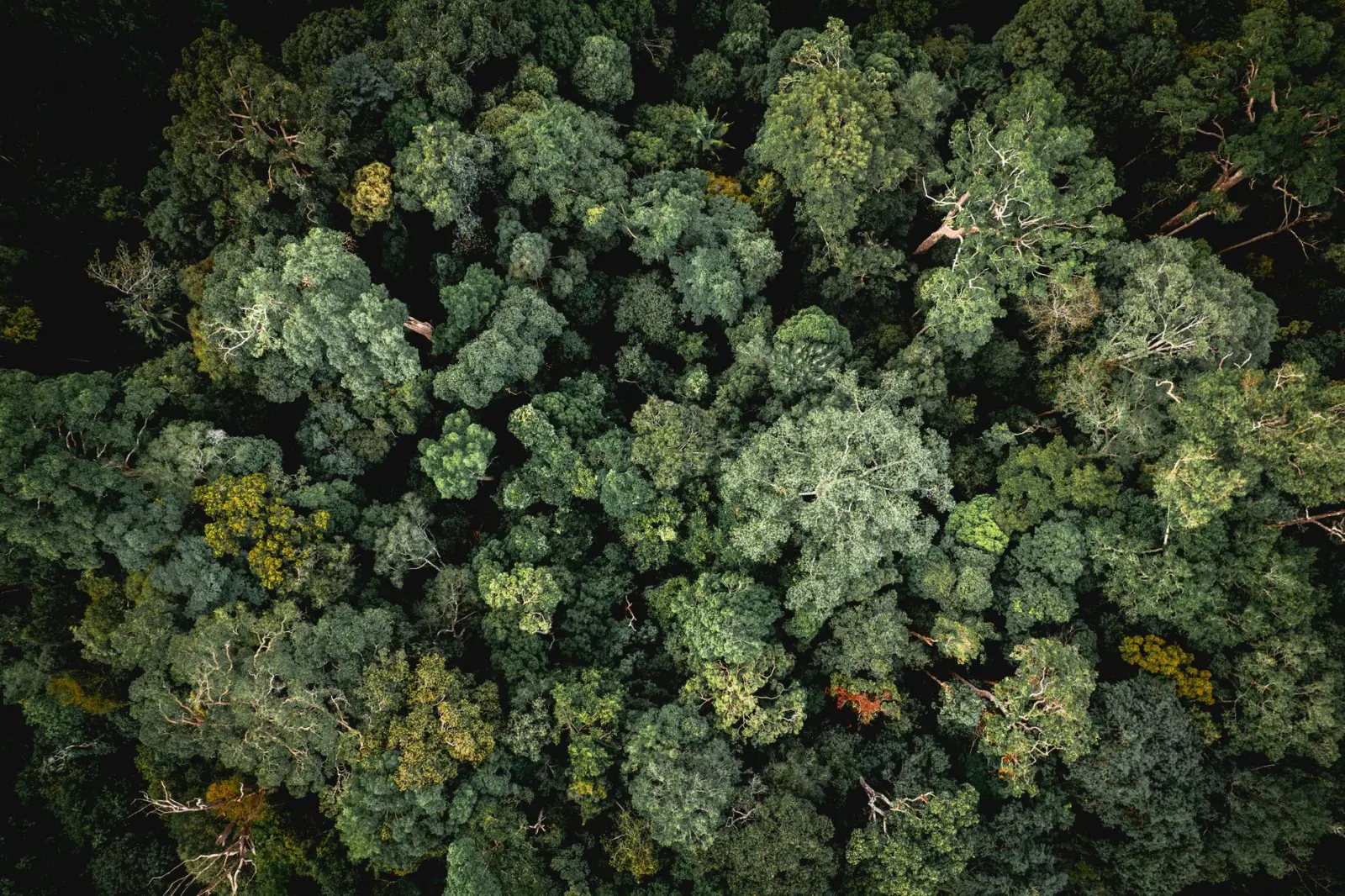
The layering of a rainforest canopy – emergent trees, upper canopy, understory, and forest floor – creates a kind of natural filtration system. Water doesn’t arrive at the soil all at once. It moves through different levels, each one slowing it further. The leaf litter and organic matter on the forest floor act like a sponge, holding water and releasing it gradually into the soil. This slow release is what maintains baseflow in streams during the dry season. Without it, water bodies that appear permanent during rainy months become seasonal or disappear entirely.
I’ve walked alongside rivers in regions where forest cover has been partially cleared, and the difference is stark. In forested sections, the water runs clear and steady. A few kilometers downstream, where the catchment has been opened up, the same river runs brown and turbulent after rainfall, then drops to a trickle within days. The forest-covered upstream section acts as a buffer. The degraded section acts as a drain.
The root systems of mature trees also play a role that’s often overlooked. Large trees have deep root networks that access water stored far below the surface. During dry periods, these trees release water back into the soil through a process called hydraulic lift. Smaller plants and understory vegetation benefit from this released moisture, which keeps the soil moist and maintains infiltration capacity. Remove the large trees, and you lose this mechanism. Soil compacts. Water runs off instead of soaking in.
Soil Stability and Erosion Patterns
Erosion in degraded catchments isn’t just a surface problem. It’s a cascade. When heavy rain hits exposed soil, it creates gullies and channels. These eroded materials end up in streams, raising turbidity and smothering the streambed. Sediment loads increase dramatically. I’ve measured water samples from deforested areas that were so laden with suspended particles that they looked more like thin mud than water. That sediment settles in reservoirs, reducing storage capacity. It clogs water intake pipes. It changes the entire chemistry of the water body.
The forest prevents this through multiple mechanisms at once. The canopy breaks the force of rainfall. The litter layer absorbs water and protects soil from impact. The root network binds soil particles together. The result is that erosion rates in intact forest are typically a fraction of those in cleared or degraded areas. This isn’t just environmental elegance – it’s functional infrastructure. A forest catchment is essentially a water treatment and storage system that requires no pumps, no chemicals, and no maintenance budget.
Temperature and Evapotranspiration Dynamics
Another dimension that affects water availability is temperature regulation. Forests moderate local temperature through shading and evapotranspiration. The canopy keeps soil cooler, which reduces direct evaporation. At the same time, trees release water vapor through their leaves, which cools the air and can influence local rainfall patterns. This sounds abstract until you’re trying to source water in a region where the forest has been cleared. Temperatures rise. Evaporation increases. Springs that once ran year-round become seasonal. Shallow wells dry up.
I’ve observed this pattern repeatedly in montane regions where cloud forests have been partially logged. The remaining forest patches become increasingly stressed because they’re losing the moisture feedback loop that sustained them. It’s not just that less water falls – it’s that more of what does fall evaporates before it can recharge groundwater or feed streams.
Water Quality and Chemical Cycling
Beyond quantity, forest cover affects water quality in ways that matter for human use. Intact forests filter water naturally. Organic matter in the soil and leaf litter acts as a biofilter. Microbial communities break down contaminants. The slow movement of water through soil allows settling and chemical transformation. When you remove the forest, you lose this filtration. Water becomes harder to treat. Contaminants persist longer. Pathogenic organisms survive better in degraded waterways because there’s less organic matter and less biological competition to suppress them.
Nutrient cycling also changes. In a functioning forest system, nutrients are retained and recycled within the ecosystem. Deforestation disrupts this. Nitrogen and phosphorus wash out into waterways, causing eutrophication and algal blooms. This degrades water quality for downstream users, whether they’re farmers irrigating crops or municipalities treating drinking water.
The economic calculus of forest conservation for water protection is often framed in terms of ecosystem services – a useful framework, but one that can obscure how essential these functions actually are. A catchment without forest cover isn’t just less productive ecologically. It’s less reliable as a water source. It requires more infrastructure to deliver the same amount of usable water. It’s more vulnerable to drought and to flooding. Over time, the cost of managing a degraded catchment typically exceeds the cost of protecting an intact one, but the calculation is rarely made until the damage is already done.
What I’ve learned from years in regions where this trade-off is playing out in real time is that forest conservation isn’t separate from water management. It’s foundational to it. The canopy, the soil, the roots, the understory – these aren’t decorative elements of a scenic landscape. They’re the operational components of a water system. Protect them, and water availability and quality tend to be stable. Degrade them, and you’re essentially dismantling the infrastructure that regulates water flow. The forest doesn’t just live in the watershed. It is the watershed.