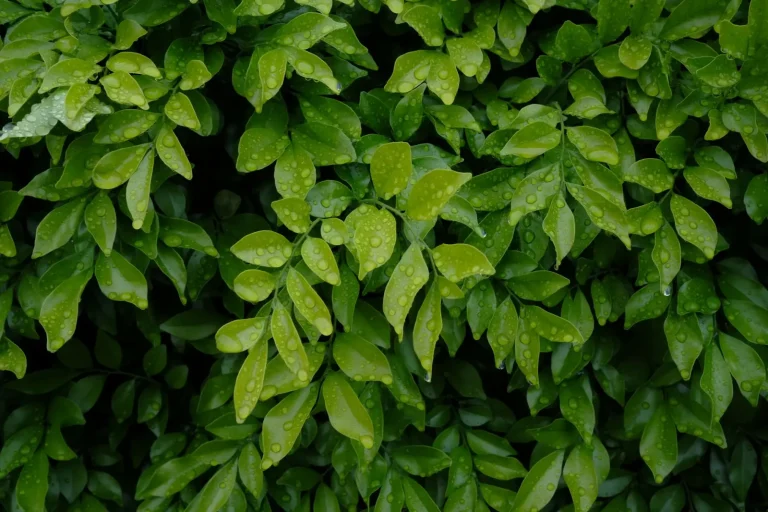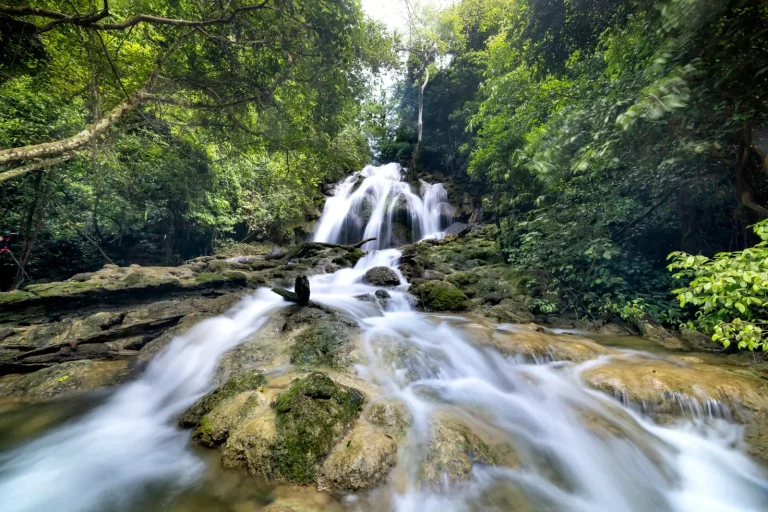

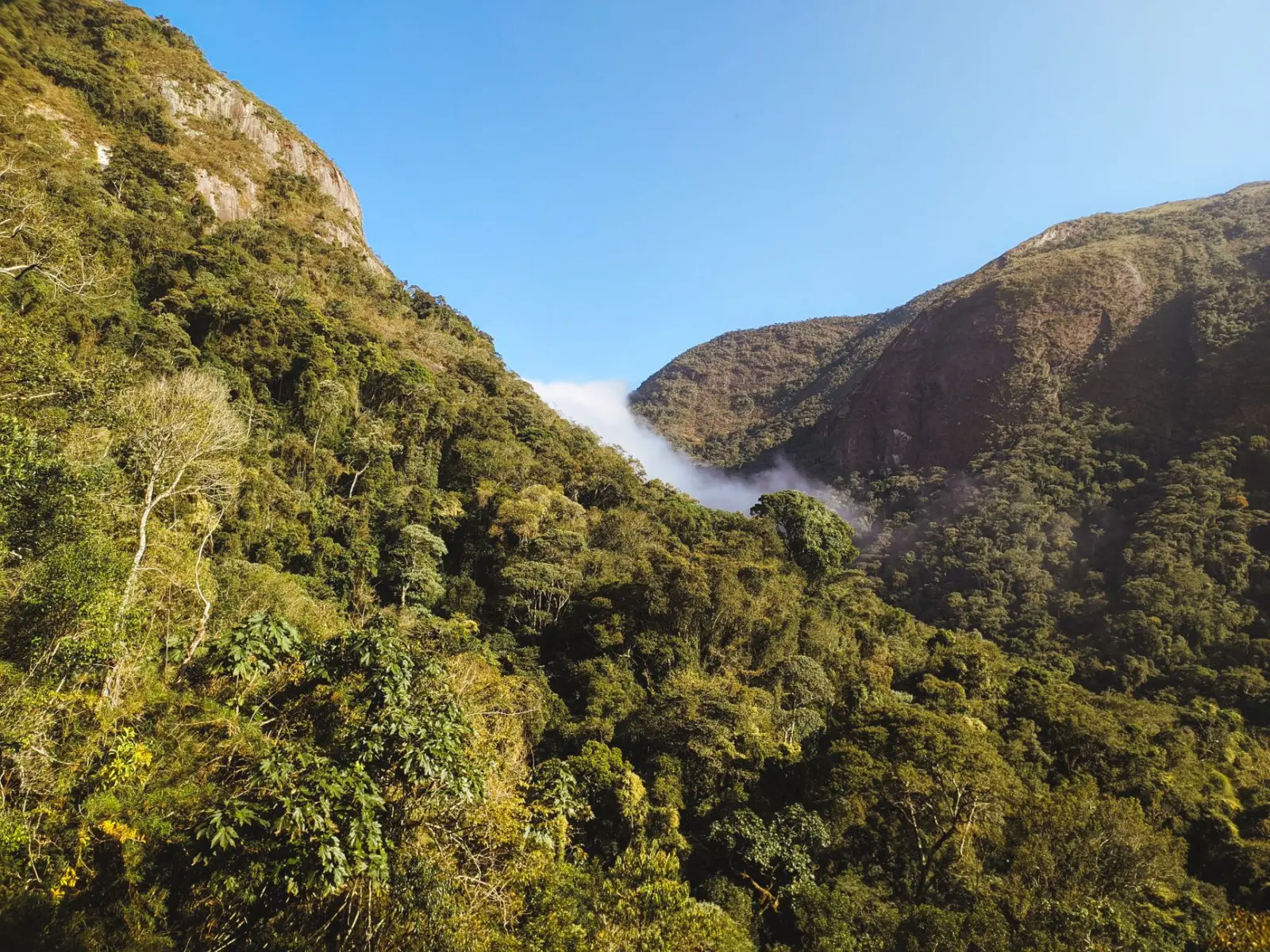
Spend enough time in a mountain rainforest above a certain elevation, and you stop thinking of clouds as something that passes overhead. They become part of the landscape – a tangible, almost touchable presence that soaks into the canopy and drips steadily to the forest floor. What appears to casual observers as mist or fog is actually a measurable transfer of water from air to soil, happening continuously during cloud-covered periods. This process, called cloud interception or occult precipitation, is not poetic metaphor. It is a hydrological mechanism that sustains entire ecosystems.
The mechanism works because of a specific combination of geography and vegetation. When moisture-laden air masses move upslope toward higher elevations, they cool as atmospheric pressure decreases. At a certain point – the cloud condensation level – that air becomes saturated, and water vapor condenses into visible water droplets. A mountain rainforest positioned at this elevation intercepts those clouds directly. The forest canopy, dense and multi-layered, acts as a physical barrier. Droplets collide with leaves, branches, and moss-covered surfaces. Instead of drifting past, they adhere and accumulate.
What makes this different from ordinary rainfall is the mechanism of delivery. Rain falls through the atmosphere and reaches the ground relatively quickly. Cloud interception happens at the canopy level, where water is captured before it ever becomes precipitation. The droplets cling to vegetation, coalesce, and eventually drip downward – but much of this water never reaches the forest floor as a single drop. It is absorbed directly by leaves, bark, epiphytic plants, and the dense moss layers that coat tree trunks and branches in these forests. The water enters the ecosystem at multiple levels simultaneously, rather than concentrating at ground level.
The Role of Vegetation Structure
Not all forests capture clouds equally. The effectiveness of cloud interception depends on specific structural characteristics. Broad-leafed evergreen trees with dense foliage intercept far more water than deciduous forests or open woodlands. In tropical mountain rainforests, the canopy is not a simple single layer. It is a complex, multi-tiered structure with an emergent layer of tall trees, a dense mid-canopy, an understory, and a ground layer of ferns, mosses, and low vegetation. Each layer contributes to the interception process.
Moss coverage is particularly significant. Healthy mountain rainforests often have moss so thick on tree trunks and branches that it forms a distinct ecological layer. This moss acts as a sponge, absorbing and holding cloud water. A single moss-covered branch can hold several times its own weight in water. When saturation occurs, the excess drips down, but the moss retains moisture for hours or days, gradually releasing it to the surrounding air and vegetation. Lichens play a similar role, though they are generally less water-retentive than moss.
The leaf shape and arrangement matter as well. Compound leaves with many leaflets create more surface area for water capture than simple leaves. Leaves with waxy or hydrophobic surfaces shed water more readily, which can actually reduce interception efficiency – counterintuitively, rougher, more absorbent leaf surfaces capture more cloud water. Leaf angle also affects capture rates. Leaves oriented to intercept falling moisture at oblique angles tend to accumulate more water than those angled away.
Topography and Elevation Effects
Geography determines where cloud interception becomes significant. The elevation at which clouds consistently form and linger is called the cloud condensation level, and it varies by season, latitude, and regional weather patterns. In tropical mountains, this level often sits between 1,000 and 2,500 meters, though it can be higher or lower depending on local conditions. Forests positioned at this elevation experience cloud immersion for a substantial portion of the year, particularly during wet seasons.
Windward slopes receive more cloud-driven moisture than leeward slopes. When moisture-laden air is forced upslope by prevailing winds, it cools and condenses. The windward side of a mountain experiences persistent cloud cover and high interception rates. The leeward side, where air descends and warms, experiences less cloud formation and lower interception. This creates a rain shadow effect, but for cloud water rather than conventional precipitation. A forest on the windward slope of a mountain ridge can receive twice as much water from cloud interception as one on the leeward side, even if traditional rainfall is similar.
Ridge tops and exposed slopes are more effective at cloud capture than sheltered valleys. Vegetation on ridges experiences more direct wind and cloud contact. Valleys, while they may receive runoff from surrounding slopes, are often below the cloud condensation level and miss the direct interception benefit. This is why cloud forests are typically found on slopes and ridge systems rather than in low-lying areas, even in regions with abundant moisture.
Water Movement Through the System
Once captured, cloud water moves through the forest in several pathways. Some water is intercepted by the canopy and never reaches the soil – it evaporates directly from leaf and moss surfaces. This is called interception loss, and it typically accounts for 20 to 40 percent of captured cloud water in mountain rainforests, depending on humidity and wind conditions. High humidity and calm conditions reduce evaporative loss. Dry air and windy conditions increase it.
Water that does not evaporate drips from the canopy as stemflow along tree trunks or as throughfall between trees. Stemflow concentrates water at the base of individual trees, creating localized areas of high soil moisture around tree roots. Throughfall distributes water more evenly across the forest floor. Both pathways eventually reach the soil, where it infiltrates and recharges groundwater. In cloud forests, this groundwater recharge is often more significant than recharge from conventional rainfall, because the water is delivered slowly and steadily rather than in intense bursts.
The accumulated effect is substantial. A mountain rainforest can extract 10 to 60 millimeters of water per day from clouds during periods of active cloud immersion. Over a year, this can total 2,000 to 4,000 millimeters of water – equivalent to a year’s worth of conventional rainfall in many temperate regions. In some locations, cloud interception contributes more to the water budget than rain falling from above. This water sustains the forest during dry seasons and maintains stream flow in mountain valleys even when no rain has fallen for weeks.
Ecological and Hydrological Consequences
The continuous, gentle delivery of cloud water creates conditions fundamentally different from those in lowland rainforests. Soils in cloud forests remain saturated or near-saturated for much of the year. This supports the growth of moss, lichens, and epiphytic plants that would not survive in drier conditions. The slow, steady water input also reduces erosion compared to intense rainfall events, allowing soils to develop and organic matter to accumulate.
Stream flow in cloud forest watersheds is remarkably stable. Because cloud interception delivers water continuously and slowly, it buffers the effects of variable rainfall. Streams fed by cloud forest watersheds maintain flow during dry periods when lowland streams run low or dry. This hydrological stability has made cloud forests critical water sources for human communities downstream, particularly in tropical regions where water demand is high and dry seasons are pronounced.
Climate change is altering cloud forest hydrology in ways that are not yet fully understood but are clearly consequential. As temperatures rise, the elevation of the cloud condensation level shifts upward. Forests that currently sit within the cloud layer may find themselves above it, losing the interception benefit. Simultaneously, changes in atmospheric circulation patterns are shifting where and when clouds form. Some cloud forests are experiencing less cloud immersion, while others are seeing changes in the timing and intensity of cloud seasons. For ecosystems that have evolved to depend on this water source, even modest shifts in cloud patterns can be disruptive.
Understanding cloud interception is not merely an academic exercise. It explains why mountain rainforests exist where they do, why they support such high biodiversity, and why their protection matters for water security in regions far downstream. The mechanism is elegant in its simplicity: air rises, cools, condenses, and a forest catches the result. But the consequences ripple through entire watersheds and support millions of people who depend on the water these forests capture and release.