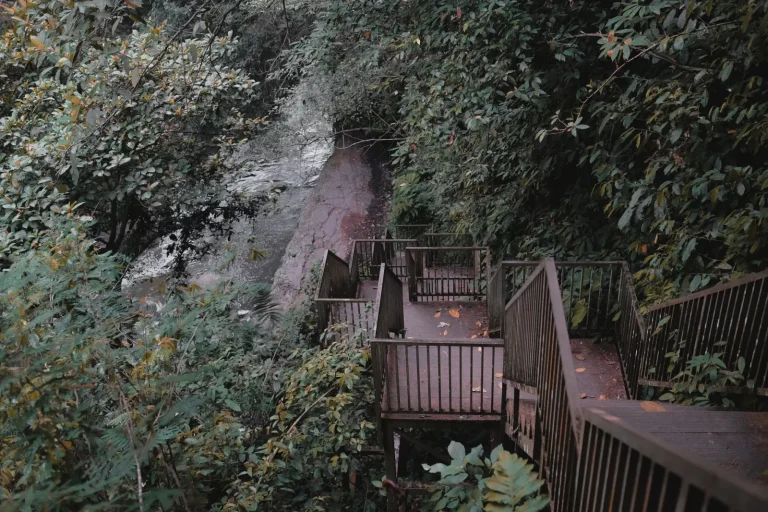

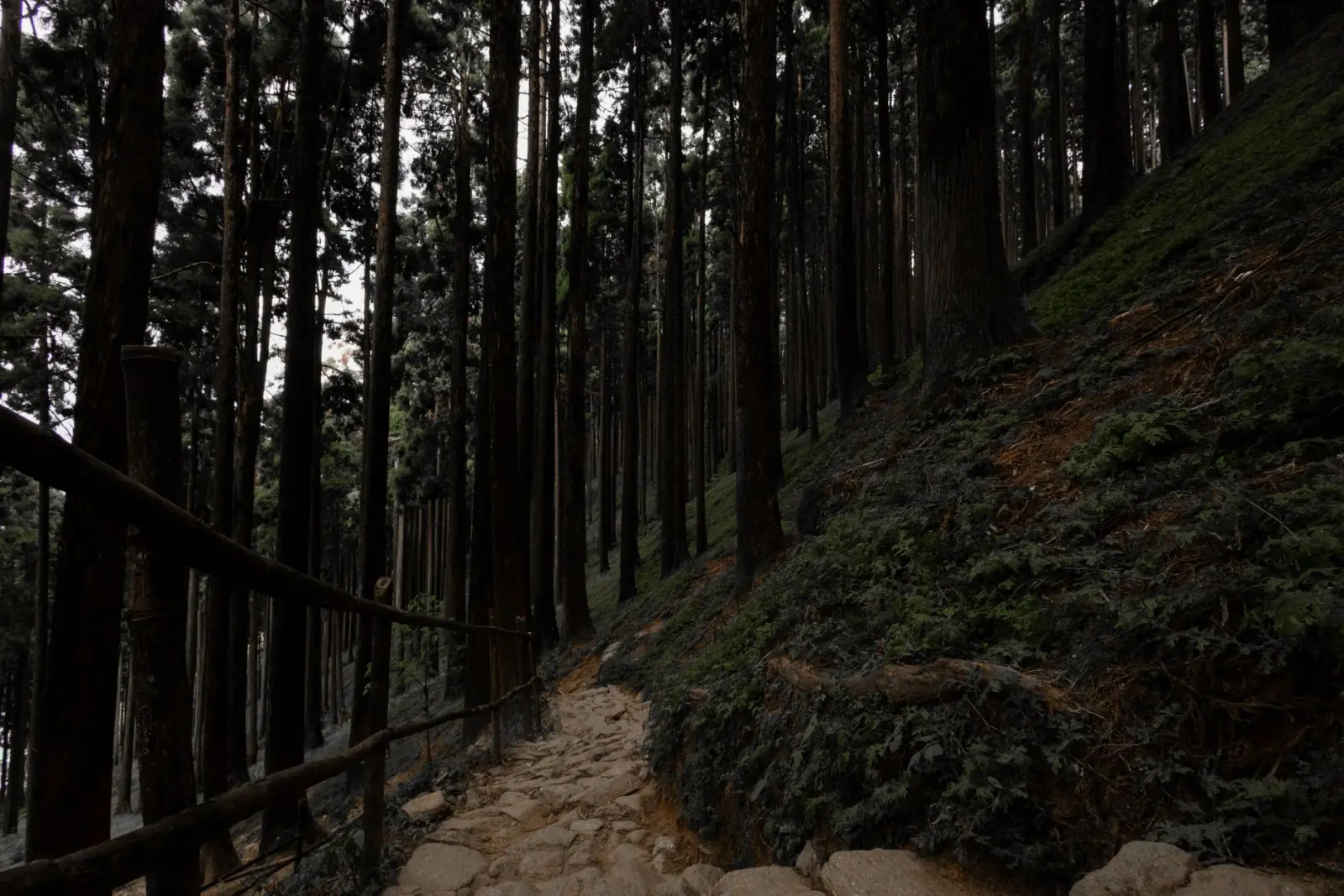
The Central Highlands forests don’t announce themselves. You arrive at a trailhead or a village edge where the tree line begins, and the transition happens gradually enough that you don’t immediately grasp what you’ve entered. The canopy thickens. The air becomes heavier. The ground shifts from packed earth to something softer, more uncertain. After several days of walking through these forests, you understand that the environment isn’t hostile so much as indifferent to your presence, and that indifference requires respect.
Most people underestimate the physical toll before they experience it. Walking through dense forest is categorically different from hiking open trails or ridge lines. The terrain demands constant micro-adjustments. Your feet navigate roots, stones, and soft patches simultaneously. Your legs work at angles that road walking never requires. Your core engages to maintain balance on uneven ground. By the end of a six-hour forest day, muscles you didn’t know were engaged will be fatigued in ways that a flat ten-kilometer walk would never produce. This isn’t weakness or poor conditioning. It’s the simple biomechanics of moving through an environment that doesn’t accommodate linear motion.
The Reality of Visibility and Pace
Daylight penetrates the Central Highlands forest in scattered patches. Even at midday, the canopy filters light into a diffuse, greenish illumination that makes distance deceptive. You can see perhaps thirty meters ahead on a clear section, sometimes less. This fundamentally changes how you move. You cannot maintain a steady pace the way you might on an open path. Instead, you move in rhythms dictated by terrain changes. A section of dense undergrowth slows you to a crawl. A brief clearing allows faster movement. Then the forest tightens again.
This variability means that distance estimates become unreliable. A guide might tell you a walk will take five hours. What they mean is that under optimal conditions with a practiced walker and clear weather, five hours is reasonable. In reality, you might encounter a washed-out section that requires careful navigation, or the path might be less distinct than expected, or your group might move slower than anticipated. Adding two hours to any forest estimate is not pessimism; it’s realism. Starting walks early matters not because you’re slow but because the forest’s actual pace is slower than most people assume.
Weather and the Forest’s Mood
Rain transforms the Central Highlands forest into something entirely different. The forest floor, already soft from decomposing vegetation and moisture, becomes slick and treacherous. Roots that were merely obstacles become genuine hazards. Streams that were quiet trickles become rushing channels. Visibility drops further as mist rises from the canopy. A walk that was manageable in dry conditions becomes genuinely difficult and potentially dangerous.
The forest also generates its own weather. Morning mist often persists until late morning, particularly in certain valleys. Humidity remains high even when it hasn’t rained recently. Your clothes stay damp. Sweat doesn’t dry. This creates a constant low-level discomfort that isn’t dangerous but accumulates over hours. Bring clothes that dry quickly, not cotton. Understand that staying completely dry is impossible; the goal is managing moisture rather than avoiding it entirely.
What Your Body Needs, and What It Won’t Tell You
Dehydration sneaks up in forest walking more easily than on open terrain. The shade and the dampness create an illusion that you’re not losing water as quickly as you actually are. You feel cooler, so you drink less. By the time thirst becomes obvious, you’re already depleted. Carry more water than you think necessary. On a six-hour forest walk, two liters is a minimum, not a target. If you’re walking with a group, someone will inevitably run short.
Food becomes less appetizing in the forest heat and humidity. Your body still needs fuel, but the motivation to eat diminishes. Bring foods that don’t require appetite, things you can consume mechanically. Nuts, dried fruit, energy bars, salt tablets. Actual meals can wait until camp. During the walk, focus on maintaining energy levels rather than eating when hungry, because hunger signals arrive late.
Foot care matters more than most walkers acknowledge. Blisters develop faster in damp conditions. Your feet swell slightly from constant impact and heat. Socks that felt fine in the morning may create problems by afternoon. Check your feet during breaks. If you feel a hotspot forming, address it immediately with tape or a blister prevention product. Ignoring foot issues on day one makes day two substantially harder.
Navigation and Getting Lost
The forest obscures landmarks. You cannot see distant peaks or reference points that might orient you on open terrain. Trails can be ambiguous, particularly where local use has created multiple paths. GPS works, but the dense canopy sometimes creates signal issues. Maps are useful but often lack the detail needed for precise navigation through forest. This is why local guides provide genuine value, not as luxury but as practical necessity.
Getting lost in the Central Highlands forest is not immediately dangerous, but it’s deeply inefficient. You waste energy retracing steps. You consume water and food reserves. You arrive at camp exhausted rather than tired. More importantly, you lose confidence in your navigation, which affects decision-making for subsequent days. If you’re walking without a guide, move slowly enough that you can identify the path clearly before committing to it. Stop frequently to confirm direction. This feels cautious, but it prevents the wasted effort and frustration that comes from taking wrong turns in dense forest.
The Rhythm of Multi-Day Walking
Walking through the forest for multiple consecutive days creates a cumulative fatigue that’s different from single-day exhaustion. Your legs adapt to the terrain, which is good. Your mental resilience either strengthens or erodes, depending on conditions and temperament. By day three or four, you understand the forest’s rhythm in a way that first-day observations cannot capture. The noise that seemed alarming on day one becomes ambient. The physical demands feel more manageable, not because you’re stronger but because your body has stopped resisting the environment.
Camps matter more than you might expect. A well-situated camp with level ground, water access, and some protection from wind makes a substantial difference in recovery. A poor camp leaves you uncomfortable and poorly rested. If you have choice in where to stop, prioritize these factors over reaching a particular distance. An extra hour of quality rest is worth more than covering another two kilometers.
The Central Highlands forest rewards patience and consistency more than speed or heroic effort. Walkers who move steadily, manage their resources carefully, and respect the environment’s pace tend to have better experiences than those who push hard and burn out. This isn’t philosophy; it’s the practical outcome of how the forest actually works and how human bodies actually function within it.