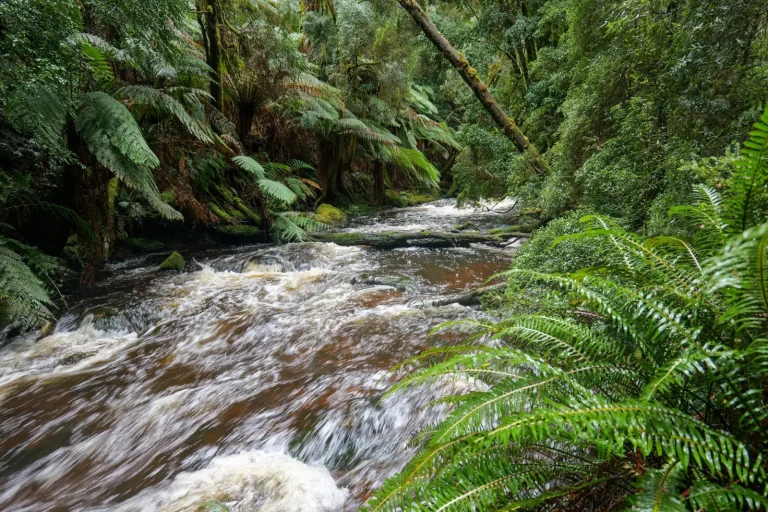

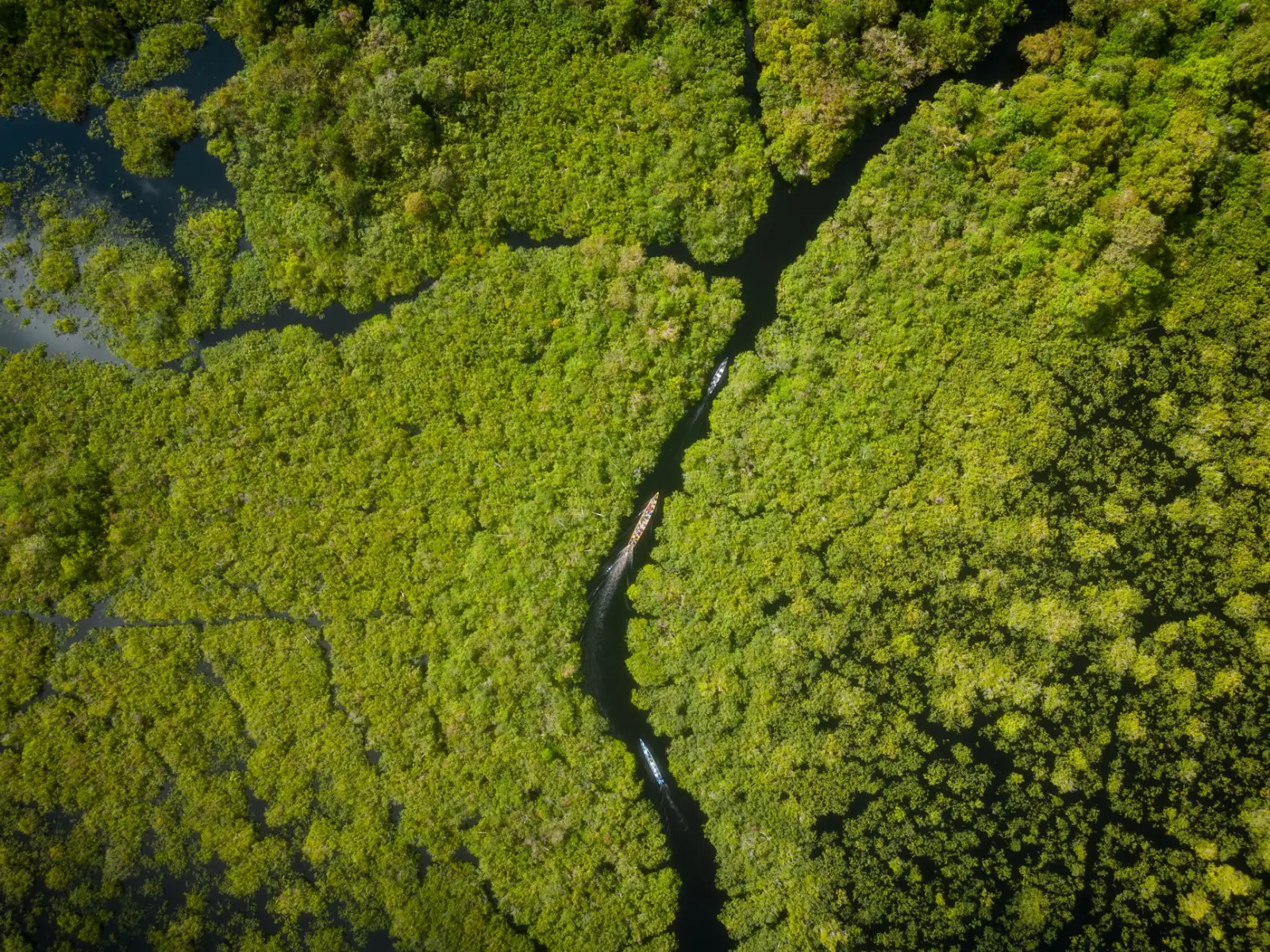
Spend enough time in a rainforest, and you begin to notice that the real action happens above your head. The canopy – that dense, interlocking layer of branches and leaves typically 100 to 150 feet overhead – functions almost as a separate world from the forest floor. It is not simply that more organisms live there; it is that the conditions up there fundamentally favor life in ways that the understory and forest floor cannot replicate. Once you understand this, the concentration of species and activity in the canopy stops feeling like a mystery and starts feeling inevitable.
The most obvious advantage is light. In a mature rainforest, the canopy intercepts 95 percent or more of incoming solar radiation. This means the forest floor exists in perpetual twilight, while the canopy basks in unfiltered sun. Plants cannot grow without light, and neither can the herbivores that depend on them. The canopy is where photosynthesis happens most efficiently, where leaves are youngest and most nutritious, and where the energy that drives the entire forest originates. Everything else – every animal, every decomposer, every parasite – exists because of what the canopy produces.
Moisture and Microclimate Stability
What often gets overlooked is how the canopy creates its own climate. The layering of leaves and branches acts as both a shield and a regulator. Rainfall does not fall straight through; it is intercepted, slowed, and distributed gradually. Some water drips directly, some runs along branches, some is absorbed by epiphytic plants – orchids, bromeliads, ferns – that grow on the branches themselves. This means the canopy never fully dries out, even during drier seasons. The microclimate remains humid and stable in ways that the ground level, exposed to more dramatic fluctuations, simply cannot match.
I have worked in forests where the difference between canopy conditions and forest floor conditions was startling. At ground level, during the dry season, humidity could drop noticeably by midday. Fifty meters up, the humidity remained constant. This stability matters enormously for small organisms. Insects, spiders, frogs, and countless other creatures cannot afford to lose water rapidly. The canopy provides a buffer against desiccation that the lower forest layers do not. Larger animals notice this too. Birds and mammals that depend on consistent water sources concentrate where the canopy keeps conditions predictable.
Resource Availability and Niche Layering
The canopy is not a single habitat. It is a series of nested microhabitats. The top of the canopy – the emergent layer where the tallest trees break through – experiences different conditions than the middle canopy or the lower canopy. Leaves at different heights, branches of different thicknesses, flowers blooming at different times, fruits ripening in sequence – this layering creates dozens of distinct ecological niches within what looks like a single space.
A particular species of beetle might specialize on the bark of one tree species at one specific height. A frog might breed only in the water that collects in a particular bromeliad. A bird might forage only for insects in the lichen-covered branches of the upper canopy. This extreme specialization is possible because resources are abundant and diverse enough to support it. On the forest floor, resources are more limited and more seasonal. The canopy’s year-round productivity means that specialized niches can persist and proliferate.
The structural complexity also matters. A canopy branch is not just a surface; it is a three-dimensional environment with crevices, lichen growth, moss cushions, and accumulated leaf litter. This creates habitat for decomposers, which in turn feed predators, which feed larger predators. The food web in the canopy is not just longer than on the forest floor; it is more intricate.
Predator-Prey Dynamics and Refuge
One aspect that becomes clear when you observe canopy life closely is that predators and prey both benefit from the complexity. A small bird hunting for insects has thousands of hiding places to check but also many places to perch and scan. Insects have countless refuges but are still vulnerable to predation. This balance – neither predator nor prey has a decisive advantage – allows both to coexist in high numbers. On simpler substrates, like an open branch or a bare trunk, predators tend to dominate more completely, reducing overall diversity.
The canopy also offers refuge from ground-based threats. Jaguars, anacondas, and other large predators operate primarily at ground level. Many canopy species have evolved to exploit this separation. They can afford to be smaller, less cryptic, and more specialized because they occupy a space that large terrestrial predators cannot easily access. This reduces predation pressure in ways that allow population densities to remain high.
Seasonal Continuity and Flowering Patterns
In temperate forests, seasons create feast-or-famine cycles. In rainforests, particularly tropical rainforests, seasonality is muted. The canopy flowers and fruits year-round, though not all species do so simultaneously. This means that pollinators, seed dispersers, and fruit-eaters can remain active throughout the year. They do not need to migrate or enter dormancy. They can maintain stable populations because food is never entirely absent.
This is not to say rainforest canopies are uniformly productive every single day. They are not. But the timing of productivity is staggered across species. When one tree stops fruiting, another is beginning. When one flower fades, another opens elsewhere in the canopy. This temporal diversity, combined with spatial diversity, creates an environment where a huge number of species can coexist without competing directly for the same resources at the same time.
The canopy’s position as the primary productive layer, combined with its structural complexity, microclimate stability, and year-round resource availability, creates conditions that simply cannot exist at ground level. It is not that the forest floor is barren – it supports important decomposer communities and some specialized species – but it operates under constraints that the canopy does not. Light is limited, moisture fluctuates more, and resources are more seasonal. The canopy, by contrast, is where the forest’s energy is concentrated, where conditions remain stable, and where ecological niches proliferate. Over millions of years, evolution has filled every available niche, resulting in the extraordinary biodiversity that characterizes rainforest canopies today. Once you see this pattern clearly, it becomes obvious why so much life concentrates overhead.