
The Sunshine Coast hinterland forest moves differently than you expect if you’re coming from other regions. The trees are denser than they appear from a distance, the ground shifts under your feet in ways that aren’t immediately obvious, and the weather can change the entire character of a walk within the span of an hour. After years of moving through these trails – sometimes regularly, sometimes after months away – certain patterns emerge. They’re not dramatic, but they shape every walk you’ll have here.
The first thing that catches most people is the humidity. It’s not the heat itself that surprises experienced walkers; it’s how the moisture sits in the air even on days that don’t feel particularly warm. Your shirt will be damp within twenty minutes of starting, regardless of pace. This isn’t a problem in itself, but it matters for how long you can sustain effort and how quickly fatigue accumulates. The subtropical forest holds onto moisture like it’s a resource. Shade doesn’t cool you down the way it does in drier regions – it just changes the quality of the heat. You’re still working hard; the environment is just absorbing the evidence of it more completely.
Terrain and Root Systems
The forest floor here is built on decades of decomposed matter. Walking across it feels almost spongy in places, particularly after rain. This isn’t mud exactly; it’s a dense layer of organic material that has partially broken down but hasn’t fully integrated into soil. Your foot sinks slightly with each step. It’s not treacherous, but it demands more from your legs than a firm track would. Over a three or four-hour walk, this constant minor sinking motion accumulates into genuine fatigue in your calves and ankles.
Root systems are extensive and often exposed. The large trees – the tallowwoods, the coachwoods, the various eucalypts – send roots across the walking surface rather than driving them straight down. This is partly because the soil isn’t deep enough to reward vertical growth, and partly because the forest here is competitive. Everything is reaching for moisture and nutrients in ways that make roots spread laterally. You learn to watch the ground rather than the canopy, at least for the first part of any walk. Tripping isn’t common, but it’s possible if your attention drifts. Ankle rolls are more common than actual falls, and they tend to happen on days when you’re tired or moving faster than the terrain warrants.
Water and Drainage Patterns
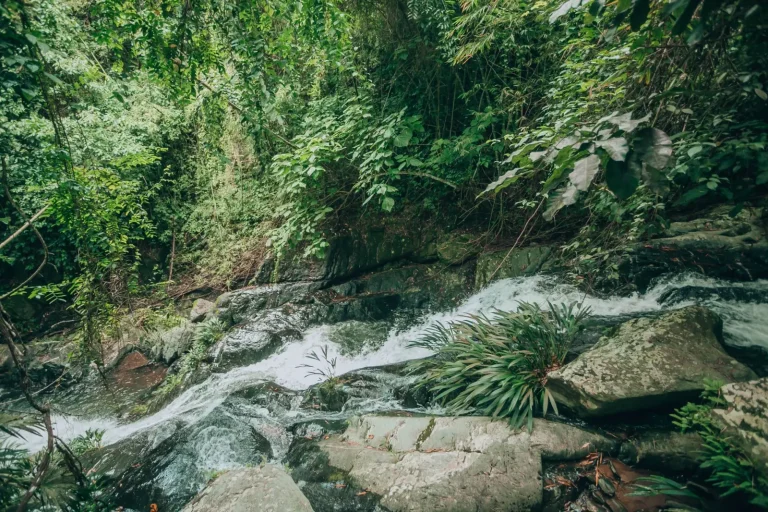
The hinterland sits at elevation, but water still moves through it constantly. Creeks appear suddenly and then seem to vanish, only to reappear fifty meters downstream. During dry periods, some of these waterways become intermittent – flowing only after rain. But even in the driest months, the ground beneath the forest remains damp. This creates a particular kind of ground instability. Sections of track that look solid can be surprisingly soft underfoot. Rocks that appear to be sitting on firm ground might shift slightly when you step on them because the earth beneath has absorbed water and lost some of its structural integrity.
Most trails in the hinterland follow water courses or run parallel to them. This makes sense logistically – water finds the easiest path downhill, and historically, people followed the same routes. But it also means that the tracks themselves are often the drainage channels during heavy rain. A walk that’s perfectly manageable in dry conditions can become slippery and treacherous within hours of significant rainfall. The forest canopy is dense enough that rain doesn’t reach the ground uniformly. Some sections of track stay relatively dry while others become saturated. This uneven distribution of moisture can make footing unpredictable.
Navigation and Trail Markers
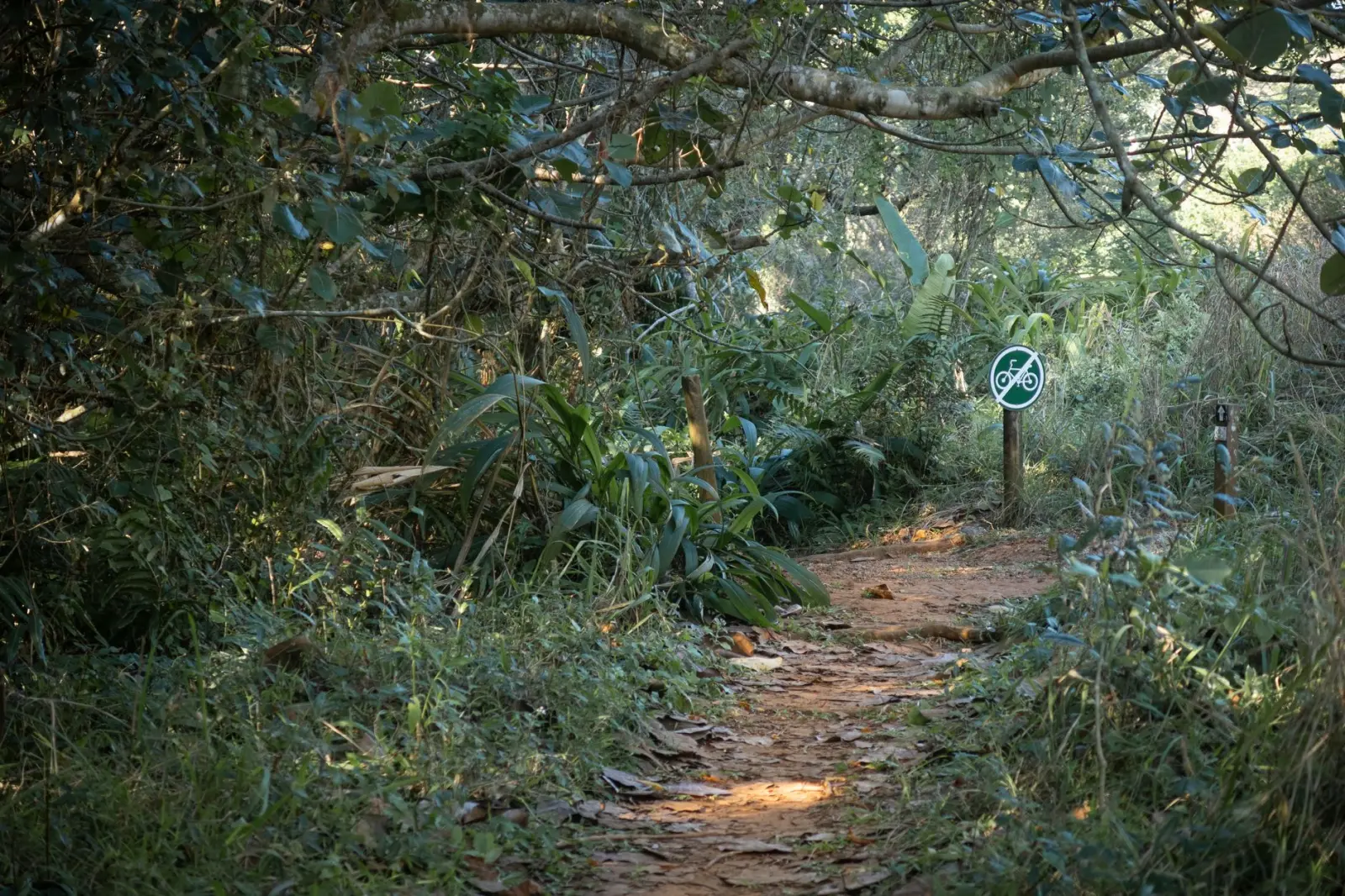
The hinterland has a network of established trails, but they’re not always marked with the same consistency you’d find in other regions. Some tracks have regular blazes or painted markers. Others rely on foot traffic to maintain visibility. During wetter months, when vegetation grows more aggressively, the distinction between the actual trail and surrounding forest can blur. This isn’t a serious navigation problem if you’re paying attention, but it’s easy to drift off the main path if you’re moving quickly or if your focus is elsewhere.
The forest itself provides navigation cues if you know how to read them. Foot traffic creates a visible line through the undergrowth. Exposed roots and worn rock indicate where most people step. But relying entirely on these visual cues without a map or GPS is risky. The forest is large enough that getting turned around is possible, and once you’re off the main trail, the density of vegetation makes it difficult to reorient quickly. Most walkers carry a phone with offline maps or a basic GPS device. It’s not paranoia; it’s practical acknowledgment of how easy it is to lose track of direction in dense subtropical forest.
Timing and Light
The canopy density affects how long you have usable daylight. Even on clear days, the forest floor is noticeably dimmer than open country. This matters more than you’d expect for timing walks. A trail that takes three hours in midday conditions might feel slower in late afternoon, partly because you’re moving more carefully on a darker forest floor and partly because fatigue is accumulating. Most experienced walkers aim to start early and finish well before dusk. The forest doesn’t become dangerous at dark, but it becomes significantly less pleasant. Navigating roots and uneven ground by headlamp is possible but tedious.
Seasonal light changes affect this more than latitude alone would suggest. Winter days are noticeably shorter, and the angle of the sun means that afternoon light doesn’t penetrate the canopy as effectively. Summer offers longer days, but the heat and humidity increase the rate at which fatigue accumulates. Spring and autumn tend to be the most balanced seasons for walking – temperatures are moderate, humidity is slightly lower, and daylight hours are sufficient without creating the fatigue burden of summer.
What Catches People Unprepared
Most experienced walkers who struggle in the hinterland aren’t underprepared in the obvious ways. They have water, they have a map, they have appropriate footwear. What catches them is underestimating how the combination of factors – humidity, uneven ground, root systems, and the psychological weight of dense forest – accumulates over time. A walk that feels manageable for the first hour can feel substantially harder by hour three, even if the terrain hasn’t changed. The forest doesn’t get steeper or more difficult; your body just registers the cumulative demands more acutely.
Footwear matters more here than on open trails. Shoes that work fine on firm ground can feel unstable on the spongy forest floor. Ankle support becomes relevant not because you’re navigating technical terrain, but because the ground is constantly shifting slightly beneath your feet. Trail runners work for experienced walkers who know the routes, but hiking boots with proper ankle support are more forgiving for people still learning how the forest moves.
Weather changes are another common source of difficulty. The hinterland can generate its own weather systems. Clear skies can give way to heavy rain within minutes, particularly in the warmer months. This isn’t a dramatic mountain weather event; it’s a subtropical forest phenomenon. Rain here is often warm and comes with wind that moves through the canopy unpredictably. Visibility drops, the ground becomes slippery, and the psychological experience of being in dense forest during heavy rain is more intense than most people anticipate.
After multiple walks through these forests, the hinterland becomes less mysterious. You learn which sections stay damp year-round, which tracks are prone to becoming overgrown, and how your body responds to the particular demands of subtropical forest walking. The forest doesn’t change, but your relationship to it does. What initially feels chaotic becomes legible. What seemed difficult becomes simply demanding in a way you understand and can plan for.