
Most rainforest walks advertised as having “river views” deliver something closer to river sounds – a distant rush of water somewhere beyond the canopy, audible but invisible. After years of walking through tropical forests across Southeast Asia, Central America, and Australia, I’ve learned that the gap between what a trail description promises and what you actually experience often comes down to water levels, season, and how close the path genuinely runs to flowing water.
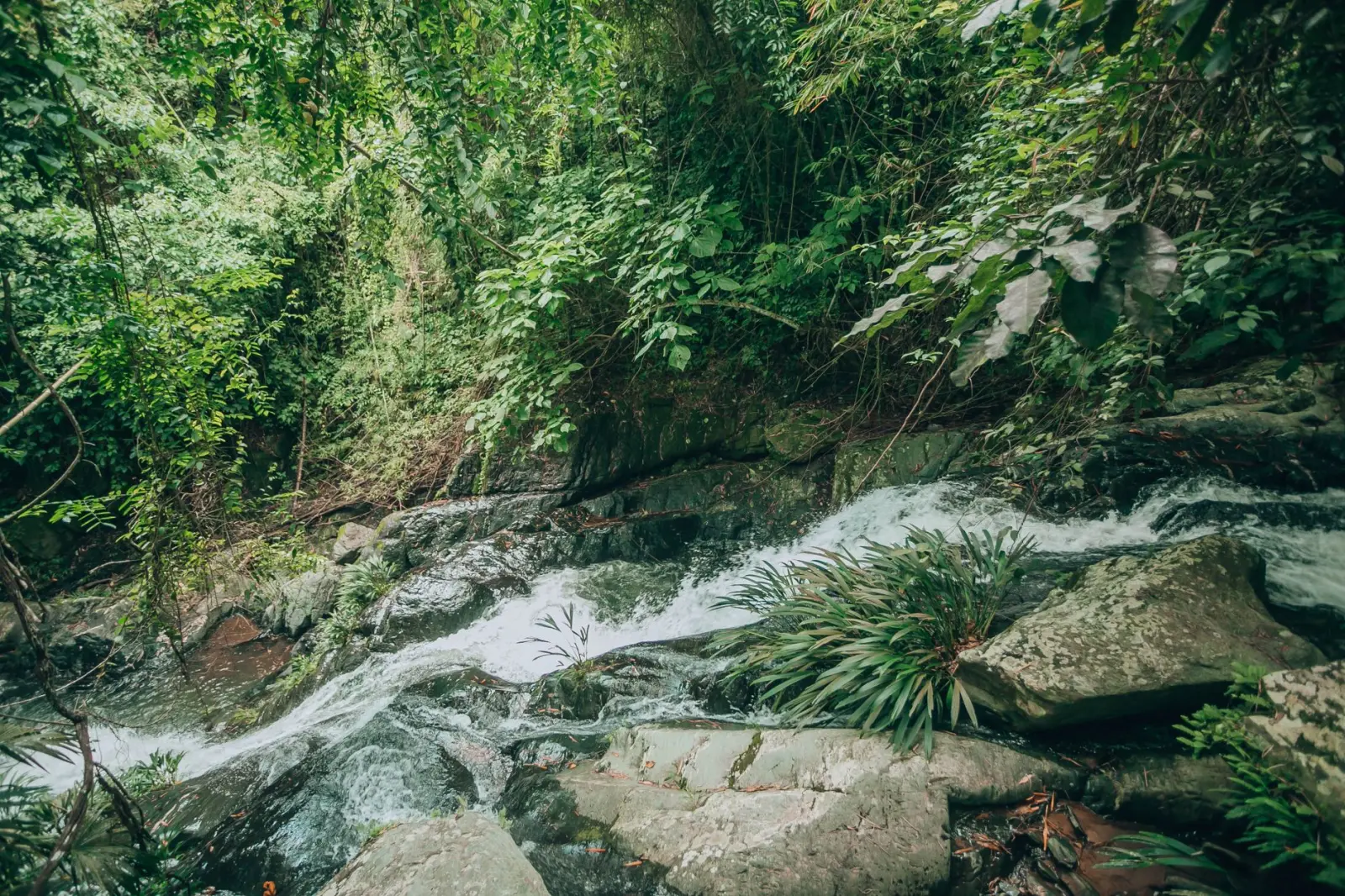
The reality of rainforest river walks is less romantic than it appears in photographs. You’re moving through dense vegetation where the canopy blocks direct sunlight, the ground stays perpetually damp, and the river itself – when visible – is often muddy, fast-moving, and not particularly photogenic unless you catch it at specific times of day. But when conditions align, when you’re on a trail that actually hugs the water rather than merely approaching it, the experience shifts entirely. The sound becomes immersive rather than background noise. The air changes temperature. You notice how the forest structure differs at the water’s edge.
What Makes a River Walk Functional
A trail that truly works with river views typically needs three things working together. First, the path must stay within 20 to 50 meters of the water for a meaningful stretch – not just at a single viewpoint. Second, the river itself needs sufficient volume and movement to be worth the walk; a trickle through rocks doesn’t justify the extra effort and mud. Third, the forest canopy around that river section should be open enough that you’re not walking in near-total darkness at midday.
I’ve found that trails in gorges or canyons almost always deliver better river views than those in flat rainforest. The terrain forces the path closer to water, and the canyon walls create natural clearings overhead. The Routeburn Track in New Zealand’s South Island spends significant stretches running right alongside the Routeburn River, and the gorge structure means you’re genuinely walking beside moving water, not just near it. Similarly, trails that follow river valleys uphill tend to maintain proximity to water throughout, whereas trails that cut across ridges or through open forest only touch the river at specific points.
Seasonal Realities That Change Everything
Dry season versus wet season fundamentally alters what you see and experience. In dry season, river levels drop, exposing banks, boulders, and sometimes sandy beaches. The water moves slower. The forest floor is less waterlogged, so the walk is physically easier. But the river becomes less visually dramatic, and some trails that require river crossings become impassable because water levels are too low to wade safely.
Wet season brings the opposite trade-offs. Rivers swell, move faster, and create genuine white-water sections. The landscape feels alive with water movement. But trails alongside rivers become treacherous – muddy, slippery, and prone to sudden flooding. I’ve turned back from trails in Central America during wet season when water levels rose faster than forecast, cutting off safe passage. The forest also becomes more oppressive in wet season; the canopy seems thicker, light is dimmer, and the combination of heat and humidity makes longer walks genuinely exhausting.
The best timing for most rainforest river walks falls in the shoulder season – early dry season or late dry season, depending on the region. Water levels are still substantial enough to be visually interesting, but the trails are stable and the forest floor is negotiable. This window is often only a few weeks long, which is why timing matters more than most travelers realize.
Specific Walks That Deliver
The Milford Track in New Zealand’s Fiordland runs alongside the Clinton River for much of its length, and the river genuinely dominates the experience. The trail stays close enough that you hear constant water movement, and the river valley is narrow enough that the forest canopy opens into genuine sky. This walk requires a booking months in advance, which filters out casual walkers, and the logistics (ferry, bus, accommodation) mean you’re committed to the full four-day experience. But the river is present throughout, not just at designated viewpoints.
In Costa Rica, the Arenal area has several trails that work reasonably well. The Hanging Bridges trail near La Fortuna actually crosses a river canyon multiple times, though the river itself is often obscured by the canopy below. More reliable is the Mistico Arenal Hanging Bridges Park, where the trail genuinely moves through the forest alongside water features. It’s not a wilderness experience – the trail is well-maintained and crowded – but the river element is genuine.
The Inca Trail in Peru is often oversold as a river walk, which is misleading. The trail does cross rivers multiple times, and some sections run alongside water, but the Urubamba River is distant for most of the trek, and the focus is genuinely on mountain scenery and archaeological sites rather than river views. If your primary goal is river proximity, this walk disappoints.
In Australia, the Lyrebird Track in the Dandenong Ranges near Melbourne follows a creek for significant stretches, and the forest there is genuinely lush and cool. The water is clear, the canopy is open enough to see properly, and the walk is short enough that you’re not dealing with serious fatigue. It’s not a rainforest in the tropical sense, but it delivers the experience of walking beside moving water through dense forest.
Physical Demands You Need to Anticipate
Rainforest walks alongside rivers are consistently more demanding than their distance suggests. The ground is uneven, often slippery, and your attention is divided between watching the river and watching your footing. River crossings, even shallow ones, slow you down significantly. If the trail involves scrambling over rocks or navigating muddy banks, a three-kilometer walk can take as long as a five-kilometer ridge trail on stable ground.
Humidity is relentless. Even in dry season, the air near water is thick and moisture-laden. Your body works harder to regulate temperature, and fatigue accumulates faster than on exposed trails. I’ve seen fit hikers struggle on short river walks simply because they underestimated the physical toll of moving through that environment for several hours.
Insects are also more present near water. Mosquitoes, sandflies, and various biting insects congregate around rivers, particularly in early morning and late afternoon. This isn’t a reason to avoid these walks, but it’s a practical reality that affects comfort and requires preparation. Lightweight long sleeves and insect repellent are not optional.
What Matters When Choosing Your Walk
Start by being specific about what “river views” means to you. If you want dramatic white-water sections and gorge scenery, you need a trail in mountainous terrain where the river has cut a valley. If you want calm water and forest reflection, you need a flatter section where the river moves slowly. These are different experiences, and conflating them leads to disappointment.
Check recent trip reports from people who walked the trail in the specific season you’re planning. Guidebooks and tourism websites are often outdated about water levels and trail conditions. A trail that works beautifully in June might be impassable in September. Local hiking forums and recent blog posts give you real information about what you’ll actually encounter.
Consider your fitness level honestly. A trail that takes four hours for experienced hikers might take six or seven hours for someone less accustomed to uneven terrain and sustained effort. That difference matters when you’re in a rainforest environment where darkness falls quickly and you’re moving through dense vegetation.
Finally, accept that some of the best rainforest river walks are not the famous ones. The Milford Track and Routeburn are excellent, but they’re also crowded and require advance booking. Lesser-known trails in the same regions often deliver comparable experiences with fewer people. This requires local knowledge or willingness to research beyond the standard guidebooks, but the payoff is genuine solitude alongside water in a genuinely wild setting.