
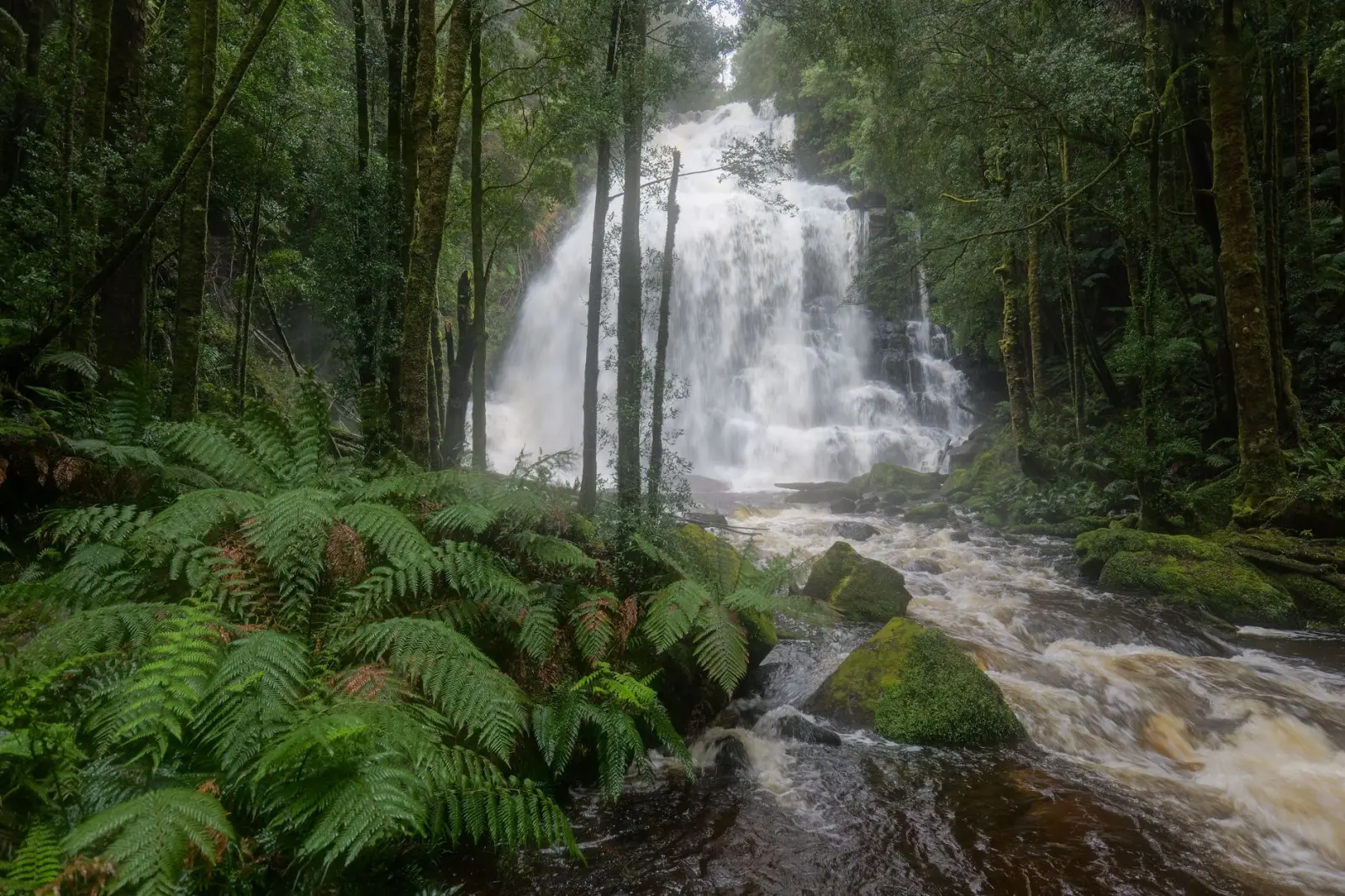
Spending time in Australian rainforest streams teaches you quickly that the water is not empty. What looks like a quiet pool or a shallow run holds a surprising amount of life, much of it hidden or active only under specific conditions. The crayfish that inhabit these systems are part of a larger freshwater community that responds directly to water quality, temperature, and seasonal flow patterns. After years of moving through these streams – sometimes wading, sometimes just observing from the bank – you develop a sense of what to look for and when.
The crayfish found in Australian rainforests are not the large, aggressive species you might encounter in cooler southern waters or in aquarium hobby circles. The rainforest varieties tend to be smaller, more cryptic, and far more sensitive to their immediate environment. They occupy niches that depend on stable conditions: consistent water temperature, adequate dissolved oxygen, and reliable shelter in the form of leaf litter, root systems, or rock crevices. When these conditions shift, the populations shift with them, sometimes dramatically.
Where to Find Them and Why
Rainforest crayfish are not distributed evenly throughout a stream system. They cluster in specific zones based on water flow, substrate composition, and the availability of organic matter. The slower pools where leaves accumulate and decompose are prime habitat. These pools stay cooler than exposed runs and provide both food and shelter. The crayfish spend daylight hours buried or wedged into crevices, emerging at dusk and during the night to feed on detritus and small invertebrates.
The transition zones where a rapid run meets a deeper pool are also productive areas. Water slows here, allowing fine sediment and organic material to settle. Crayfish position themselves at these boundaries, taking advantage of the food supply without committing fully to the slower water where predation risk might be higher. In my experience, if you’re looking for crayfish activity, these edges often yield better results than the pools themselves, particularly in the late afternoon when they begin to move.
Seasonal timing matters considerably. During the dry season, many rainforest streams become disconnected chains of pools. Crayfish populations concentrate in these remaining refuges, making them easier to locate but also more vulnerable to water quality deterioration. A pool that looks stable can deteriorate rapidly if temperatures spike or if organic decomposition consumes too much oxygen. The wet season brings different challenges: high flows can displace populations downstream, and turbid water makes observation nearly impossible.
The Broader Freshwater Community
Crayfish do not exist in isolation. Their presence or absence often signals something about the overall health of the stream. Where crayfish populations are robust, you typically find a diverse assemblage of other invertebrates: aquatic insects, small fish, shrimp, and snails. Where crayfish are sparse or absent, the reasons usually relate to water quality, temperature stress, or habitat degradation. I have noticed that streams with heavy silt loads or consistently elevated temperatures rarely support healthy crayfish populations, even when other conditions appear suitable.
The invertebrate community also includes predators and competitors. Native fish species, particularly small gobies and gudgeons, feed on crayfish eggs and juveniles. Introduced species like mosquitofish are more aggressive and can suppress crayfish recruitment in some systems. Aquatic insect larvae, especially the larger dragonfly and damselfly nymphs, will take crayfish juveniles when the opportunity arises. This predation pressure is normal and expected, but it becomes a serious concern when the predator-prey balance shifts due to environmental stress or species introductions.
Water Quality and Sensitivity
Crayfish are relatively sensitive to changes in water chemistry and temperature. Rainforest streams typically maintain stable conditions year-round, with temperatures ranging from around 15 to 22 degrees Celsius depending on location and elevation. Crayfish thrive in this range. When temperatures climb above 25 degrees for sustained periods, stress becomes visible: reduced activity, poor feeding, and increased susceptibility to disease. I have observed populations decline noticeably following unusually warm dry seasons.
Dissolved oxygen is another critical factor that often goes unnoticed by casual observers. Rainforest streams with good riparian cover and moderate flow generally maintain adequate oxygen levels. Problems arise in isolated pools during the dry season, particularly where decomposing organic matter is heavy. A pool that smells of sulfur or appears anoxic at depth will not support crayfish. The presence of crayfish in a pool is, in fact, a reasonable indicator that oxygen levels are adequate.
Sedimentation and turbidity affect crayfish populations in ways that are not always immediately obvious. Fine silt can clog the gills of filter-feeding invertebrates and can also smother the substrate where crayfish burrow. Streams that have been logged or cleared upstream often carry higher sediment loads, and the crayfish populations in these systems tend to be diminished or absent. The relationship is not always linear – some sediment is normal and expected – but chronic high turbidity reliably correlates with reduced crayfish abundance.
Behavioral Patterns Worth Noting
Crayfish behavior changes with season, time of day, and water conditions. During the day, they remain hidden. At night, they emerge to feed and move through the stream. This nocturnal pattern is so consistent that daytime observations of crayfish are relatively rare unless you are deliberately disturbing rocks or leaf litter to expose them. If you do see a crayfish out in the open during daylight, it often signals stress or displacement – the animal may have been flushed from its shelter by high water or may be seeking a new refuge due to habitat degradation.
Reproduction timing is seasonal and tied to water temperature and flow patterns. In most Australian rainforest systems, breeding occurs in the cooler months, and juveniles recruit into the population during the wet season when food is abundant and flow provides dispersal opportunities. The timing varies slightly depending on latitude and elevation, but the general pattern holds across the range. Understanding this cycle helps explain why crayfish populations in a given stream may appear stable one year and depleted the next – recruitment failure in a single season can take years to recover.
Crayfish also respond to disturbance in predictable ways. If you turn over rocks or dig through leaf litter, you will displace individuals. They typically seek refuge in deeper water or move downstream. Repeated disturbance in a localized area can cause populations to abandon that section of stream entirely. This is worth remembering if you are conducting surveys or simply exploring: the act of observation inevitably changes what you observe.
Practical Realities of Stream Exploration
If you spend time in rainforest streams looking for crayfish and freshwater life, you need to accept that you will not see everything. The majority of the community is nocturnal or cryptic. What you observe during daylight hours represents only a fraction of what is actually present. Night surveys, if you can conduct them safely, reveal far more activity and diversity. Even then, you are sampling a subset of the total population.
The physical demands of stream exploration are often underestimated. Rainforest streams are typically steep, with slippery rocks and dense vegetation. Moving through them requires careful footing and awareness of water flow. Sudden rain upstream can cause rapid water level rises, and the banks can be unstable. Spending hours in cool water also brings fatigue and hypothermia risk, even in tropical systems. These practical constraints mean that most observations are necessarily brief and localized.
The crayfish and other freshwater life in Australian rainforests exist within systems that are more fragile than they initially appear. They depend on stable conditions, adequate habitat, and protection from introduced species. Disturbance upstream – whether from logging, agriculture, or development – propagates downstream and affects populations far removed from the source. Conservation of these systems requires understanding not just the crayfish themselves, but the entire network of conditions that support them.