
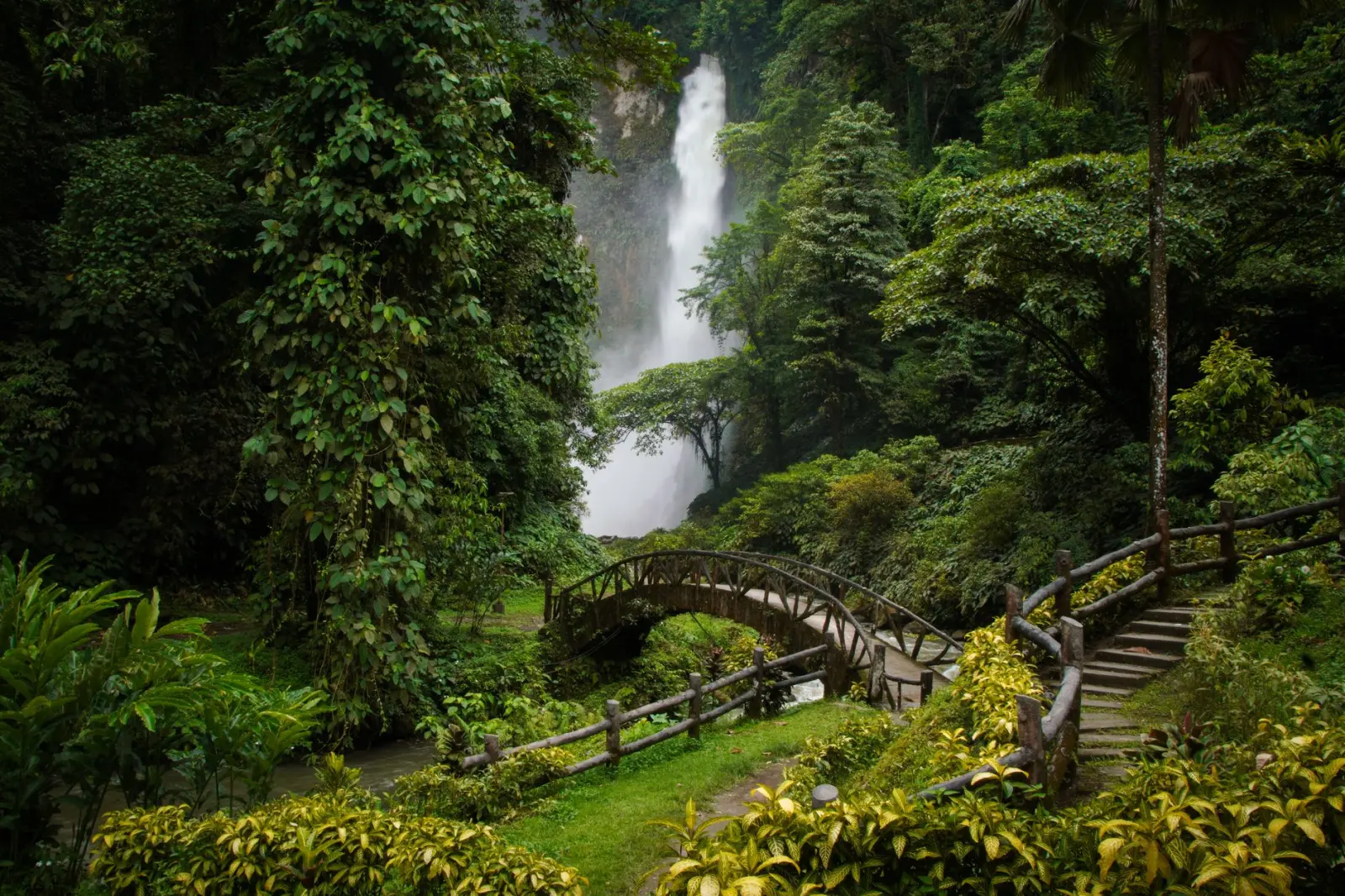
Ellinjaa Falls sits in a pocket of rainforest that feels isolated despite being relatively accessible from the Atherton Tablelands. The forest around it operates on its own logic – one that doesn’t always align with what visitors anticipate when they arrive. I’ve walked these trails in different seasons and at different times of day, and the experience shifts noticeably depending on when you show up and how much time you’re willing to spend.
The immediate forest around the falls is dense and humid year-round. The canopy here is thick enough that even on bright days, the light feels filtered and soft. The ground is consistently damp, not from recent rain necessarily, but from the sheer volume of moisture the rainforest holds. Tree roots run across the path in places, and the soil itself is dark and rich, the kind that holds water like a sponge. Walking requires attention to foot placement, particularly if you’ve arrived after rain or during the wetter months.
Most people arrive expecting a short, straightforward walk to a viewpoint. The main trail to the falls themselves is indeed brief – usually under 20 minutes from the car park. But the forest extends well beyond that obvious destination, and many visitors miss the fact that there are options for longer exploration if you’re willing to look for them and move slowly.
Seasonal Patterns and Water Conditions
The falls themselves respond dramatically to rainfall. During the dry season (roughly May through September), Ellinjaa is a modest cascade – still worth seeing, but not the thundering torrent that appears after heavy rain. The surrounding forest changes with the seasons too, though not in the dramatic way that temperate forests do. What changes is the insect activity, the density of certain plant growth, and the overall moisture level.
The wet season (December through March) brings humidity that feels almost solid. Walking becomes a sweating proposition, and the forest floor becomes genuinely slippery. Leeches are present during this period, particularly after rain. They’re not dangerous, but they’re persistent and annoying, and many people find them reason enough to avoid the forest during peak wet season. The insect pressure generally is higher – mosquitoes, sandflies, and other biters are more active when conditions are warm and humid.
The shoulder months (April, May, October, November) tend to offer the best balance. The forest is still green and water-filled, but the extreme humidity and insect pressure ease off. The falls usually have decent flow, and walking is genuinely comfortable rather than a test of endurance.
What the Trails Actually Offer
The main walk to the falls is well-marked and maintained. It’s popular for good reason – the destination is legitimate and the walk is short enough that families with young children can manage it. But if you’re interested in the forest itself rather than just the falls as a photo stop, you need to think differently about your time there.
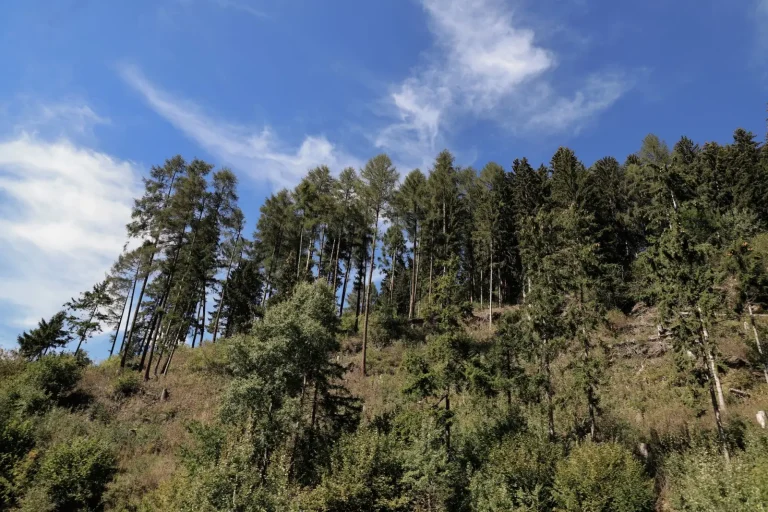
The forest composition around Ellinjaa is typical of this elevation and rainfall zone on the Tablelands. You’ll see strangler figs, brush box, and various palms. The understory is thick with ferns and smaller plants that thrive in the shade and moisture. Birds are present but often heard rather than seen – the rainforest canopy is dense enough that spotting them requires patience and luck. Early morning is genuinely better for wildlife observation, though most visitors arrive mid-morning after the drive from town.
The trail network isn’t extensive in the way that some other rainforest walks are. You’re not looking at a system of interconnected loops or long through-walks. What exists is the main path to the falls and a few secondary routes that extend the experience if you’re interested. Some of these secondary paths are less obvious and require a bit of exploration to find.
Physical Realities and Timing
The terrain is not steep in the way that mountain walks are steep, but it’s uneven. The combination of roots, rocks, and the general unevenness of the forest floor means you can’t move quickly even if you want to. A reasonable pace for the main walk is something like 2 kilometers per hour, which sounds slow until you’re actually doing it and realizing that’s a reasonable speed given the conditions.
Fatigue accumulates differently in the rainforest than on open trails. The humidity and the constant attention required for footing means that people tire faster than they expect. Someone who walks comfortably on flat suburban paths might find a 45-minute rainforest walk genuinely tiring. This isn’t a criticism of the forest or the walker – it’s just how the conditions work. The lack of breeze, the moisture-laden air, and the mental engagement required all contribute.
Most people spend 1 to 1.5 hours total at Ellinjaa, including the walk in, time at the falls, and the walk out. If you want to actually explore the forest rather than just tick off the falls, you need to allow more time. Two to three hours gives you room to move slowly, sit and observe, and explore some of the less obvious areas.
What Often Gets Overlooked
The forest floor itself is worth attention if you slow down enough to notice it. The leaf litter, the fungi, the insects and smaller creatures – there’s a whole ecosystem operating at ground level that most visitors walk past without registering. Fungi are particularly abundant in the rainforest, and depending on the season, you’ll see various species at different stages of fruiting and decomposition.
The sound environment changes as you move through the forest. Closer to the car park and main trail, there’s often noise from other visitors. Move further in or arrive early, and the soundscape shifts to bird calls, water, and the general ambient sound of the forest. This shift is noticeable and affects how the place feels.
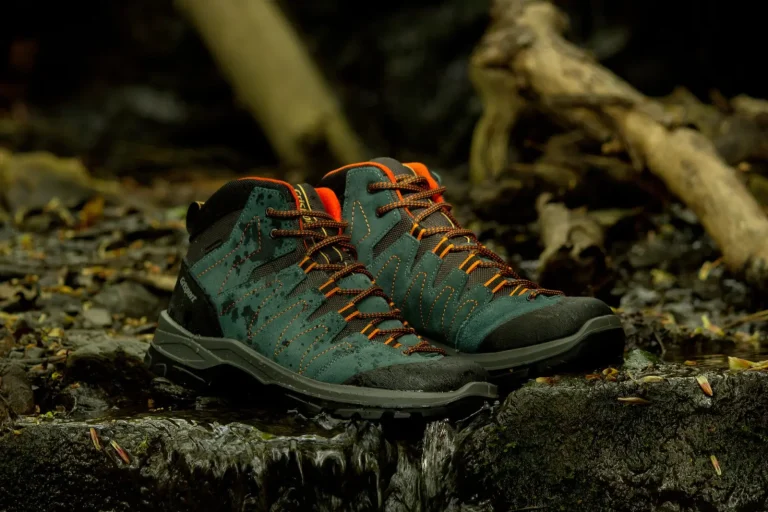
Water crossings are minor on the main trail but present nonetheless. During dry periods, some of these are barely noticeable. After rain, they can be slippery and require careful footing. Proper footwear matters more than people typically assume. Thongs or casual sneakers are genuinely risky on wet forest floors. Shoes with decent grip and ankle support make a real difference in how safely and comfortably you can move.
The forest around Ellinjaa doesn’t demand specialized knowledge or advanced bushwalking skills, but it does reward attention and realistic expectations about pace and conditions. It’s a place where moving slowly and observing carefully reveals more than rushing through to see the falls and leave. The rainforest operates on its own timeline, and adjusting to that rhythm rather than fighting against it makes the experience substantially better.