Bindarri National Park sits in the New England region of New South Wales, and the forest around it isn’t what most people imagine when they picture a national park walk. There’s no dramatic escarpment, no famous waterfall at the end of a three-hour hike. Instead, you get tall eucalypt forest that feels genuinely remote, even though you’re never more than a few kilometres from a road. That disconnect between proximity and isolation is worth understanding before you head out.
The park itself is modest in size, but the surrounding forest extends well beyond the official boundaries. Most visitors stick to the marked trails within the park proper, and there’s good reason for that. The forest floor is thick with fallen branches, the understory is dense in places, and navigation becomes genuinely difficult once you step off maintained track. I’ve watched people confidently leave the trail thinking they’ll just explore for ten minutes, only to spend forty minutes finding their way back out. The trees look similar in every direction. Your phone signal drops. The light changes constantly under the canopy.
Timing and Seasonal Realities
The best window for forest exploration here runs from late autumn through early spring. Winter brings wet conditions that turn the forest floor into something closer to bog than dirt, and the temperature drops enough that you lose warmth quickly if you’re stationary. Summer is simply too hot. The shade helps, but the humidity sits heavy, and the flies become a genuine problem. I’ve been there in December when the heat combined with the insect pressure made even short walks feel exhausting. By February, the forest canopy is so dense that the ground stays damp even after dry weeks.
Spring – September and October – offers the most comfortable conditions. The temperature sits in the mid-to-high teens, the humidity is manageable, and the ground has dried out from winter rains but hasn’t baked hard. This is also when the forest is most active. Bird calls are constant, and you’ll see more wildlife movement. That said, spring also brings ticks, which are a real consideration in this region. They’re small, persistent, and easy to miss. Long pants and checking yourself thoroughly afterward isn’t optional.
What the Trails Actually Involve
The marked walking tracks in and around Bindarri range from short nature walks of thirty minutes to longer loops that take three to four hours. The shorter walks are genuinely easy, but they’re also crowded on weekends and don’t give you much sense of the forest’s depth. The longer trails are where things get interesting, but they also reveal the park’s limitations. The track maintenance is inconsistent. In some sections, the path is clear and well-defined. In others, it’s easy to lose the trail entirely, especially after heavy rain when water has redistributed leaf litter and obscured the worn path.
The elevation changes are gentle. There’s no real climbing, which sounds appealing until you realize that gentle slopes through dense forest can be more tiring than steeper, more direct routes. Your legs don’t get the rhythm of a proper climb. Instead, you’re constantly stepping over fallen logs, navigating around muddy patches, and adjusting your pace to match the terrain’s whims. A four-kilometre walk here takes longer and feels more demanding than the distance suggests.
Water crossings are common, and this is where seasonal variation matters most. In dry months, the creeks are barely flowing. In winter and spring, they’re full and sometimes impassable without careful route-finding. I’ve seen people turn back from walks they’d planned because a creek that’s normally ankle-deep has become genuinely difficult to cross. The park doesn’t provide alternative routes, so you either find a way across or go back.
Navigation and Self-Reliance
The park provides maps at the visitor area, and they’re reasonably accurate. The problem is that maps don’t capture the real texture of walking here. They show the trail, but they don’t show how overgrown sections are, where water damage has compromised the path, or how similar the forest looks in every direction. A GPS unit is genuinely useful, not just for safety but for confirming you’re actually on the trail when it becomes unclear. Phone-based maps work, but your signal is unreliable, and battery drain is faster under heavy tree cover.
Most people walk these trails without incident, and the park isn’t genuinely dangerous. But it does require a degree of self-reliance that some visitors underestimate. If you get turned around, you need to be able to stay calm, retrace your steps, or use your phone to navigate back. The park doesn’t have ranger patrols on the trails. If you’re injured, you’re responsible for getting yourself out or calling for help and waiting. This sounds dramatic, but it’s the reality of walking in a regional park that doesn’t have the infrastructure of more popular destinations.
The Forest Itself
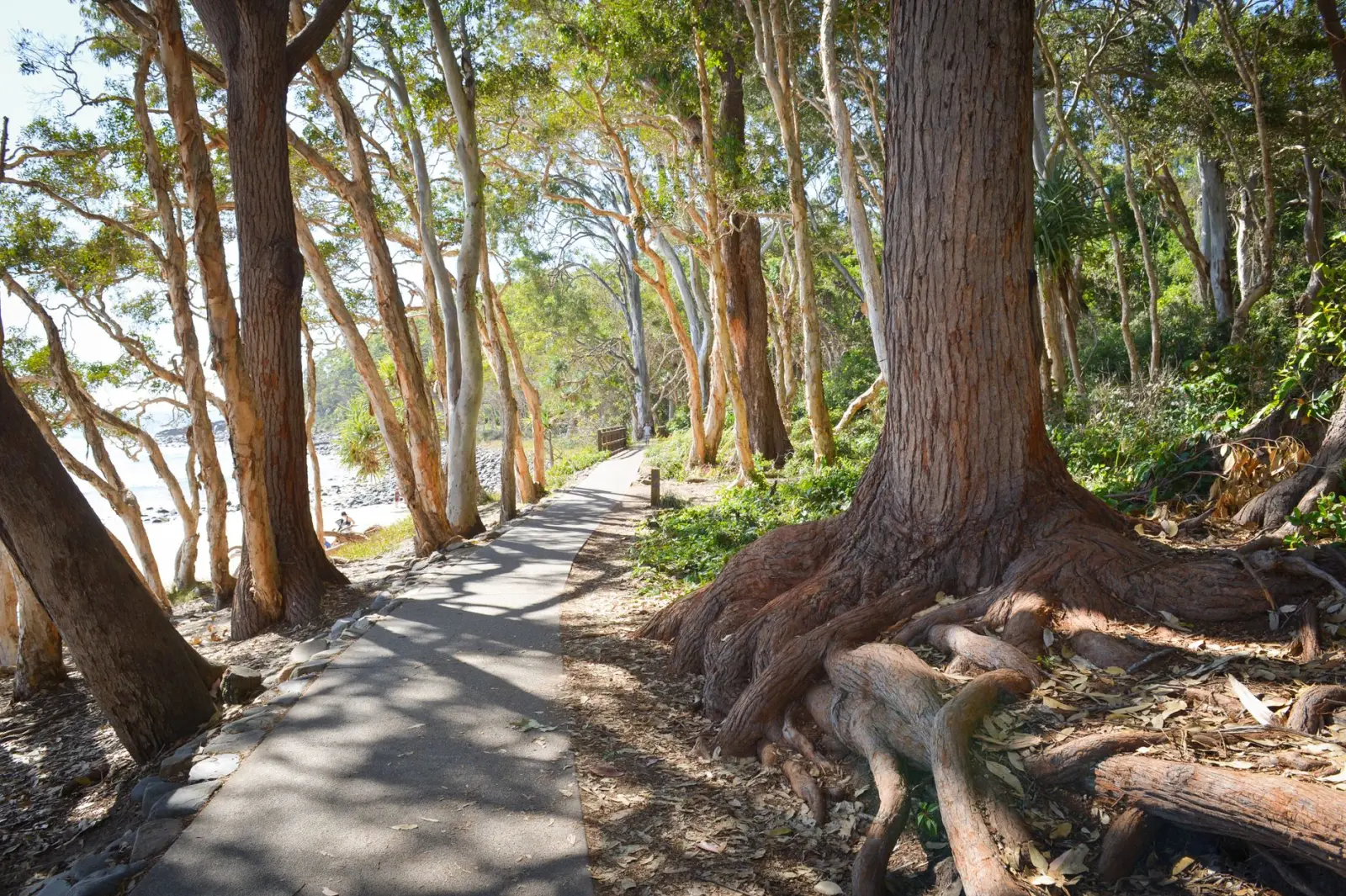
The dominant trees are tall eucalypts – mostly stringybarks and messmates – with a thick understory of smaller trees and shrubs. The canopy is dense enough that even at midday, the light is filtered and soft. The forest floor is carpeted with fallen leaves and branches, and the smell is distinctive: eucalypt oil, damp earth, and something that’s hard to describe but unmistakably Australian bush. If you’re coming from more manicured walking environments, the sheer amount of deadfall can be surprising. It’s not neglect; it’s just how these forests function.
Wildlife is present but not obvious. You’ll hear more than you see. Kookaburras, currawongs, and various other birds are vocal, especially in the morning and late afternoon. Wallabies move through the understory, and you might catch glimpses of them if you’re walking quietly and paying attention. Snakes exist in the forest, but encounters are rare, and they’re far more interested in leaving you alone than the reverse. The main animals you’ll actually interact with are the ones you can’t see: leeches in wet months and, as mentioned, ticks year-round.
The forest changes character depending on where you are. Some sections are more open, with less understory and clearer walking. Others are almost impenetrably dense. The variation keeps the experience from becoming monotonous, but it also means that a walk that’s described as “moderate” might feel significantly harder depending on which sections you encounter and in what condition.
The reality of exploring forest around Bindarri is that it’s rewarding precisely because it doesn’t cater heavily to casual visitors. You’re walking through a functioning ecosystem, not a park designed for tourism. The trails are there, the forest is accessible, and the experience is genuinely quieter than most walking destinations. But it requires realistic expectations about what you’re getting into: a modest walk in genuine bush, not a scenic destination with a payoff at the end. The payoff is the walk itself.