The forests around Kuranda sit in a particular climatic pocket that shapes everything about walking there. The Atherton Tablelands receive consistent rainfall year-round, which means the ground stays perpetually damp and the vegetation grows densely. This isn’t a dry bushwalk where you can move quickly and predictably. The trails here demand a different pace and a different mindset, one that accounts for moisture, root systems, and the sheer density of growth pressing in from both sides.
Most people arrive at Kuranda from the coast or from Cairns, often after traveling through drier country. The shift in environment is immediate and somewhat disorienting. The air feels heavier. The light changes as soon as you step into the canopy. Visibility drops. What seemed like a straightforward walk on a map becomes something more complex once you’re actually moving through it.
The Physical Reality of the Terrain
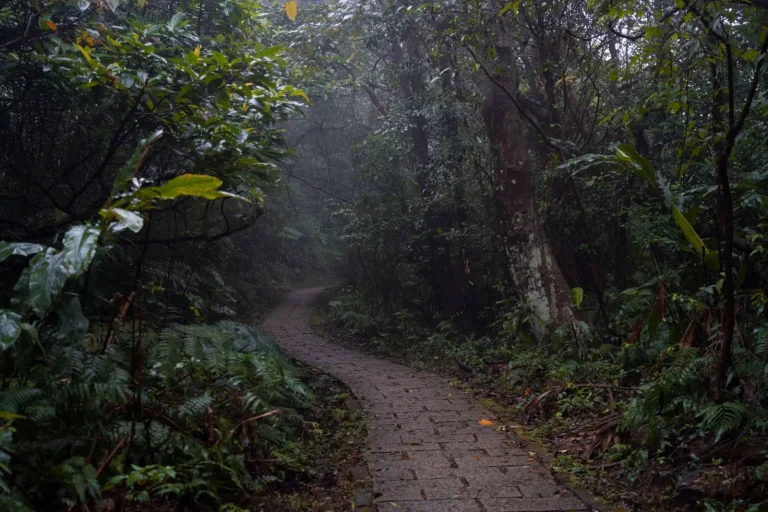
The ground beneath your feet is rarely stable in the way you might expect from a “walking trail.” Roots are everywhere – some obvious, some hidden under moss or leaf litter. The soil itself compacts unevenly. In wetter sections, what looks like solid ground can shift slightly when you put weight on it. This isn’t dangerous in most cases, but it demands constant attention. Your ankles work harder here than on a standard gravel path. People who walk regularly on flat surfaces sometimes underestimate this. After an hour on Kuranda’s forest trails, your lower legs have done considerably more work than the distance covered would suggest.
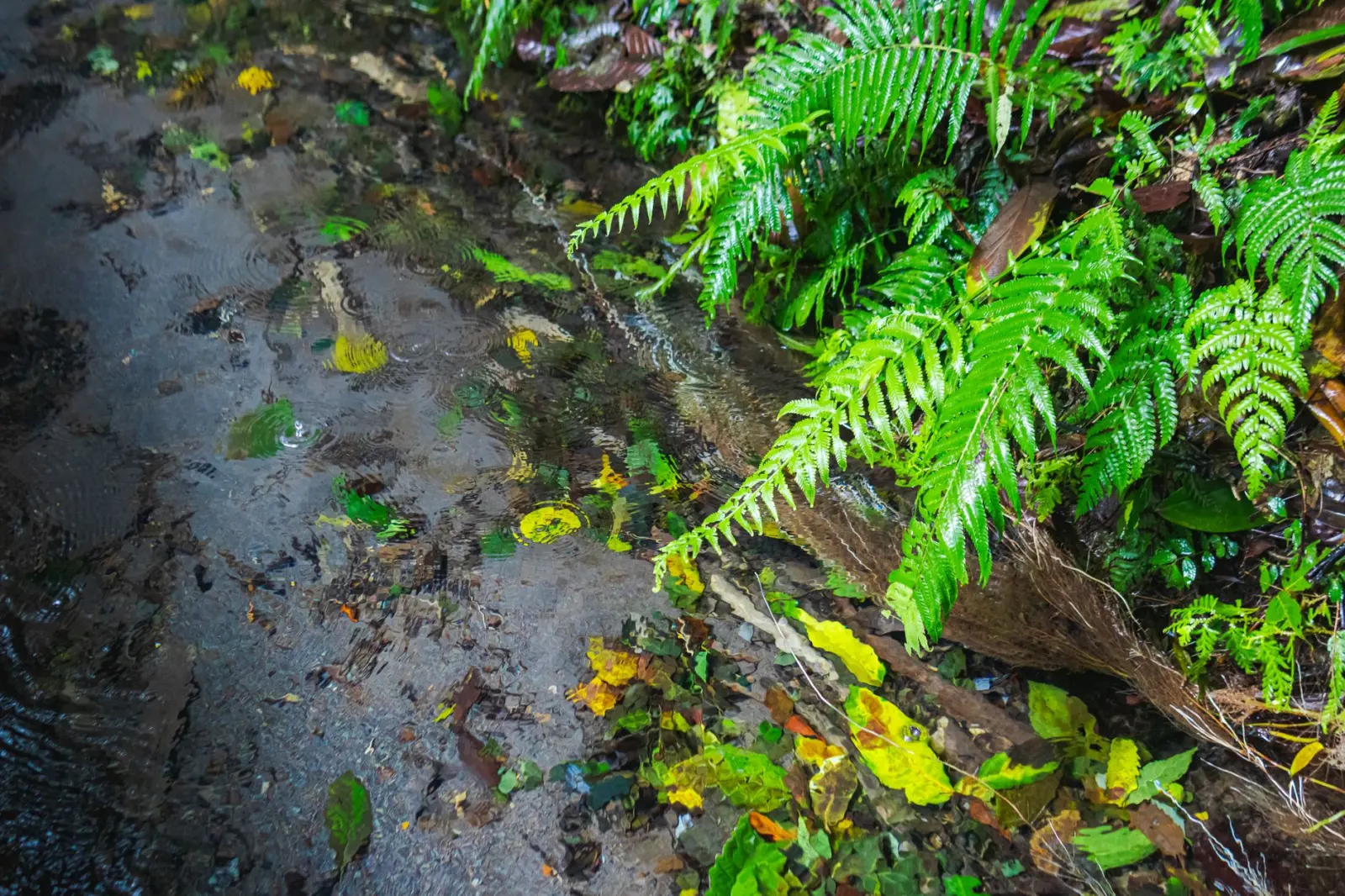
The humidity creates its own set of demands. Even when it’s not actively raining, moisture hangs in the air and settles on every surface. Your clothes stick to your skin. Your hands become slippery. If you’re carrying anything – a camera, binoculars, a phone – condensation forms on lenses and screens within minutes. Sweat doesn’t evaporate; it just accumulates. This affects your energy expenditure more than people anticipate. Your body works harder to regulate temperature in this environment.
Vegetation encroaches on many of the trails. Depending on the season and how recently the track has been cleared, branches hang at head height, vines cross the path, and ferns brush against your legs. This isn’t a problem in itself, but it means you can’t settle into an easy rhythm. You’re constantly adjusting your posture, ducking, stepping around obstacles. Over two or three hours, this becomes fatiguing in a way that flat-ground walking isn’t.
Timing and Distance Are Misleading
A trail marked as three kilometers doesn’t feel like three kilometers. The combination of uneven footing, moisture, and vegetation means your actual pace is considerably slower than it would be on a standard path. What might take forty minutes on a city footpath could take ninety minutes here. People often misjudge this and end up walking longer than they intended, which matters when you’re trying to catch a train or return to accommodation before dark.
The light changes quickly in rainforest. Even on a clear day, the canopy filters so much light that dusk arrives earlier than your watch suggests. By the time you realize you’ve lost the brightness you were counting on, the trail becomes noticeably harder to navigate. This is worth factoring in when you’re planning a walk. If you start late in the afternoon, you’re gambling with the light.
What Actually Happens on Popular Routes
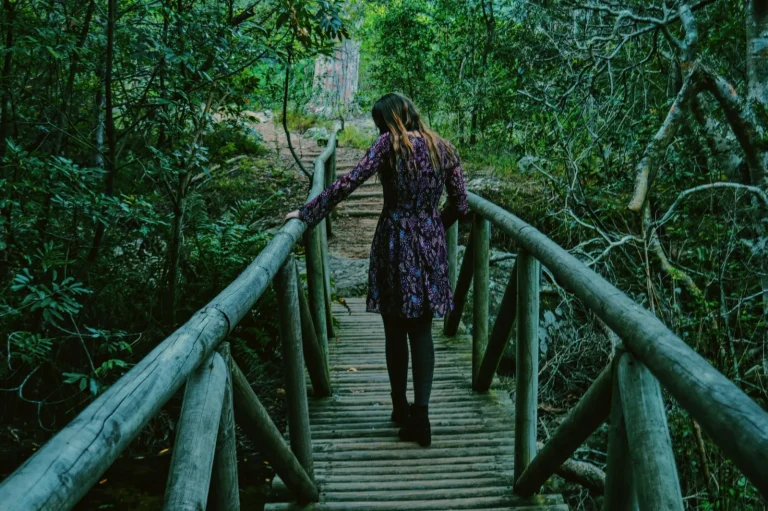
The trails closest to the Kuranda Scenic Railway station and the main village tend to be well-maintained and clearly marked. The Barron Falls circuit is probably the most-walked route in the area. It’s accessible, relatively short, and offers a genuine forest experience without requiring serious fitness. But even here, the ground is technical. The steps down to the falls are steep and often wet. The handrails help, but they’re also a sign that the terrain is genuinely challenging in places.
The Kuranda Rainforest Gardens and the nearby walking paths are gentler options, though they’re less “forest walk” and more “curated garden experience.” If you’re after actual rainforest – the kind where you feel genuinely in the bush rather than on a managed path – you need to venture further from the main tourist infrastructure.
The Wrights Lookout trail offers views across the Barron Gorge and involves a moderate climb. It’s popular with people who want more than a casual stroll but aren’t looking for a full day’s hiking. The ascent is steady rather than steep, which is manageable, but the footing is uneven throughout. By the time you reach the lookout, your legs have worked considerably harder than the elevation gain alone would suggest.
Practical Considerations That Matter
Footwear is critical. Flat-soled shoes or sandals are a mistake. You need something with grip and ankle support. The moisture means standard hiking boots can become uncomfortable if they’re not designed for tropical conditions – they tend to stay wet and can cause blistering. Trail shoes with good tread and a stiffer sole work better than heavier boots. Your feet will be damp by the end of the walk regardless, so accepting that and choosing footwear that drains quickly is more practical than trying to stay dry.
Water is essential, more so than in drier environments. The humidity and the physical demands of the terrain mean you dehydrate faster than you might realize. A liter is a minimum; two liters is better if you’re planning a walk longer than an hour. The water sources along the trails are generally not safe to drink without treatment, so carrying what you need from the start is the only reliable approach.
Insect repellent is worth considering, particularly during the warmer months. Mosquitoes are present, especially near water. Leeches are also a possibility in very wet conditions, though they’re not common on the main trails. If you encounter one, salt or insect repellent will make it release, and the bite itself, while unpleasant, is minor.
The trails can be slippery after rain, sometimes for hours afterward. If you’re planning a walk and it’s rained recently, expect the ground to be more treacherous than usual. The moss that grows on rocks and roots becomes particularly slick. This isn’t a reason to avoid walking – the forest is beautiful after rain – but it’s a reason to move more carefully and allow extra time.
Walking alone is possible on the main trails, but they’re also busy enough that you’ll encounter other people regularly. The forest itself, despite its density, doesn’t feel isolated or threatening. The sounds are constant – birds, insects, water – which is oddly reassuring. Getting lost is unlikely if you stick to marked trails, though the vegetation can make it easy to miss a turn if you’re not paying attention.
The experience of walking through Kuranda’s forests is genuinely rewarding, but it’s also physically demanding in specific ways that aren’t immediately obvious. The combination of technical footing, humidity, and the need to navigate around vegetation creates a walking experience that’s quite different from what most people encounter in temperate climates. Understanding this beforehand – not as a warning, but as realistic expectation – makes the walk itself more enjoyable and less likely to become an exhausting slog.