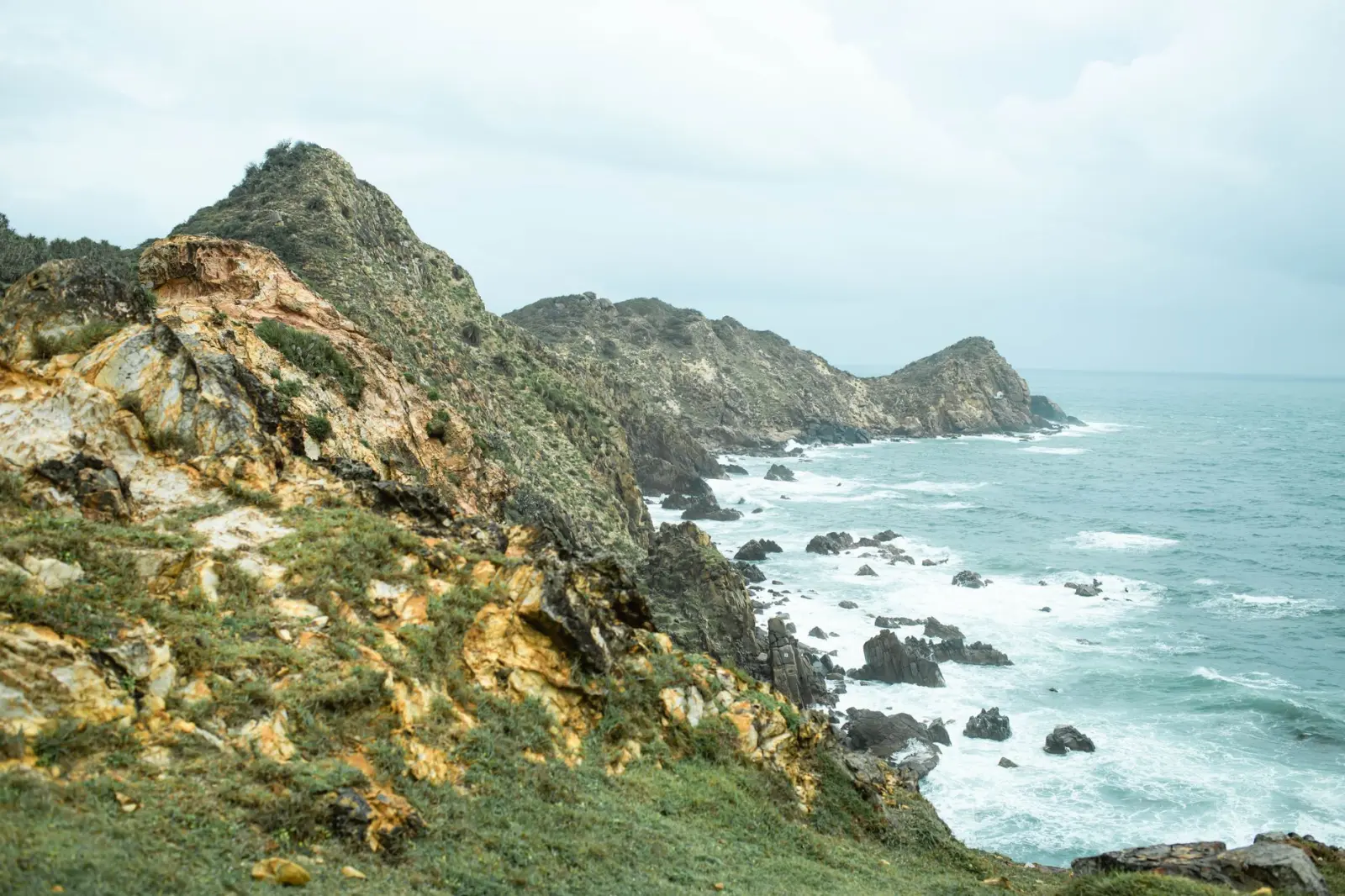
Coastal headlands present one of the more peculiar environments where rainforest attempts to take hold. After spending time observing these transitions – moving between open, wind-scoured terrain and dense forest – the process becomes less mysterious but no less interesting. The rainforest doesn’t simply march inland from the shoreline. Instead, it advances in fits and starts, following microtopography and soil conditions that most casual observers miss entirely.
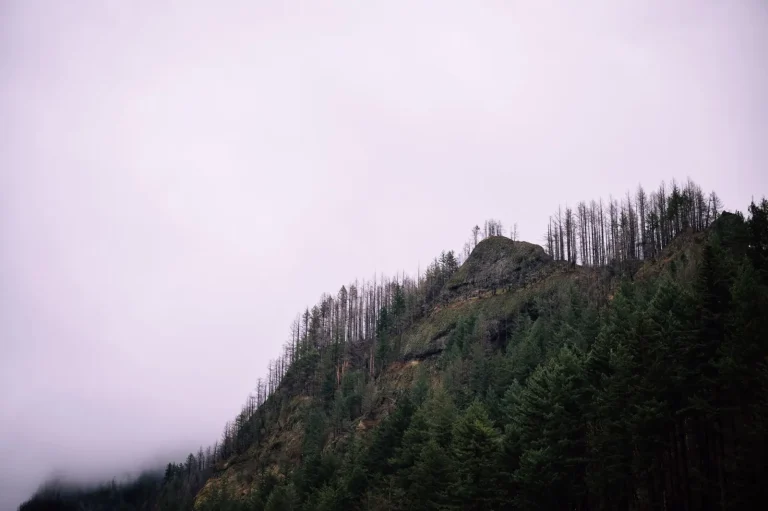
The initial barrier is straightforward: salt spray and wind. On exposed headlands, salt-laden air travels inland with considerable force, particularly during storm systems. This salt accumulates on leaf surfaces and damages plant tissue directly. Most tropical plants cannot tolerate this for long. The result is a sharp ecological boundary. Behind rocky outcrops or in sheltered gullies, vegetation changes abruptly. In front of these natural windbreaks, you see stunted shrubs and grasses. Behind them, taller growth becomes possible. This isn’t random. It reflects the precise point where salt spray intensity drops enough for sensitive species to survive.
Soil Development as the Real Constraint
What strikes you most when examining headland soils is how thin they often are. Exposed rock, weathered granite, or limestone dominates the surface. Rainforest, despite its lush appearance, actually requires decent soil depth and organic matter to establish. On headlands, both are scarce initially. The first plants to arrive – hardy pioneer species like certain ferns, low shrubs, and salt-tolerant grasses – don’t need much. They colonize cracks in rock and shallow pockets where wind-blown debris and organic matter accumulate. This matters because these pioneers begin the slow work of soil building. Their roots break rock further. Their leaf litter, though sparse at first, begins adding organic material.
The process accelerates once soil depth reaches roughly 30 to 50 centimeters. At that threshold, moisture retention improves dramatically. Roots can penetrate deeper and access water reserves during dry periods. More organic matter can accumulate without washing away immediately. This is when you start seeing the transition. Shrubs grow taller. Vines appear. The understory becomes denser. It’s not that rainforest suddenly decides to move in. Rather, conditions finally permit the establishment of species that require deeper root systems and more consistent moisture.
Gully Systems and Moisture Channels
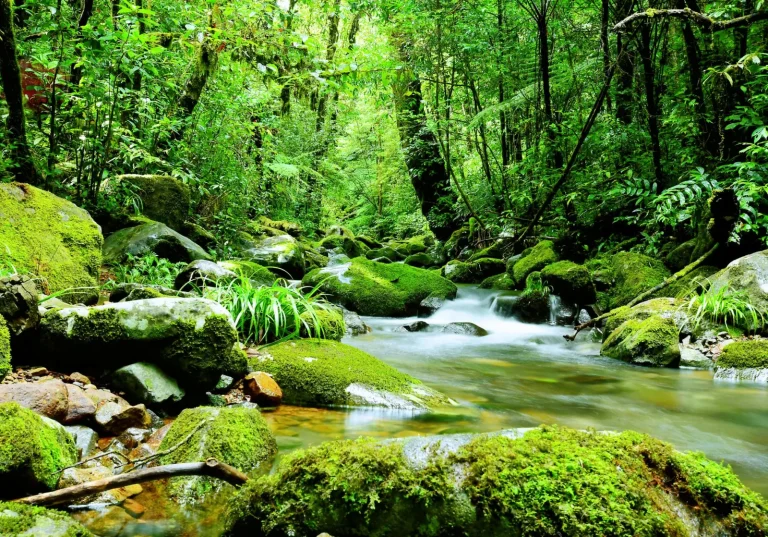
On most headlands, water movement shapes forest distribution as much as wind does. Gullies and drainage lines act as moisture corridors. During rainfall, water concentrates in these channels rather than running evenly across the landscape. The soil stays wetter longer. Vegetation responds to this gradient. You’ll often see rainforest advancing furthest along gully systems, sometimes penetrating well inland while exposed ridge areas remain scrubby and open. This isn’t coincidence. The extra moisture allows species with higher water demands to establish. It also means soil erosion is less severe in gullies because vegetation stabilizes banks and slows water movement.
I’ve observed headlands where rainforest forms a narrow band following a single gully, with open vegetation on either side. The forest edge is sharp, almost as if drawn with a line. This reflects the tight coupling between water availability and plant community composition. Move 20 meters from the gully, and moisture stress becomes limiting again. The species that thrive in the gully – ferns requiring constant humidity, trees with shallow root systems adapted to moist soil – cannot survive on the drier margins.
Salt Tolerance and Species Succession
The plants that establish first on headlands are genuinely salt-tolerant. Certain shrubs accumulate salt in their tissues without damage. Some grasses have waxy leaf coatings that shed salt spray. These pioneer species are not weak or temporary. They’re highly specialized. But they’re also not the species that will eventually dominate. As soil develops and salt spray intensity decreases with increasing distance from shore, different species become competitive. Taller trees gradually outshade the pioneers. Vines establish in the developing understory. Epiphytes – orchids, bromeliads, mosses – begin colonizing branches once humidity rises sufficiently.
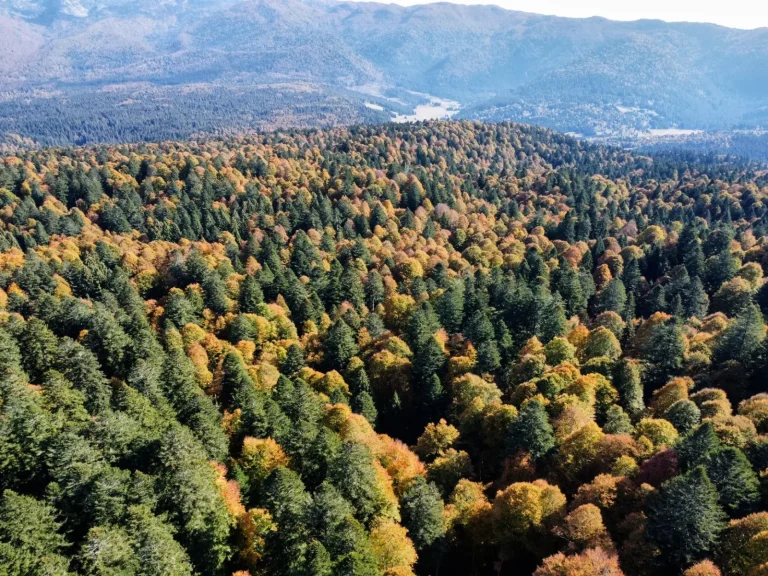
This succession takes decades to centuries, depending on conditions. I’ve seen headlands where the transition from open scrub to closed-canopy rainforest occurs over roughly 100 to 150 meters inland. The gradient is visible in single walk. Near the coast, stunted shrubs and salt-tolerant grasses dominate. Moving inland, shrub height increases. Trees appear scattered, then more densely. Vines become abundant. The canopy closes. Fern diversity explodes in the understory. Each zone represents a stage in the successional process, driven by improving soil conditions and decreasing salt stress.
One detail often overlooked: the role of rock type. Granite headlands develop rainforest differently than limestone headlands. Granite weathers more slowly but produces sandy, well-draining soil. Limestone weathers faster and creates more alkaline conditions initially. These differences affect which pioneer species establish first and how quickly soil chemistry shifts. On limestone, I’ve seen rainforest establish somewhat faster because weathering products create more fertile soil more quickly. On granite, the process is slower but ultimately produces deeper, more stable soils.
Disturbance and Setback
Storms reset the clock on coastal headlands. Strong cyclones or severe storm surge can strip vegetation back to bare rock, erasing decades of succession in hours. I’ve visited headlands after major storms where the forest boundary had moved back inland by 50 meters or more. The recovery begins immediately, but the process restarts. Pioneer species recolonize first. Soil rebuilding begins again. This is why many headlands show a mosaic of different successional stages – some areas recovering from recent disturbance, others in mid-succession, a few reaching mature forest conditions.
Human activity complicates this. Clearing for development, trampling by foot traffic, or even changes in fire regime can arrest succession indefinitely. I’ve seen headlands that would naturally support rainforest held in a scrubby state by repeated disturbance. Once the disturbance stops, succession resumes, but it can take 20 to 30 years before forest conditions return.
What becomes clear after observing these systems repeatedly is that rainforest on coastal headlands isn’t a fixed endpoint. It’s a dynamic process shaped by salt exposure, wind, soil development, water movement, and disturbance history. The forest advances and retreats. Boundaries shift. Species composition changes as conditions evolve. Understanding this requires looking beyond the visible forest edge and examining the underlying gradients that drive plant community patterns. That’s where the real story lies.