
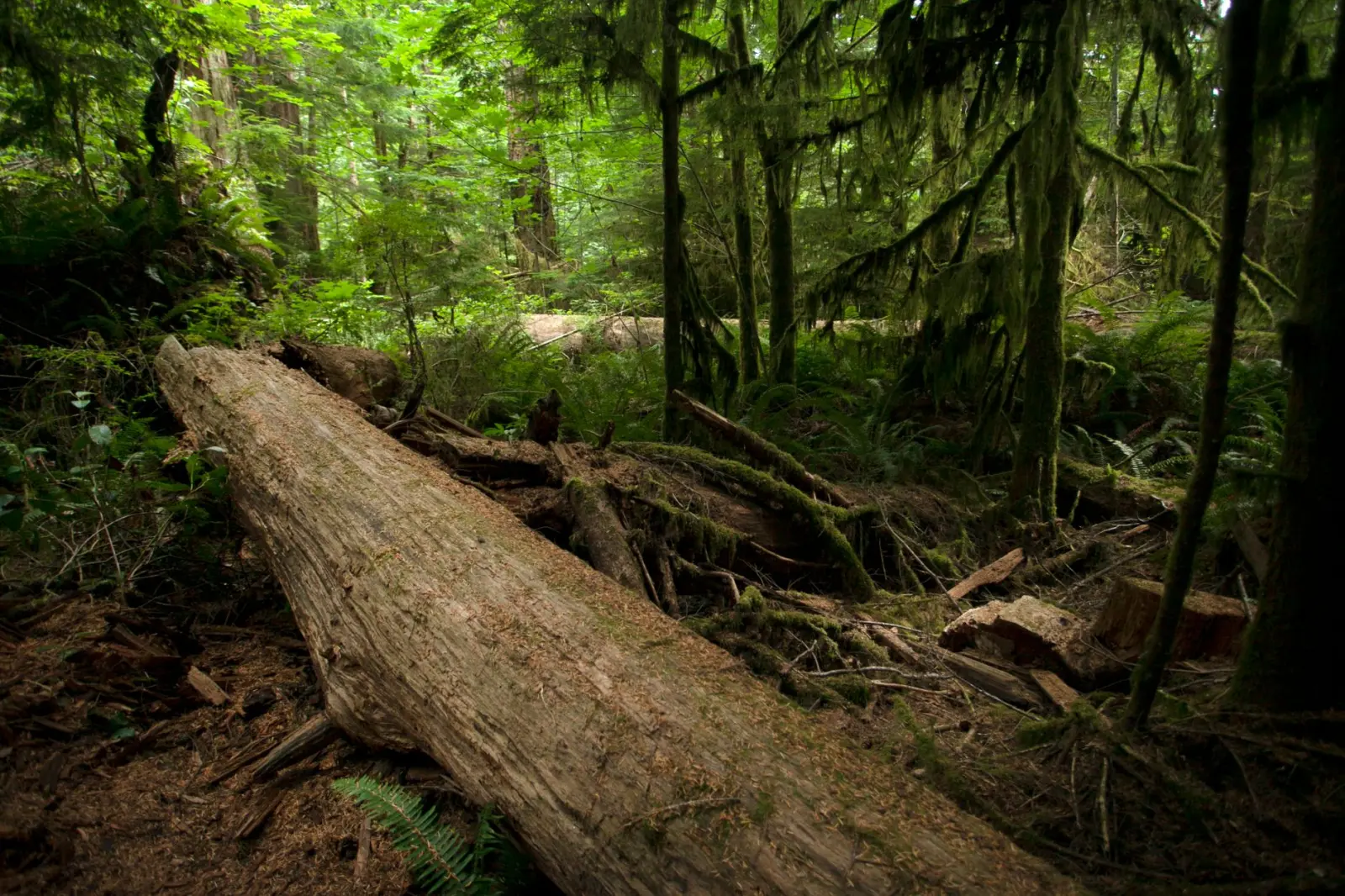
A large tree falls in the rainforest. For weeks, you hear the sound of wood settling, branches snapping under their own weight as they decompose. The canopy opens. Light floods a patch of forest floor that has not seen direct sunlight in decades. Within days, the gap begins to reorganize itself – not randomly, but according to patterns that have shaped tropical forests for millennia.
Gaps are not failures of the forest. They are the forest’s primary mechanism for renewal. I have spent enough time in tropical rainforests to recognize that the popular image of an undisturbed, unchanging jungle is almost entirely false. Rainforests are dynamic systems in constant flux, and gaps are where much of that flux happens. Understanding gaps requires moving past the assumption that the forest is a stable, closed system. It is not. It is a landscape of disturbance, recovery, and competitive reorganization playing out at multiple timescales simultaneously.
The size of a gap matters far more than most people realize. A gap created by a single fallen tree – perhaps 200 to 400 square meters – behaves very differently from a gap created by a windstorm that flattens dozens of trees across several hectares. Small gaps tend to close quickly, within 10 to 20 years, as surrounding trees grow laterally into the open space. Large gaps remain open longer and create conditions that favor pioneer species – fast-growing, light-demanding plants that cannot establish themselves in shade. The distinction between these gap sizes shapes which species colonize, how quickly the forest recovers, and what the forest looks like during the recovery process.
Light as the Primary Resource
In an intact rainforest canopy, light availability at ground level is typically 1 to 2 percent of incident light. In a gap, this can jump to 20, 30, or even 50 percent, depending on gap size and orientation. This change in light regime is the fundamental driver of gap ecology. Species that have been waiting in the understory as seedlings or suppressed juveniles suddenly find conditions suitable for growth. Others that have no presence in the forest arrive as seeds, carried by wind, water, or animals.
What is less obvious is that the increased light does not benefit all plants equally. Shade-tolerant species that dominate the undisturbed forest understory are often poor competitors in high-light conditions. They grow slowly and allocate resources to shade tolerance rather than rapid height growth. Pioneer species, by contrast, are built for gaps. They germinate quickly, grow fast, and reach reproductive maturity within 5 to 15 years. They also tend to be shorter-lived. A pioneer tree that dominates a gap for a decade may be dead or dying by year 20, as shade-tolerant species gradually overtake it.
The light gradient within a gap is also important. The edge of a gap receives more light than the understory but less than the center. This creates a zone where intermediate species – neither full pioneers nor deep-shade specialists – can thrive. These edge communities often have higher diversity than either the gap center or the surrounding forest, because they support species from multiple light niches.
Soil Disturbance and Nutrient Release
When a large tree falls, its root system tears up soil. Depending on the tree’s size and the soil’s cohesion, this can create a mound of exposed earth several meters across and up to 2 meters high. These mounds, called pit-and-mound topography, persist for decades and create microsites with different soil conditions than the surrounding forest floor. The exposed mineral soil in the mound is nutrient-rich but often drier. The pit, where the roots were torn from the ground, tends to accumulate water and organic matter.
Nutrient cycling accelerates in gaps. The decomposition of the fallen tree itself releases nutrients locked in wood. Increased light and temperature in the gap speed decomposition rates. The pioneer vegetation that colonizes the gap typically has high nutrient demands and rapid turnover rates, which further accelerates nutrient cycling. This is one reason why gaps are often more productive, per unit area, than the surrounding forest. The trade-off is that this productivity is temporary. Once shade-tolerant species establish and slow the cycling process, productivity declines again.
Species Composition and Successional Pathways
The trajectory of a gap’s recovery is not predetermined. It depends on which seeds arrive, which seedlings survive the first dry season, and which species manage to establish dominance before being shaded out. I have observed gaps in the same forest that took very different paths to recovery, depending on initial colonization patterns.
Some gaps are colonized primarily by one or two dominant pioneer species that form a nearly monospecific stand for 10 to 15 years. Others develop a diverse mix of pioneers and early-successional species from the start. The difference often comes down to seed availability and dispersal vectors. If a particular pioneer species has a large seed crop in the year the gap opens, and if its seeds are dispersed by wind or water rather than animals, it may saturate the gap before other species arrive. Animal-dispersed species depend on animal movement patterns, which can be unpredictable.
The understory composition before the gap opened also influences recovery. If there was a dense layer of shade-tolerant seedlings waiting beneath the canopy, these may grow rapidly once light becomes available, suppressing pioneer recruitment. If the understory was sparse – perhaps because the fallen tree had been shading a large area for years – then pioneer species may have a clearer window for establishment.
Over time, shade-tolerant species gradually increase in abundance. This process typically takes 30 to 60 years, depending on gap size and the growth rates of the dominant species. During this period, the gap is neither pioneer forest nor mature forest. It is a transitional community with characteristics of both. The diversity of this transitional phase is often higher than the final, shade-dominated state, because it contains species from multiple successional stages.
Disturbance Regimes and Forest Structure
The frequency and size distribution of gaps in a forest determines much of the forest’s overall structure and composition. In forests with frequent large disturbances – from windstorms, landslides, or human logging – pioneer species remain abundant and the forest retains a younger, more dynamic appearance. In forests with infrequent, small disturbances, shade-tolerant species dominate and the forest develops a more closed, uniform canopy.
The natural disturbance regime varies by location. Rainforests in areas prone to hurricanes or severe wind events experience larger, more frequent gaps than forests in sheltered regions. This difference shapes the entire ecological community. A hurricane-prone forest may have 5 to 10 percent of its area in gaps at any given time. A sheltered forest might have only 1 to 2 percent. These differences are not trivial. They translate into different species compositions, different productivity levels, and different responses to climate variability.
One pattern I have noticed repeatedly is that forests with an intermediate disturbance frequency tend to have the highest diversity. This is sometimes called the intermediate disturbance hypothesis. When disturbances are too rare, a few competitive dominants exclude other species. When disturbances are too frequent, only the fastest-growing pioneers persist. An intermediate regime allows both pioneers and shade-tolerant species to coexist, maximizing the range of niches available.
Gaps also influence the spatial heterogeneity of the forest. A forest with many gaps of varying ages creates a mosaic of different-aged patches. This mosaic supports different species at different locations, increasing overall diversity. It also affects animal habitat, water cycling, and nutrient distribution. The forest becomes a landscape of microclimates and microhabitats rather than a uniform environment.
The ecology of rainforest gaps reveals that tropical forests are far more dynamic than their reputation suggests. They depend on disturbance for renewal, diversity, and long-term persistence. Without gaps – whether from natural tree fall, wind events, or other causes – the forest would gradually shift toward a community dominated by a few highly shade-tolerant species, losing much of the structural complexity and biological diversity that characterizes healthy rainforests. The gaps themselves are not damage to the system. They are essential to how the system works.