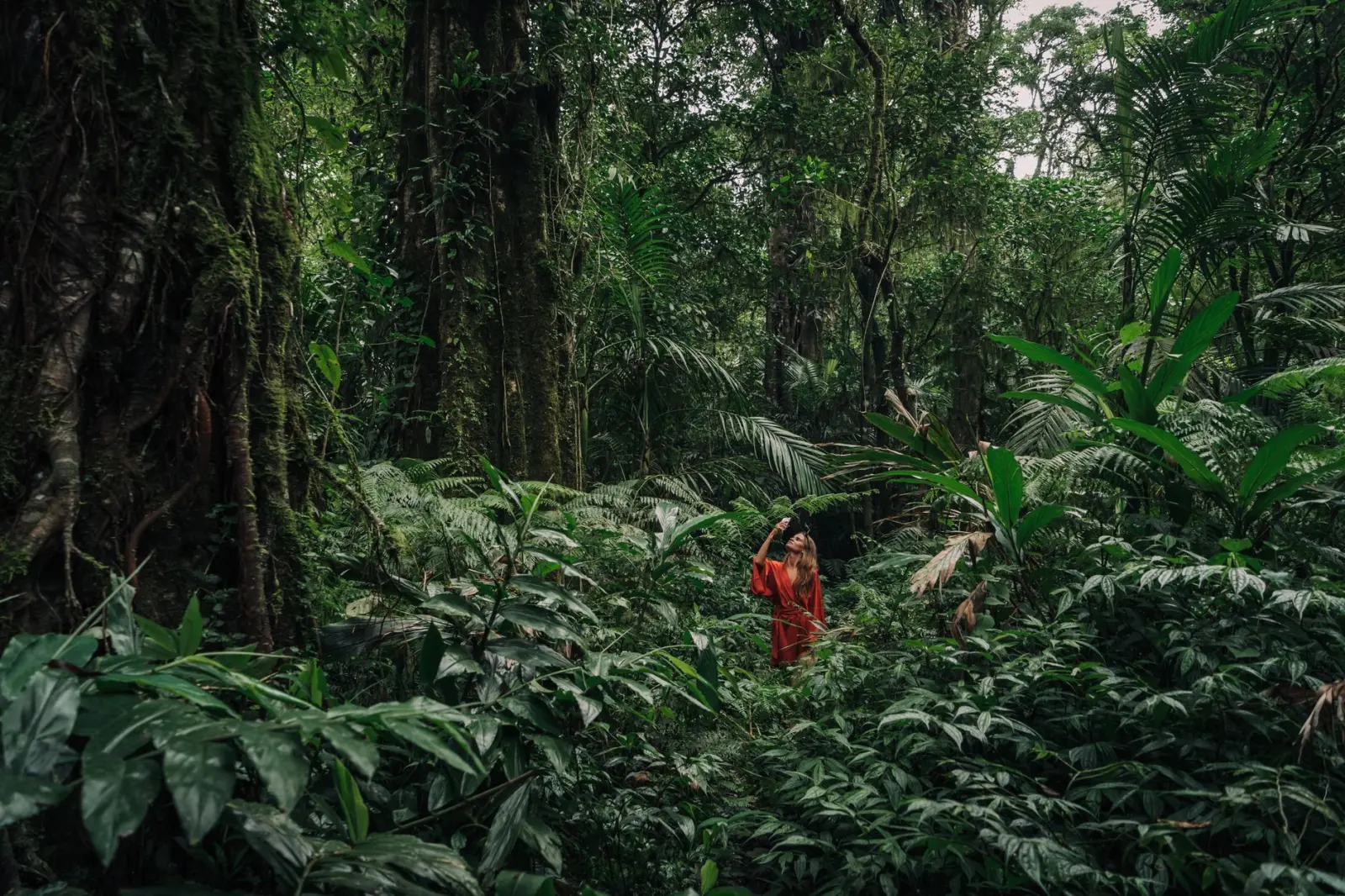
Anyone who has spent time in a montane rainforest knows the shock of temperature swing. You leave the humid afternoon warmth at 2,000 meters elevation and within hours, as the sun drops behind the ridge, the air temperature can fall 15 to 20 degrees Celsius. The canopy that trapped heat all day becomes a radiator, and the thin mountain air holds little thermal mass. Species living here don’t have the luxury of migration or torpor as a standard response. They face this cold every single night, year-round, and have developed a range of strategies that operate on different timescales and energy budgets.
The most immediate adaptation is behavioral. Many animals simply move. Diurnal species retreat to microclimates – dense vegetation, rock crevices, burrows, or the thick leaf litter that insulates better than open air. I have watched howler monkeys settle into the densest part of the canopy as light fades, huddling in groups that reduce individual heat loss through shared body warmth. They don’t sleep deeply; they enter a state of reduced activity that conserves energy without the metabolic cost of true hibernation. Small mammals like rodents and opossums become almost entirely nocturnal or crepuscular in montane zones, timing their activity to warmer hours and sheltering during the coldest pre-dawn period.
Physiological Cold Tolerance
The animals that remain active through cold nights rely on elevated metabolic rates. This is expensive. A small bird or mammal at high elevation burns fuel constantly just to maintain core body temperature. What I have observed repeatedly is that species in these environments tend to have higher baseline metabolic rates than their lowland relatives. They are essentially running their internal furnace hotter all the time. Some species, particularly small mammals and birds, have dense fur or plumage that creates an insulating layer, trapping warm air close to the skin. The density of this insulation varies by season and elevation, and animals in the coldest zones often show thicker coats even in the dry season when you might not expect it.
Vasoconstriction is another key mechanism. Blood vessels in the extremities constrict, reducing blood flow to the skin and appendages. This minimizes heat loss at the surface while maintaining core temperature. You see this in mountain-dwelling species with proportionally smaller ears, tails, and limbs compared to lowland cousins – less surface area exposed to cold air means less heat radiating away. Some species cycle between periods of activity and rest throughout the night, allowing them to recover metabolically between bouts of movement or feeding.
Behavioral Thermoregulation and Grouping
Huddling is not random. In montane regions, I have observed that species often cluster in specific patterns that maximize heat retention. Primates, rodents, and even some bird species form tight groups where individuals take turns occupying the warmer center position. This rotational system is not always obvious, but it happens. The metabolic cost of maintaining body heat is distributed across the group, making survival more efficient than solitary individuals could achieve.
Some species engage in what might be called “pre-cooling” – they allow their body temperature to drop slightly during the coldest hours, reducing the temperature gradient between their body and the environment. This lowers the rate of heat loss. It sounds counterintuitive, but a drop of even 2 to 3 degrees Celsius can mean significant energy savings over an entire night. The animal remains functional and alert, just operating at a slightly lower metabolic set point. Certain high-altitude species can tolerate body temperatures that would be lethal to lowland relatives.
Ecological Positioning and Microhabitat Selection
Where an animal shelters matters enormously. The leaf litter in a montane rainforest can be 30 centimeters deep, and the temperature just 10 centimeters down is measurably warmer than at the surface. Small amphibians, arthropods, and reptiles burrow into this layer. Moisture content is high enough that they don’t desiccate, and the decomposing organic matter generates some residual heat. I have documented temperature differences of 5 to 8 degrees Celsius between the surface and mid-litter depth during cold nights. For a small frog or lizard, this difference is the margin between survival and death.
Rock outcrops and dense vegetation also create thermal refugia. South-facing slopes in the Southern Hemisphere (or north-facing in the Northern Hemisphere) retain more residual heat from the day. Species position themselves accordingly. Trees with thick, rough bark offer better insulation than smooth-barked species. Over evolutionary time, this has influenced species distribution and microhabitat preference. You will find certain animals clustered in specific microhabitats not because of food or predation alone, but because those locations offer the best thermal protection.
Metabolic Flexibility and Energy Storage
Species adapted to montane cold often show remarkable metabolic flexibility. They can shift between different energy pathways depending on food availability and temperature stress. In warmer daylight hours, they feed intensively, building up fat reserves and glycogen stores. At night, they draw on these reserves while simultaneously reducing their overall metabolic demand through behavioral changes. The timing of feeding is tightly coupled to temperature cycles. Many montane species feed most actively in the warmest part of the day, even if this differs from the feeding patterns of their lowland relatives.
Some species have evolved the ability to enter daily torpor – a controlled lowering of body temperature and metabolic rate that lasts only a few hours, not the weeks or months of true hibernation. Small mammals and certain birds in the Andes and other high rainforests use this strategy. They enter torpor during the coldest part of the night, sometimes dropping their body temperature by 10 degrees Celsius or more. The metabolic savings are substantial, but the animal must rewarm before dawn, which also costs energy. The net benefit is positive only when the cold period is predictable and the animal has sufficient fat reserves.
Cold mountain nights in rainforests are not exceptional events – they are the baseline condition. Species living here have not developed emergency responses to cold; they have integrated cold survival into their daily rhythm. The adaptations operate simultaneously: behavioral positioning, physiological thermoregulation, social grouping, and metabolic adjustment all work together. What makes this system resilient is redundancy. If one mechanism fails or is insufficient on a particularly cold night, others compensate. This layered approach is what allows such high biodiversity to persist in environments that, at first glance, seem hostile to tropical life.