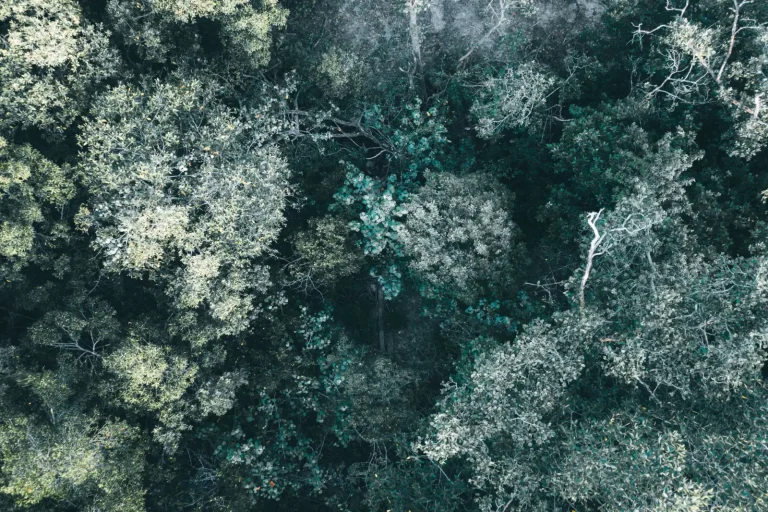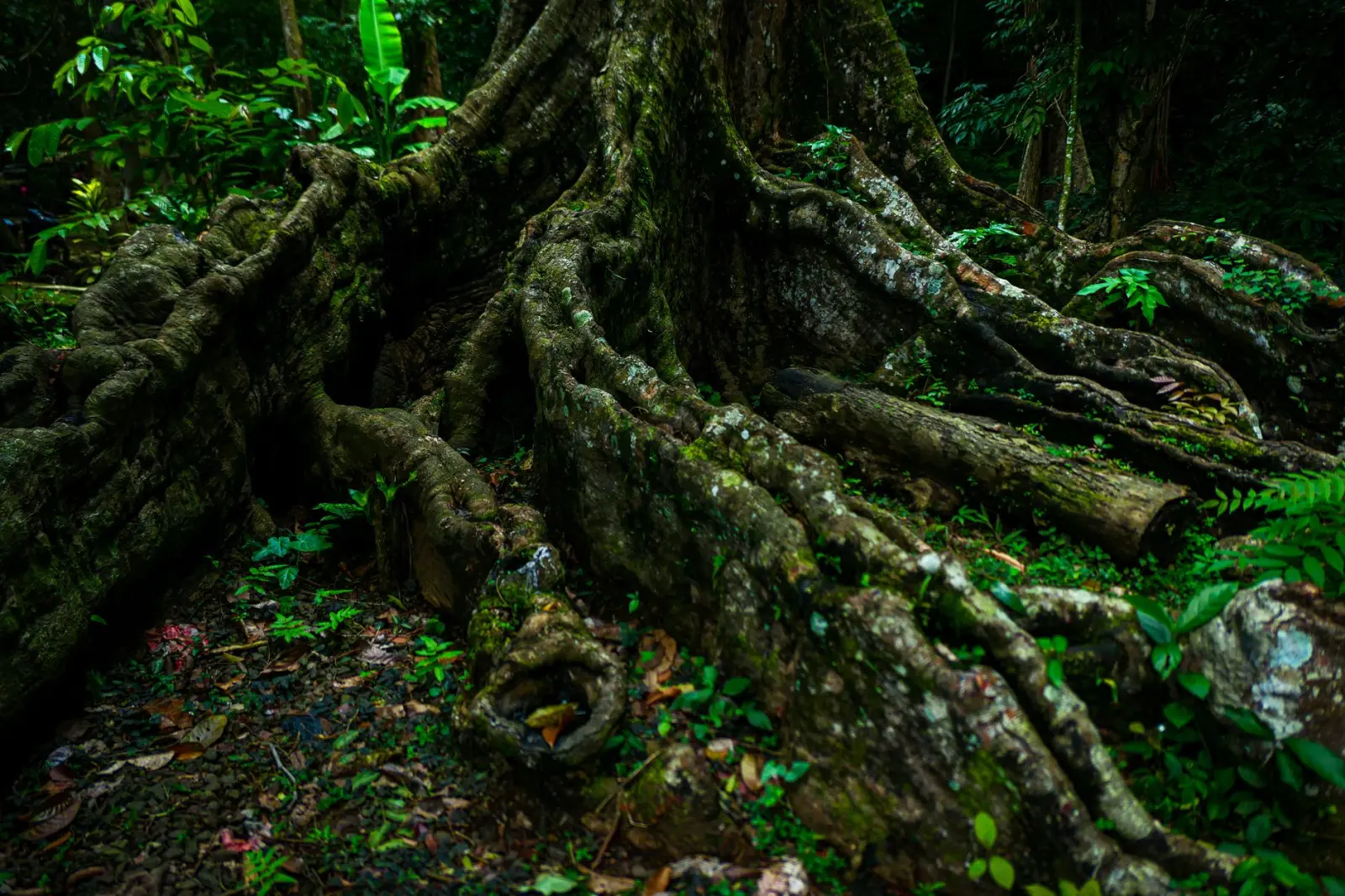
After spending years moving through rainforest understory, you start to notice patterns in how plants organize themselves in near-total darkness. The forest floor receives somewhere between 1 and 5 percent of the sunlight that hits the canopy above. That’s not a minor reduction – it’s a fundamental constraint that reshapes everything about how a plant must function to survive. The plants down here aren’t smaller versions of their canopy relatives. They’re fundamentally different organisms, built around the reality of permanent shade.
The first thing you observe is that most understory plants have adapted their leaf structure in ways that seem counterintuitive at first. Large leaves are common, often much larger than you’d expect from a plant living in shadow. The leaf surface tends to be thinner and more delicate than sun-exposed leaves, with less waxy coating and fewer protective layers. This isn’t weakness – it’s efficiency. A thin leaf can capture more of the limited light that does filter through, and it requires less energy to construct and maintain. The leaf shape often becomes asymmetrical or deeply lobed, which increases surface area without adding structural cost.
The chlorophyll content in these leaves shifts noticeably. Shade-adapted plants produce more chlorophyll per unit of leaf tissue, giving their foliage a darker, richer green than you’d see in full sun. This higher pigment concentration allows them to extract more energy from whatever light wavelengths do penetrate the canopy. The leaf structure itself becomes more efficient at capturing and using diffuse light. Palisade cells – the tightly packed photosynthetic cells in sun leaves – become less pronounced, replaced by more loosely organized mesophyll tissue that spreads light capture across more cells.
The Problem of Energy and Growth
Living in shade creates a genuine energy crisis. A plant needs to photosynthesize enough to build new tissue, maintain existing structure, and reproduce. Under low light, the photosynthetic rate drops dramatically. Many understory plants operate at a razor-thin margin between energy input and energy cost. Growth is slow – sometimes glacially slow. A seedling that would reach maturity in five years in full sun might take fifteen or twenty years in deep shade. This isn’t just a minor inconvenience. It means the plant must be extraordinarily efficient with every bit of energy it produces.
The metabolic strategy shifts accordingly. Understory plants typically allocate more resources to root systems relative to above-ground growth than sun plants do. The roots spread widely and efficiently through the soil, accessing water and nutrients with minimal waste. Many develop mycorrhizal relationships with fungi, essentially outsourcing nutrient acquisition to fungal partners. The plant provides the fungus with photosynthetically produced sugars, and the fungus extends the plant’s effective root reach and nutrient absorption capacity. This partnership is so common in the rainforest understory that it’s almost universal – most plants down here couldn’t survive without it.
Respiration rates in shade-adapted plants are also notably lower than in sun plants. The plant essentially runs on a reduced metabolic budget. This means less energy is wasted as heat, and more of the available carbon can be allocated to growth and reproduction. But there’s a cost: the plant becomes more vulnerable to sudden changes. If a tree falls and suddenly floods the area with light, the shade-adapted plant often can’t respond quickly enough to take advantage. Its photosynthetic machinery is optimized for dim conditions, not bright ones.
Light Quality and Spectral Shifts
The light that reaches the understory isn’t just dimmer – it’s different in composition. The canopy absorbs and filters wavelengths unevenly. Red and blue light, which are most useful for photosynthesis, get absorbed by the upper leaves. What filters down is enriched in far-red wavelengths, which plants can use but less efficiently. Understory plants have evolved pigment systems that respond to this shifted spectrum. Some produce additional carotenoids and xanthophylls, pigments that capture and use the wavelengths that do get through.
The ratio of far-red to red light also triggers developmental responses. A plant sensing high far-red light “knows” it’s in shade and adjusts its growth pattern accordingly. Stems tend to be longer and thinner, a strategy to reach toward any light gaps that might open up. Leaves remain smaller and simpler rather than investing in large, complex foliage that would be energetically expensive to produce and maintain in dim conditions. This is why seedlings in deep shade often look spindly and pale – they’re not unhealthy, they’re adapted to their environment.
Dealing with Moisture and Humidity
The understory is perpetually humid. Evaporation rates are extremely low because there’s little air movement and temperatures stay relatively stable. This creates both opportunities and challenges. The constant moisture means plants don’t need elaborate water-storage systems or thick, waxy leaves to prevent desiccation. Many understory plants have thin, delicate foliage that would wilt instantly in direct sun but thrives in the humid shade.
However, high humidity also means fungal and bacterial pathogens thrive. Disease pressure in the understory is intense. Plants have evolved chemical defenses – antimicrobial compounds in their leaves and stems – to manage this constant microbial assault. Some produce volatile compounds that inhibit fungal growth. Others develop waxy or hairy leaf surfaces that, despite being thin, still provide some barrier against pathogenic invasion. The investment in chemical defense is substantial, but necessary.
Water availability is generally not the limiting factor in rainforest understory. Rainfall is abundant, and the soil stays moist. What matters more is nutrient availability. The dense canopy intercepts most rainfall and channels it down trunks, so water doesn’t percolate evenly through the soil. Nutrients, especially nitrogen and phosphorus, cycle primarily through the dense mat of decomposing leaves and woody debris on the forest floor. Plants that can access this nutrient-rich surface layer – through shallow roots or mycorrhizal networks – have a significant advantage.
Reproductive Strategies Under Constraint
Reproduction in the understory follows different rules than in open habitats. Many understory plants flower sporadically or on long cycles, conserving energy for growth rather than reproduction. When they do flower, the flowers are often small and inconspicuous. Pollination is typically handled by insects, particularly small bees and flies, rather than wind or larger pollinators. The flowers may produce less nectar than sun-plant flowers, but they’re still reliable enough to attract the pollinators available in the understory.
Seed production is often limited. A plant might produce fewer seeds but invest more in each one, creating larger seeds with more stored energy. This gives seedlings a better chance of establishing in the dim, competitive environment. Some understory plants have evolved vegetative reproduction – spreading through runners or fragmentation – as a more reliable way to expand their presence than depending on seed dispersal and germination in shade.
The reality of rainforest understory ecology is that every adaptation represents a trade-off. Plants here are exquisitely tuned to low light, high humidity, and nutrient scarcity, but this specialization comes with costs. They’re often slow-growing, vulnerable to sudden environmental changes, and dependent on complex relationships with fungi and other organisms. Understanding how they survive isn’t about learning a list of features – it’s recognizing that these plants have fundamentally reorganized their entire physiology around a single constraint: the absence of light.