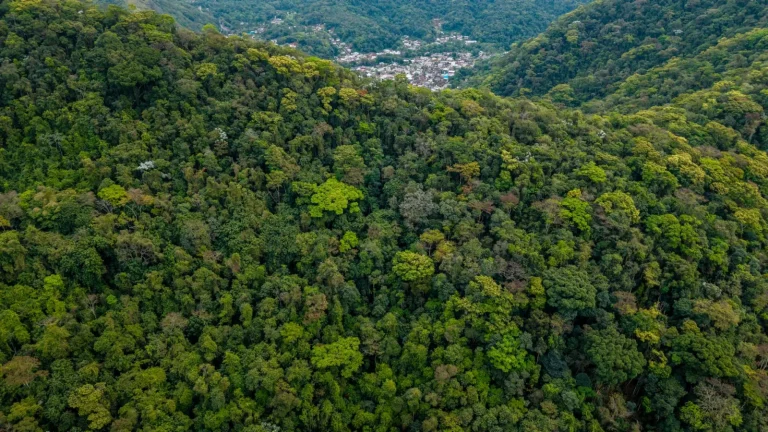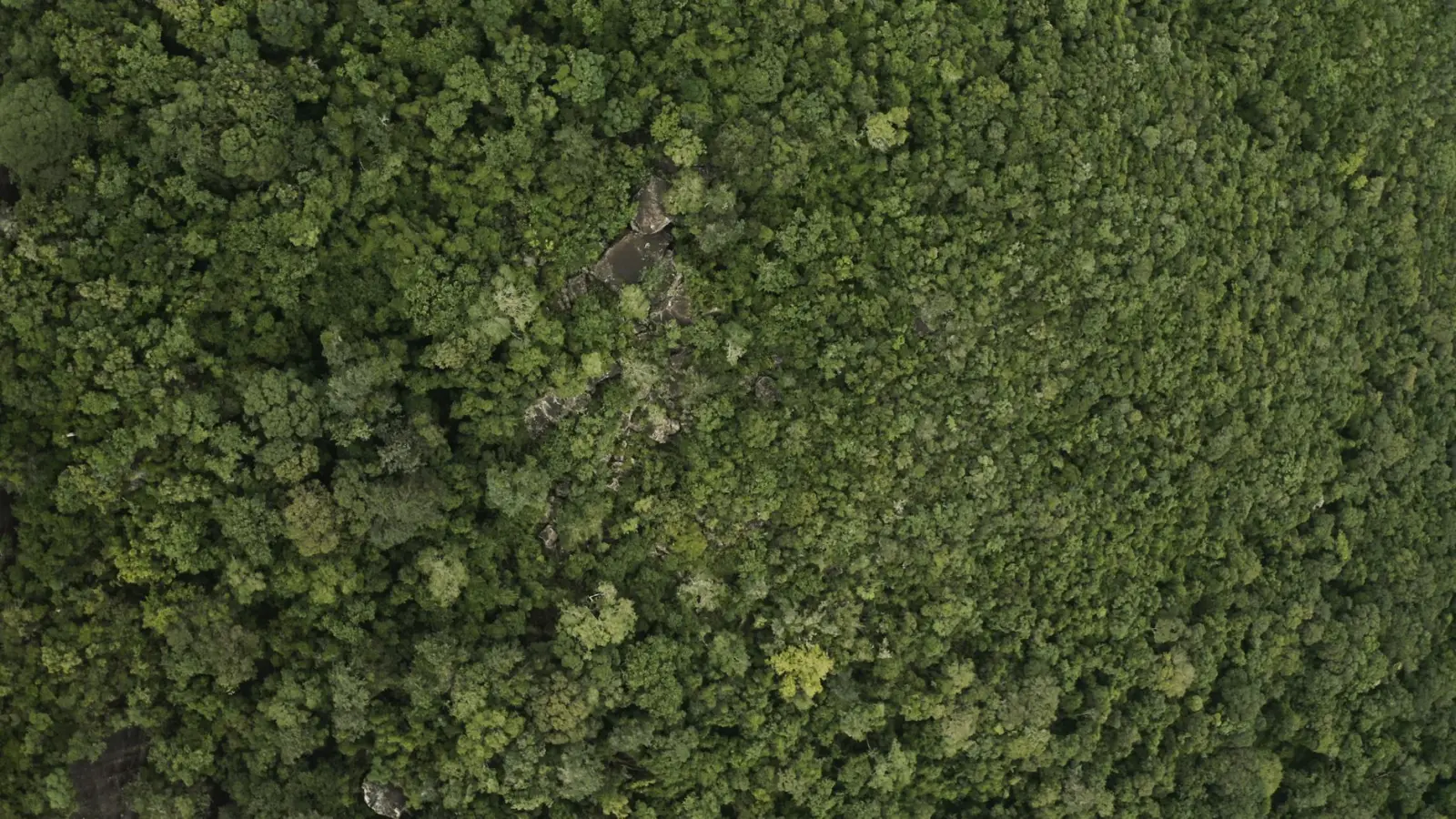
Spend enough time walking through a rainforest, and you start to notice that the real action happens overhead. The ground beneath your feet is relatively quiet – sparse, actually, because so little light reaches it. But above, in the canopy and the layers between, the forest is densely populated. Trees don’t just grow in rainforests; they build entire worlds, and understanding how they do this changes how you see these places.
The vertical structure of a rainforest is what makes it fundamentally different from temperate forests. A mature rainforest typically has four or five distinct layers, each with its own light conditions, humidity, and resident species. The emergent layer pokes above the main canopy – these are the giants, often 150 feet tall or more, their crowns exposed to full sun and wind. Below that sits the main canopy, a dense, continuous layer where most of the photosynthesis happens. Then comes the understory, a dimmer realm of smaller trees and saplings competing for whatever light filters down. The shrub layer sits below that, and finally the forest floor, which is surprisingly open and dark.
This layering isn’t accidental. It’s the result of how trees actually grow in these conditions. In a rainforest, there’s no winter dormancy, no seasonal die-back. Growth happens year-round, and competition for light is relentless. Young trees don’t have the luxury of growing slowly at ground level and then shooting upward later. They either reach for light immediately, or they remain stunted in the gloom. This creates a sorting mechanism where trees occupy specific heights based on their species’ light requirements and growth strategy.
How Trees Become Architecture
The way a rainforest tree grows shapes everything that lives on and around it. Large trees develop massive, spreading root systems that create cavities and buttresses at ground level – these become shelters for small mammals, insects, and amphibians. The bark itself is often thick and deeply furrowed, trapping moisture and creating microhabitats for lichens, mosses, and invertebrates. I’ve spent hours examining a single large tree’s bark and found dozens of species living in the crevices, each occupying a slightly different niche based on moisture, light exposure, and substrate texture.
But the real habitat creation happens in the crown. As a large tree grows, it develops a complex branching system with thick primary limbs that can be several feet in diameter. These branches don’t taper smoothly like they might in a temperate forest. Instead, they’re often gnarled and irregular, with deep angles where water collects and debris accumulates. Over time, organic matter builds up in these branch junctions – dead leaves, bird droppings, insect frass, and decomposing wood. This creates soil-like substrate high in the canopy, sometimes several feet deep in the largest trees.
This canopy soil is where the real magic happens. Seeds germinate in these branch junctions, and plants grow in the crowns of trees – not as parasites, but as epiphytes, plants that use the tree as support but don’t feed on it. Orchids, bromeliads, ferns, and mosses all thrive here. I’ve seen bromeliads the size of bathtubs growing 100 feet up in a tree’s crown, each one holding several gallons of water that becomes its own miniature ecosystem. The water in a bromeliad can support mosquito larvae, tiny crustaceans, and aquatic insects, all living in a pocket of water suspended in the canopy.
The Canopy as Ecosystem
The abundance of epiphytes creates a cascading effect. More plants mean more insects, which means more birds and small mammals. A single large rainforest tree can support hundreds of species that never touch the ground. I’ve watched howler monkeys moving through the canopy, feeding on leaves and fruit, their presence dependent entirely on the structural complexity that the tree provides. Below them, smaller primates – tamarins, for instance – move through the same branches, occupying a slightly different niche by feeding on insects and smaller fruits.
Insects are the real dominators of this space. Beetles, ants, caterpillars, and countless others live their entire lives in the canopy, feeding on leaves, epiphytes, and each other. Leaf-cutter ants establish highways along branches, carrying leaf fragments back to their nests. Some of these nests are enormous, containing millions of individuals, and the ants themselves become food for anteaters and other predators. The sheer biomass of insects in a rainforest canopy is staggering – estimates suggest that insects make up the majority of the forest’s animal biomass, and most of them live above ground.
The canopy also creates its own weather. The dense foliage intercepts rainfall, and much of it never reaches the ground. Instead, it drips or runs down the bark, or it’s absorbed by epiphytes and released slowly. This creates a more humid microclimate in the canopy than exists at ground level, and it moderates temperature fluctuations. For small animals living in the canopy, these conditions are crucial. A frog living in a bromeliad experiences very different conditions than a frog on the forest floor, and this allows species to coexist in ways that wouldn’t be possible if they were competing for the same space.
The Structural Complexity That Matters
What’s often overlooked when people talk about rainforest biodiversity is that the sheer number of species depends directly on structural complexity. A rainforest with large, old trees has far more species than a younger forest, even if the younger forest has the same number of trees. The difference is in the architecture – the large, spreading crowns, the thick branches, the accumulated epiphytes, the cavities and hollows. These features take decades or centuries to develop.
This is why logging, even selective logging, has such severe ecological consequences. When you remove the largest trees, you’re not just removing individual organisms. You’re removing the structural foundation that supports an entire community. The loss of a single large tree can mean the loss of habitat for hundreds of species. The branches that took a century to grow, the accumulated soil in the crown, the established community of epiphytes – all of it gone. Younger trees can eventually grow to replace it, but the process takes time, and the intermediate period represents a significant loss of habitat.
The relationship between tree structure and biodiversity is so tight that it’s almost impossible to separate them. In areas where I’ve observed forest recovery after disturbance, the return of species follows the return of structural complexity. First, pioneer species establish themselves – fast-growing trees that create basic shade and shelter. Then, over decades, larger trees grow in, and as their crowns expand and their branches thicken, the epiphyte community establishes itself. Only then do the canopy specialists – the birds, insects, and mammals that depend on complex structure – return in significant numbers.
Understanding this helps explain why rainforests are so biodiverse and why they’re so vulnerable. The diversity isn’t random or inexplicable – it’s a direct response to the habitat complexity that the trees create. Every layer, every branch angle, every patch of bark provides a niche for some organism. The forest’s resilience depends on maintaining this complexity, and any disruption that simplifies the structure – whether through logging, fire, or disease – reduces the forest’s capacity to support life.