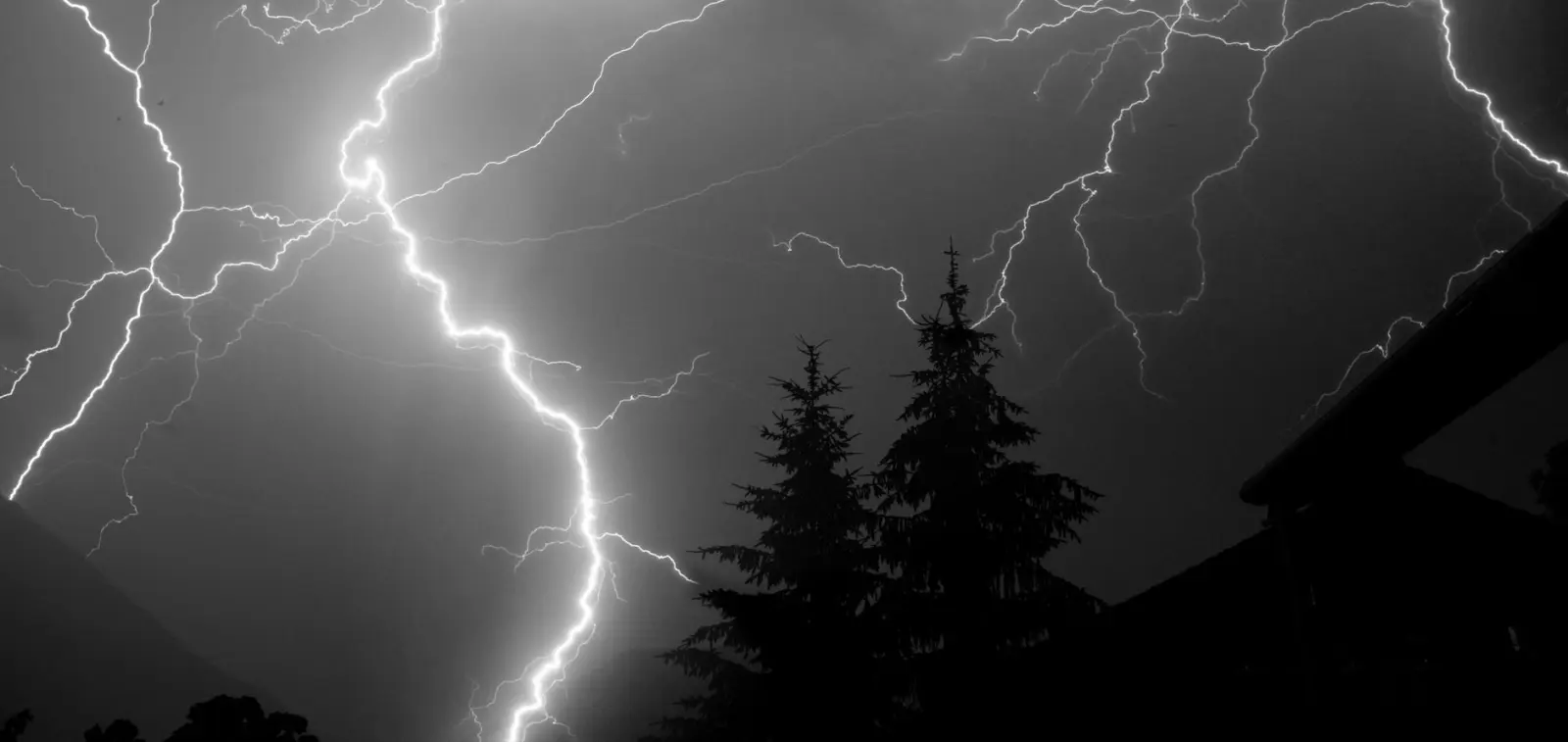
Lightning in rainforests is far more frequent than most people realize. In places like the Amazon or Southeast Asian lowlands, electrical storms roll through regularly during wet seasons, and the tall emergent trees that break through the canopy take the brunt of these strikes. After years of observing forest damage and studying recovery patterns, I’ve come to understand that lightning doesn’t simply kill a tree outright – the response is far more nuanced and depends heavily on the species, the tree’s age, and the precise path the current takes through its tissues.
When lightning strikes a rainforest tree, the immediate damage is often deceptive. The bolt doesn’t necessarily travel straight down the trunk. Instead, it follows the path of least electrical resistance, which usually means it travels through the sapwood and phloem layers rather than the heartwood. This is actually a survival advantage. The outer conducting tissues are more expendable than the core structural wood. A tree can lose significant portions of its outer bark and cambium and still recover, provided the damage doesn’t girdle the entire trunk.
The real danger comes from the explosive force generated by the lightning’s heat. When current passes through moist wood, the water inside cells vaporizes almost instantaneously. This creates steam pressure that can split the trunk vertically, sometimes explosively. I’ve seen trees with massive longitudinal cracks running from the crown all the way down to the roots. These aren’t clean breaks – they’re violent separations that expose the interior wood to pathogens and insects. Some trees don’t survive this mechanical trauma, regardless of their species or size.
Physiological Responses to Electrical Injury
Trees that do survive a lightning strike mount a coordinated physiological response. Within hours of the strike, the tree begins compartmentalizing the wound. This is a process I’ve observed repeatedly in forest recovery zones: the tree isolates the damaged tissue by producing specialized cells that wall off the injury site. This compartmentalization is crucial because exposed wood is an open invitation for fungal infections and wood-boring insects, both of which are abundant in rainforest environments.
The tree also responds by increasing resin or latex production in species that have these compounds. In some tropical trees, this happens almost immediately around the strike zone. The resin serves as both a physical barrier and a chemical deterrent to pathogens. Species like certain fig trees and rubber trees show this response particularly well. The increased production is metabolically expensive, but it’s a worthwhile investment compared to the cost of allowing decay to spread through the heartwood.
Cambial activity – the growth of new wood and bark – is often disrupted following a lightning strike. This is where timing becomes critical. If the strike occurs during the growing season, the tree can sometimes recover quickly by producing new cambial tissue that eventually covers the wound. If it happens during a dormant period, recovery is slower and less reliable. In rainforests where growth is nearly year-round, this distinction matters less than it does in temperate forests, but it’s still a factor in how quickly a tree can seal its wound.
Species-Specific Survival Patterns
Not all rainforest trees respond equally to lightning damage. Hardwood species with dense wood tend to handle strikes better than softer, faster-growing species. The density of the wood affects how the electrical current distributes through the tissues. In denser wood, the current spreads more evenly, reducing the likelihood of explosive steam pockets. Softer woods concentrate the current more intensely in certain pathways, leading to more severe localized damage.
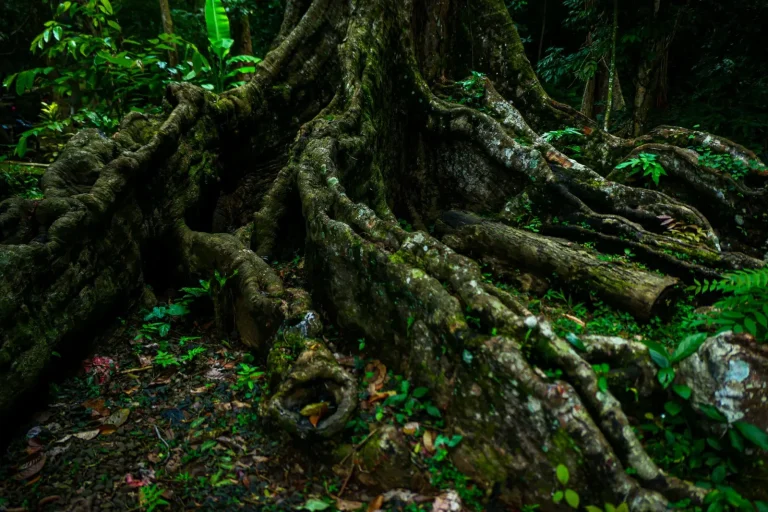
I’ve noticed that trees with deep, extensive root systems tend to recover better from lightning strikes. This seems counterintuitive at first – you’d think a deeper root system would mean more chance of the current traveling through the roots. But what actually happens is that trees with robust root systems have greater overall resource reserves. They can afford the metabolic cost of compartmentalization and wound healing without sacrificing other essential functions. Shallow-rooted trees, even if they survive the initial strike, often struggle to recover because they’re already stressed by their precarious anchorage.
Bark thickness and structure also play a role. Thick bark provides some insulation, though it’s not a complete protection. More importantly, thick bark means there’s more tissue available for the tree to sacrifice. Trees with thin bark often suffer more severe damage because the current penetrates more directly to the vital cambium and conducting tissues. In the rainforest, where many species have evolved relatively thin bark as an adaptation to the warm, humid climate, this is a genuine vulnerability.
Long-Term Consequences and Forest Dynamics
A lightning strike doesn’t necessarily end a tree’s life, but it often marks a turning point in its trajectory. Even trees that survive the immediate damage are frequently weakened in ways that become apparent only years later. The wound site becomes a permanent weak point in the trunk. Wind damage, which is common in tropical storms, is more likely to occur at these compromised sections. I’ve observed trees that survived lightning strikes only to be snapped by wind years afterward, the fracture occurring exactly at the old lightning scar.
The ecological impact extends beyond the individual tree. When a large emergent tree is killed or severely damaged by lightning, it creates a gap in the canopy. This gap allows light to flood into the understory, triggering a cascade of changes. Pioneer species rush in to fill the space, competing for the resources now available. Lianas proliferate. The structure of the local forest shifts. Over time, shade-tolerant species gradually reclaim the gap, but the process takes years or even decades.
Interestingly, some rainforest trees seem to have evolved a degree of electrical tolerance. Certain species are struck repeatedly over their lifetimes and survive each strike. Whether this is true adaptation or simply a consequence of their wood structure and physiology isn’t entirely clear. What is clear is that lightning is a persistent selective pressure in rainforest ecosystems, and the trees that persist there have developed mechanisms – some obvious, some subtle – to cope with this hazard.
The reality of lightning damage in rainforests is that it’s neither catastrophic nor trivial. It’s a regular disturbance that shapes forest structure and species composition over time. Understanding how individual trees respond to strikes gives insight into how rainforests maintain their diversity and resilience in the face of constant environmental stress.