
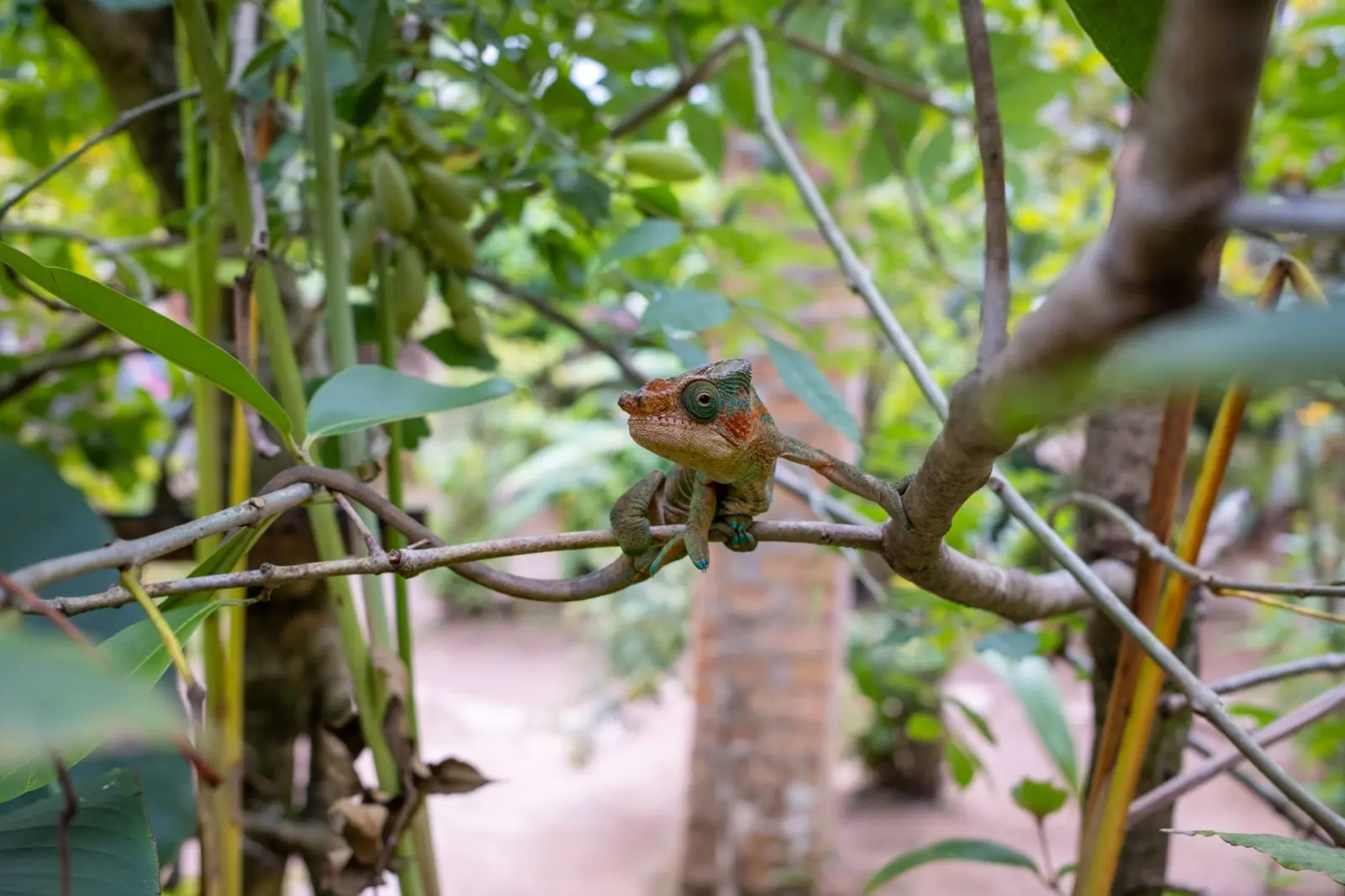
Spending time in Queensland’s rainforests teaches you quickly that lizards aren’t background noise – they’re central to how these forests function. After years moving through the wet tropics, you notice patterns. Certain species dominate the canopy. Others stay strictly on the forest floor. Some are so cryptic you could walk past them a hundred times and miss them entirely. Understanding which lizard does what, and why, changes how you read the rainforest itself.
The rainforests of tropical Queensland – particularly around Cairns, the Atherton Tablelands, and the Daintree – hold one of Australia’s most diverse reptile assemblies. The climate here is stable in ways that matter: warm year-round, humid, with predictable wet seasons. That consistency allows specialization. Lizards don’t need to survive extreme cold or drought. Instead, they’ve evolved to fill narrow ecological niches. A single hectare might contain a dozen species, each exploiting a different microhabitat or food source.
The physical environment shapes everything. The rainforest floor is thick with leaf litter, fallen logs, and dense vegetation. The mid-story is tangled vines and low branches. The canopy is fragmented and layered. Each zone has its own temperature profile, humidity level, and prey availability. Lizards have sorted themselves into these zones with remarkable precision.
Ground-dwelling species and leaf-litter specialists
The forest floor supports a distinct community of small to medium-sized lizards. The most abundant are skinks – particularly species in the genus Carlia and Lampropholis. These animals are built for life in dense litter. They have streamlined bodies, reduced limbs, and an almost serpentine way of moving through leaf matter. You’ll rarely see them in open space. They’re active in the early morning and late afternoon, foraging for invertebrates. In the middle of the day, they retreat into the litter or under logs where it’s cooler and more humid.
What strikes you about these species is their speed and skittishness. They’re not aggressive. They’re prey. They move with urgency, and if you approach too quickly, they vanish into the leaf litter in seconds. This behavior isn’t random nervousness – it’s calibrated to the actual threat environment. Snakes, larger lizards, and birds hunt them constantly. The ones that hesitate don’t survive long.
The blue-tongue lizard, Tiliqua scincoides, occupies a different niche on the forest floor. It’s larger, slower, and far more deliberate. These animals are ambush predators, feeding on invertebrates, small vertebrates, and vegetation. They’re often encountered near logs or dense vegetation where they can move with minimal exposure. Unlike the small skinks, blue-tongues have the mass and defensive capabilities to be less reactive. They’ll stand their ground, hiss, and display their blue tongue as a deterrent. In the rainforest, they’re not common but not rare – they’re present enough that you encounter them occasionally if you’re moving through suitable habitat.
Mid-story climbers and branch-dwellers
Move up into the lower and mid-canopy, and the lizard community changes entirely. Here you find dragons and agamids adapted for life on vertical surfaces and branches. The northern angle-headed dragon, Gonocephalus spinipes, is a characteristic species. These are small, angular animals with compressed bodies and powerful limbs. They’re cryptic – their coloration matches bark and lichen perfectly. They spend most of their time on tree trunks and branches, hunting insects. Their eyes are positioned to see movement, and they respond to threats by either freezing or darting around to the far side of the trunk.
These mid-story species are harder to observe than ground-dwellers. They’re not moving through open litter where you can track them. They’re on vertical surfaces where they blend in completely. Most people walk through rainforest and never see them. But if you’re patient, if you learn to scan tree trunks methodically, you start to recognize their silhouettes and movement patterns.
The rainforest also supports several species of tree monitors and smaller monitor lizards that occupy the mid to upper canopy. These are more elusive still. They’re larger, more mobile, and they range widely through the forest. Encounters are infrequent unless you’re specifically looking for them or unless you’re present at the right time – early morning or late afternoon when they’re most active.
Canopy specialists and arboreal hunters
The upper canopy is a different world. Sunlight penetrates unevenly. Temperatures fluctuate more than on the forest floor. Humidity varies. The prey base is different – more insects, more small vertebrates, fewer invertebrates in the leaf litter. The lizards here are adapted for sustained movement through branches and vines. Many are more active hunters than their ground-dwelling cousins. They have longer limbs relative to body size, better grip, and more aggressive foraging behavior.
Several species of tree monitors occupy this space. They’re fast, alert, and difficult to approach. They hunt by sight and movement. If they detect you, they’ll either move away rapidly or, if they’re confident in their position, they’ll watch you carefully while remaining still. The canopy provides escape routes – they can move vertically, horizontally, or drop to lower branches if threatened.
Seasonal patterns and activity cycles
Rainforest lizards don’t have the dramatic seasonal shifts you see in temperate regions. There’s no hibernation. No complete shutdown during winter. But there are rhythms. The wet season, roughly November through March, brings higher humidity, more rainfall, and warmer temperatures. Activity levels increase. Breeding occurs. Prey is abundant. You see more lizards, more frequently, in more locations.
The dry season, May through September, is cooler and drier. Humidity drops, though it remains high by temperate standards. Lizard activity declines. Many species become less visible. They spend more time sheltering. Breeding slows. This isn’t dormancy – it’s a shift in behavior and activity level. Understanding this cycle matters if you’re trying to observe or study rainforest lizards. Timing your visit for the wet season dramatically increases your chances of encounters.
Daily activity patterns are equally important. Most rainforest lizards are most active in the early morning and late afternoon. Midday is typically quiet. Temperatures are high, humidity can drop, and many species retreat. If you’re in the rainforest at midday, you’ll see far fewer lizards than if you’re there at dawn or dusk. This isn’t a quirk – it’s a response to the microclimate. The forest floor and lower vegetation are cooler and more humid in early morning. That’s when foraging is most efficient and predation risk is manageable.
Threats and habitat pressures
Queensland’s rainforests are under constant pressure. Habitat fragmentation is the primary issue. As forest is cleared for agriculture, development, or other land use, populations become isolated. Lizards can’t move between fragments easily. Small populations are vulnerable to local extinction. Genetic diversity declines. The system becomes less resilient.
Climate change is an emerging concern. Rainforest lizards are adapted to stable, warm, humid conditions. As temperatures shift and rainfall patterns change, the microhabitats they depend on are altered. Species that require specific temperature or humidity ranges may find their preferred zones shrinking. This is particularly true for species with narrow ecological tolerances.
Introduced species also matter. Cane toads have had limited direct impact on most rainforest lizard populations – most rainforest lizards don’t eat toads. But feral pigs and cats are problematic. Pigs disturb the leaf litter, destroying habitat and exposing ground-dwelling lizards to predation. Cats hunt small lizards efficiently. Introduced plants can alter the structure of the forest understory, changing microhabitats and prey availability.
What you learn from years in these forests is that rainforest lizard populations are resilient within their core habitat. Where the rainforest remains intact and connected, populations are stable. But where fragmentation is severe, populations are vulnerable. The species you see today might not be there in ten years if the forest continues to shrink or if the fragments become too isolated.