
The rainforest around Crystal Cascades presents a particular kind of challenge that doesn’t announce itself until you’re already moving through it. The waterfall itself is straightforward enough to reach – marked trails, reasonable foot traffic, predictable logistics. But the surrounding forest operates on different rules. After multiple visits across different seasons, I’ve noticed that most people arrive with expectations shaped by photographs and brief descriptions, then encounter a landscape far more complex than anticipated.
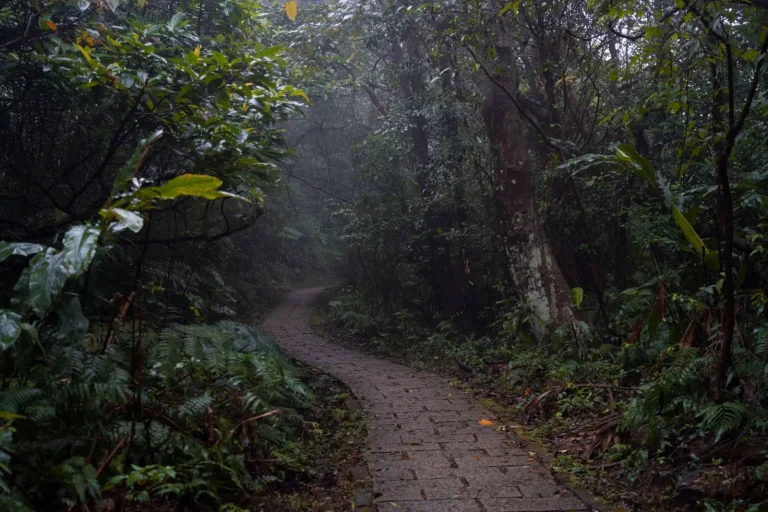
The density of the vegetation is the first thing that reshapes your sense of distance and time. What appears on a map as a short walk between two points often involves navigating through layered growth where visibility rarely extends more than twenty or thirty meters ahead. The canopy sits so high that even at midday, the forest floor exists in a kind of perpetual twilight. This isn’t atmospheric or romantic in the moment – it’s simply the condition you work within. Your eyes adjust within the first hour, but the psychological effect lingers. You move slower than you expect because the terrain itself demands it, not because of weakness or poor fitness.
Terrain and Movement
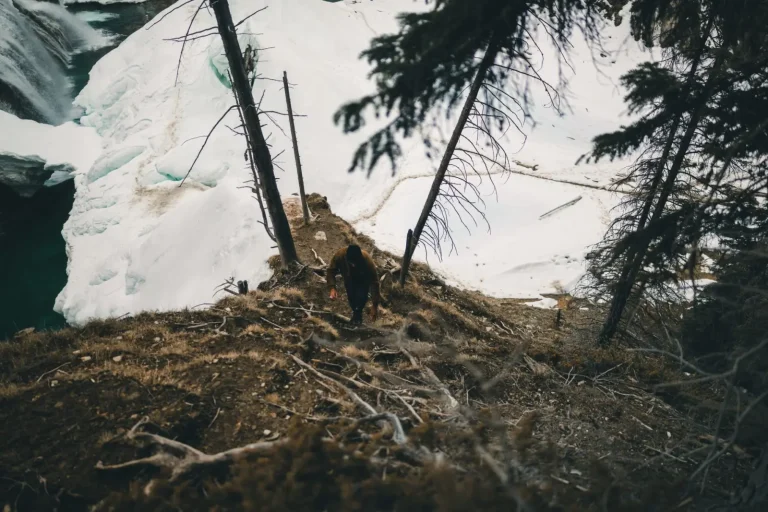
The ground underfoot varies dramatically depending on recent rainfall and the specific section of forest. Closer to the cascades, where water drainage is constant, the soil becomes almost clay-like when wet. I’ve watched experienced hikers slip on what looked like solid ground simply because the moisture content changed the friction coefficient. Further back, away from the direct water influence, the forest floor is often surprisingly firm – built up from decades of leaf litter and root systems that have compacted into something almost solid.
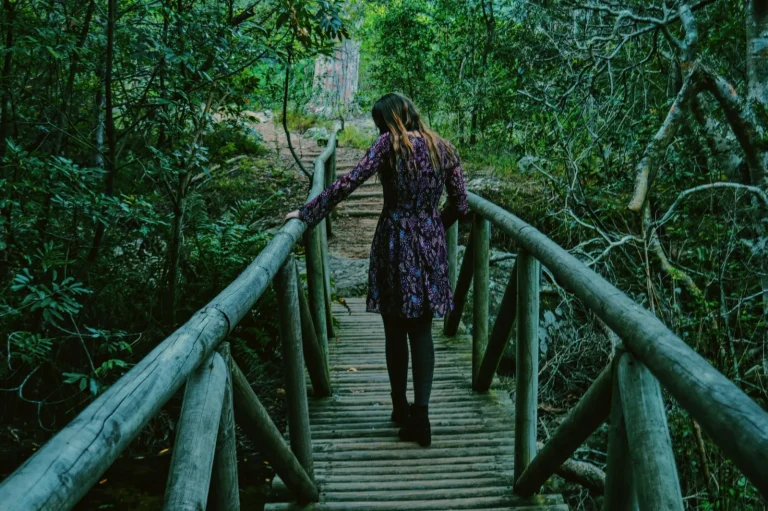
Roots present a constant navigation puzzle. They don’t form neat obstacles you step over; instead, they create a three-dimensional maze at ground level. Some are thick enough to trip you if you’re not watching, but more often they’re part of the general complexity that slows your pace. The larger roots often follow water flow patterns, so if you’re trying to move efficiently, paying attention to root direction can actually guide you toward natural drainage routes.
Mud is inevitable, though its severity depends entirely on when you visit. During the dry season, sections that would be impassable mire become navigable. During wet season, certain routes become genuinely difficult without proper footwear. I’ve seen people attempt this in trail runners or casual hiking boots and regret it within the first kilometer. The mud isn’t just slippery – it’s heavy and sticky enough to pull shoes off your feet if you’re not careful about foot placement.
Water, Humidity, and Physical Demands
The humidity is relentless and often misunderstood. It’s not just about sweating more; it’s about your body’s inability to cool itself effectively through evaporation. The air is already saturated, so perspiration simply sits on your skin. This means your core temperature can climb faster than you realize, especially if you’re moving steadily uphill or over technical terrain. I’ve noticed that people who manage their hydration well often underestimate how much fluid they need in this specific environment. The usual calculation of water intake doesn’t account for the fact that you’re not cooling as efficiently.
Stream crossings are frequent, and they’re rarely marked or obvious until you’re nearly upon them. The water is usually clear and cold, which is deceptive. Streams that look shallow can have surprisingly strong current, and the rocks are almost universally slippery. Moss and algae growth make every wet surface treacherous. I’ve learned to test footing carefully and use trekking poles for stability rather than speed. Attempting to cross quickly almost always results in a slip.
Navigation and Orientation
GPS and maps are useful but not sufficient in dense rainforest. The canopy coverage often makes satellite signals unreliable, and the visual landscape offers few distinctive landmarks when everything around you is green and roughly the same height. Trails can be poorly marked or maintained, and it’s entirely possible to take a wrong turn at a junction that isn’t clearly signed. This isn’t a reflection of poor trail management necessarily – it’s simply the reality of maintaining paths through forest that’s actively growing and changing.
Local guides make a significant difference, though not always for the reasons people expect. They don’t necessarily move faster or know secret shortcuts. What they do is read the forest in real time – noticing subtle trail markers, understanding water flow patterns that indicate direction, and recognizing when the path has shifted slightly due to erosion or regrowth. They also know which sections are prone to flooding or instability during specific seasons.
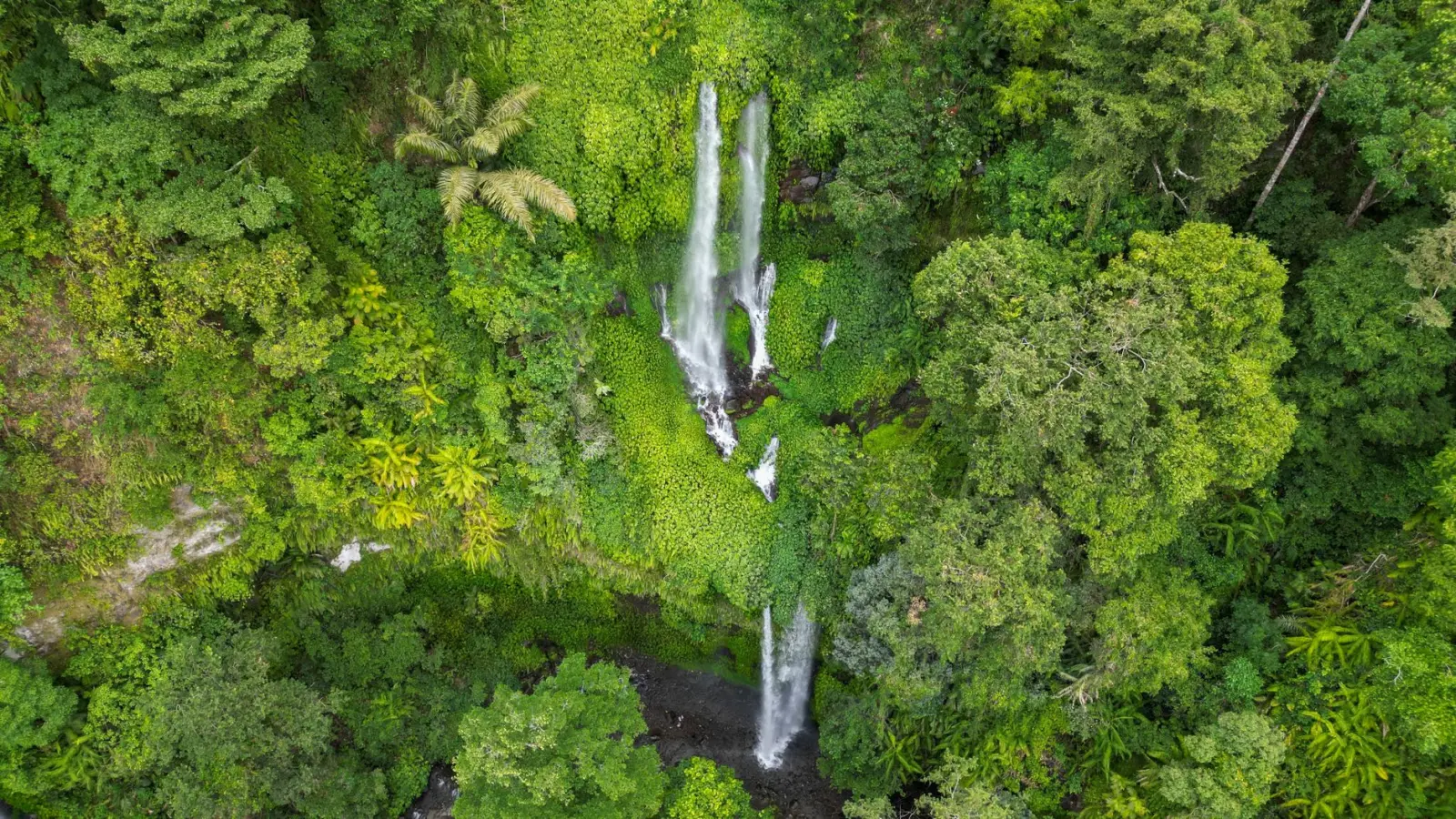
The cascades themselves are worth the effort, but they’re not the only feature worth observing. The forest composition changes noticeably as you move away from the water. Closer to the cascades, you find species adapted to high moisture and mist. Further back, the vegetation shifts to plants that tolerate slightly drier conditions. This transition happens gradually, but if you’re paying attention, it’s observable within a single walk.
Wildlife and Timing
Animal activity is concentrated in early morning and late afternoon. If you’re walking midday, you’ll see relatively little wildlife despite the forest being full of it. Birds are more vocal than visible, and larger animals tend to move away from human noise. I’ve encountered far more evidence of wildlife – scat, tracks, disturbed vegetation – than actual animals. This is normal and doesn’t indicate scarcity; it’s just how rainforest fauna operates around human presence.
Insects are constant and unavoidable. Mosquitoes are present but not always overwhelming, depending on the season and specific location. Leeches are more of a concern during and immediately after wet periods. They’re not dangerous, but they’re persistent and unpleasant. Insect repellent helps, though nothing provides complete protection. The experience of dealing with insects is part of the environment, not a failure of preparation.
The best approach to exploring this rainforest is to move at a pace that allows observation rather than speed. The forest rewards attention. Rushing through misses the actual experience – the layering of sound, the gradual shift in light as you move through different canopy densities, the specific way water moves through the ecosystem. Most people who find the experience disappointing are the ones who treated it as a task to complete rather than an environment to move through.