Spending time in Australia’s rainforests, particularly in Queensland’s wet tropics, you’ll eventually encounter evidence of satin bowerbirds long before you see the birds themselves. A cleared patch of forest floor, meticulously arranged twigs, and scattered blue objects – bottle caps, feathers, flowers, plastic fragments – signal the presence of a bower. These structures are not nests. They serve a single, focused purpose: attracting a female to mate. The bird invests weeks or months constructing and maintaining this display ground, and the quality of his bower directly influences his reproductive success.
What strikes you most when observing these birds in their natural habitat is the sheer intensity of their focus. A male satin bowerbird doesn’t simply build once and wait. He refines constantly. He rearranges decorations daily, removes debris that accumulates from wind or rain, and adjusts the structure itself based on seasonal changes. The bower itself – typically a U-shaped or avenue-like structure made from thin branches – requires structural knowledge that seems almost architectural. The bird selects branches of appropriate diameter, positions them at specific angles, and compacts the floor with precision. This isn’t random behavior driven by instinct alone; individual males develop distinct styles, and they learn from observation and trial.
The Collecting Impulse
The decorating phase reveals something more complex than simple mate attraction. Satin bowerbirds display what researchers call “color preference,” and in rainforest populations, blue objects hold particular significance. A male will spend hours collecting blue feathers, berries, flowers, and manufactured items. In areas near human settlements, this means bottle caps, plastic fragments, and even discarded jewelry. The bird carries these items in his beak, positions them around the bower entrance, and rearranges them obsessively.
What’s notable is that this collecting behavior sometimes becomes pathological. A male may become so fixated on acquiring blue objects that he neglects other aspects of bower maintenance or spends excessive time away from his territory. Some birds steal decorations from neighboring bowers, leading to territorial disputes. Others become habituated to human presence when food scraps or discarded items are nearby, which changes their natural behavior patterns and can make them vulnerable to predation or injury.
The rainforest environment itself shapes these behaviors. Dense vegetation means that visual displays must be concentrated and striking. A bower in the dim understory of a tropical rainforest competes with dappled light and complex backgrounds. The blue coloration stands out against the greens and browns of the forest floor. This explains why satin bowerbirds – unlike some bowerbird species in open woodland – have evolved such a pronounced preference for blue. It’s a response to their specific habitat’s visual constraints.
Seasonal Patterns and Territory
Breeding season typically runs from September through January in Queensland rainforests, though timing varies slightly by latitude and elevation. During this period, males become highly territorial. A male’s bower sits within a larger territory that he defends aggressively against other males. These territories can overlap, and boundary disputes are common. You’ll observe males performing elaborate displays – spreading wings, making vocalizations that range from clear whistles to harsh, mechanical sounds – when confronting rivals or attempting to attract females.
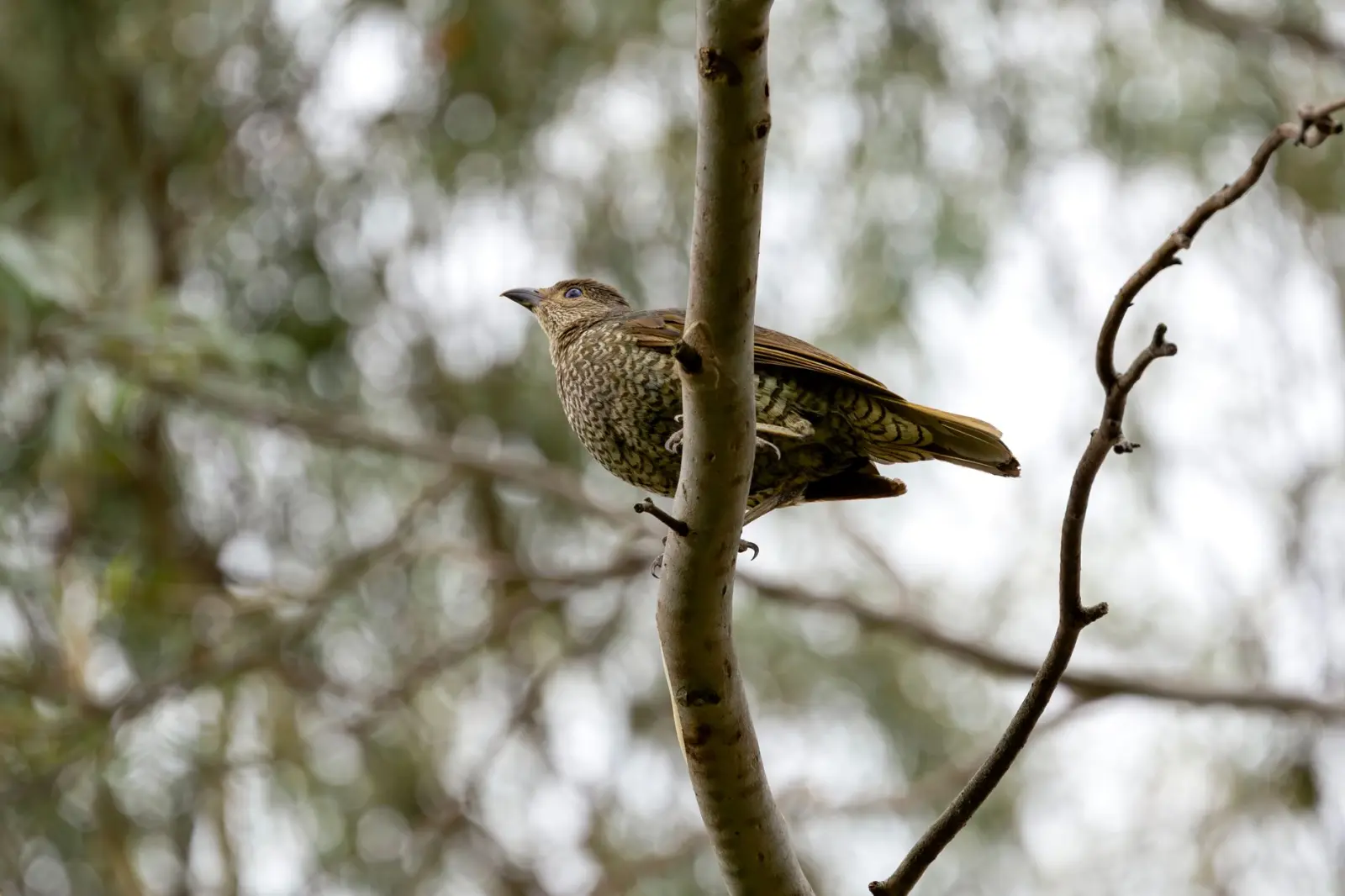
The female’s role is often overlooked in discussions of bowerbird behavior. She visits multiple bowers, assesses males, and makes a choice based on bower quality and the male’s display performance. This selective pressure drives the evolution of more elaborate bowers and more refined collecting behavior. A female may visit ten or more bowers before making a decision. Once she mates, she leaves to build a simple nest elsewhere and raises chicks alone. The male plays no role in parental care; his investment is entirely in the bower and display.
Practical Challenges in Rainforest Life
Maintaining a bower in a rainforest presents constant challenges. Heavy rainfall can damage structures and wash away decorations. Leaf litter accumulates quickly, requiring regular clearing. Insects, particularly ants and termites, may colonize the structure. Humidity promotes fungal growth on stored organic decorations. A male must balance the energy cost of constant maintenance against the reproductive benefit of a well-maintained bower. Some males appear to abandon bowers during particularly wet periods, only to return and rebuild when conditions improve.
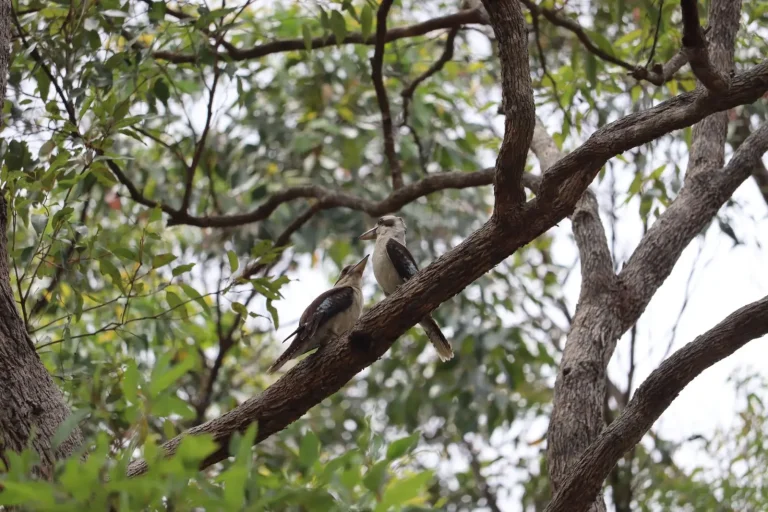
Predation pressure is another reality. Bowerbirds themselves are vulnerable while displaying or collecting decorations. Raptors, particularly the powerful kookaburra and various eagles, hunt in rainforest margins. Snakes take eggs and chicks from nests. Ground predators like quolls and feral cats pose threats. A male spending hours at his bower is somewhat exposed, though the dense vegetation provides concealment. The trade-off between visibility for display and vulnerability to predators is a constant tension in their ecology.
Competition for decorating materials can be intense. In areas where blue objects are scarce, males engage in what amounts to theft. A dominant male may raid a subordinate’s bower, removing decorations and adding them to his own. This behavior, while seemingly destructive, actually reinforces the hierarchical structure of the population. Younger or weaker males eventually abandon their territories or adopt different strategies, such as maintaining smaller, less elaborate bowers or attempting to mate through deception rather than display quality.
Over years of observation, what becomes clear is that satin bowerbirds are not following a simple genetic program. They’re responding to their environment, learning from experience, and adjusting behavior based on success and failure. A bower that attracts females is maintained and refined. One that fails to attract attention may be abandoned. Males observe other males and sometimes adopt successful decorating strategies. This combination of instinct and learning, of fixed behavior patterns and flexible problem-solving, makes them among the more cognitively sophisticated birds in the Australian rainforest.