The forests around Byron Bay draw people for obvious reasons. The hinterland sits high enough to stay cool when the coast swelters, the vegetation is dense and varied, and the walking tracks are genuinely accessible. But there’s a gap between what the maps suggest and what your legs actually experience on the ground. I’ve walked these trails in different seasons, different times of day, and with different levels of preparation. The patterns that emerge are less about romance and more about logistics.
The first thing to understand is that Byron’s hinterland isn’t wilderness in the traditional sense. It’s rainforest mixed with open forest, crisscrossed by well-maintained tracks that range from easy creek walks to steep ridge climbs. The tracks themselves are rarely abandoned or poorly marked. The issue isn’t navigation. It’s that the terrain changes rapidly, and what looks like a forty-minute walk on paper can stretch to ninety minutes in practice because the ground underfoot is uneven, sometimes slippery, and always demanding more from your knees and ankles than flat walking does.
Timing and Temperature Reality
Most people arrive at a trailhead thinking about distance and difficulty rating. What they should be thinking about is how long they’ll actually be moving, how much sun exposure they’ll face, and whether they’ll finish before conditions deteriorate. The hinterland tracks don’t get significantly hotter than coastal areas, but they do get humid. The canopy provides shade, which is genuinely useful, but it also traps moisture. On days when the coast feels warm and pleasant, the forest trails feel thick and airless. Your pace slows without you noticing it, and by the time you’re halfway through, you’ve burned more energy than expected.
Starting early matters more than people think. Not because of danger, but because of fatigue management. A track you walk comfortably at 8 a.m. becomes noticeably harder at 2 p.m. The light doesn’t change dramatically in summer, but your body does. Legs tire. Attention wanes. Footing becomes less precise. I’ve watched people who started confidently become genuinely uncomfortable by the end of a walk that should have been straightforward, simply because they started late and underestimated how much the afternoon heat and humidity would compound the physical demand.
The Ground Beneath You
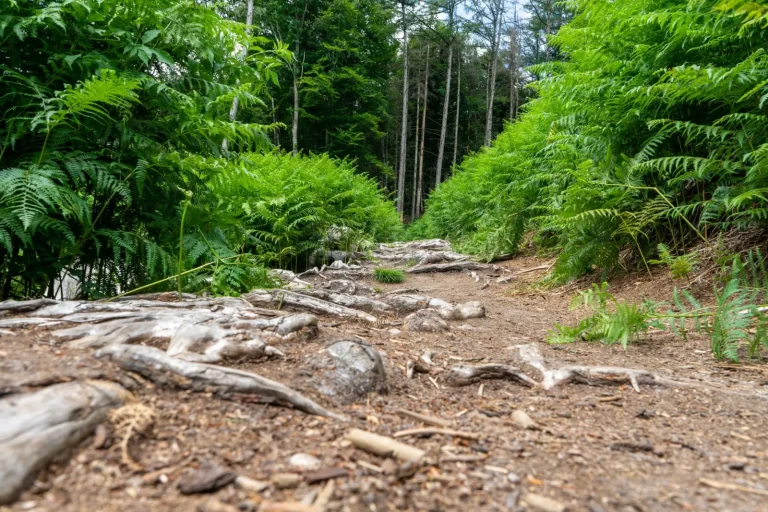
Byron’s forest floors are rarely stable in the way that coastal paths or maintained hiking trails in drier regions are. The soil is rich and often wet, even when it hasn’t rained recently. Roots cross the path constantly. Rocks are embedded at angles that catch your foot if you’re not watching. After rain, the trails become genuinely slippery. Not dangerously so on the easier walks, but enough that you can’t move quickly, and you need to concentrate on every step. This matters because it means a track that takes forty minutes in dry conditions might take sixty in wet conditions, and your legs will feel the difference.
Proper footwear is one of those things that sounds obvious but gets overlooked. Trail runners work on some of the easier, drier tracks. On anything with sustained elevation or recent moisture, they’re insufficient. You need something with real ankle support and a sole that grips. Not hiking boots necessarily, but something designed for uneven ground. I’ve seen people turn back or struggle significantly because they wore casual shoes, and it’s almost always avoidable.
Water and Hydration
The forest is humid, but that doesn’t mean you stay hydrated. People often underestimate how much they’re sweating because the moisture doesn’t evaporate as quickly as it would in drier air. You feel less thirsty than you actually are. Carrying water is essential, and carrying more than you think you need is standard practice. A two-liter capacity is reasonable for most half-day walks. On longer tracks, you might refill at creek crossings, but relying on this requires knowing where the crossings are and being confident the water is safe to drink untreated. Most people aren’t, and most creeks in the hinterland have enough animal traffic that treating water before drinking is sensible.
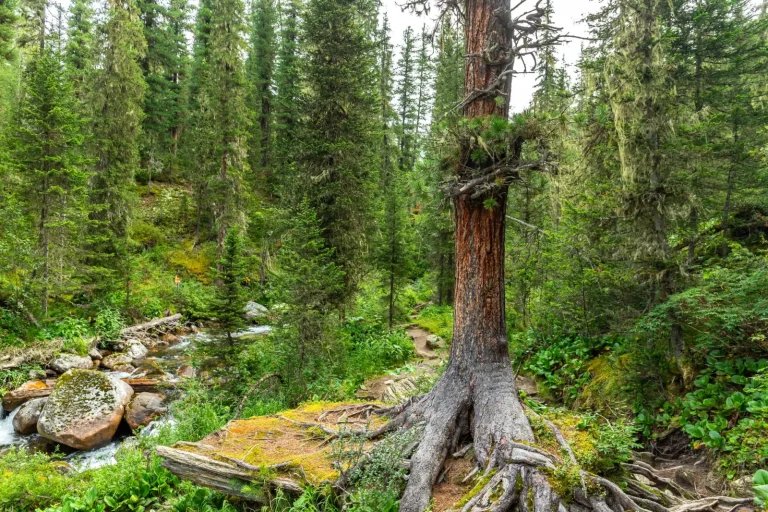
The tracks themselves often cross water. Some crossings are straightforward rock hops. Others require wading through shallow creeks. In dry seasons, this is minor. After heavy rain, the same creek can be impassable or genuinely risky. Checking conditions before you go isn’t just helpful, it’s necessary. Local knowledge or recent track reports matter more than the official difficulty rating.
Navigation and Getting Lost
Getting genuinely lost on Byron’s main tracks is unlikely. The paths are marked, maintained, and popular enough that you’ll encounter other walkers if you’re on the right route. But taking a wrong turn at a junction and walking for ten or fifteen minutes before realizing is common. It happens because the tracks branch, sometimes without clear signage, and it’s easy to assume you’re on the right path when you’re not. Carrying a map or having downloaded offline maps on your phone removes this problem almost entirely. Most people don’t, and most people don’t need to, but the ones who do are the ones who end up backtracking unnecessarily.
The hinterland tracks don’t have the exposure risk of high-altitude hiking or cliff-edge walking. The worst-case scenario is usually that you take longer than expected and finish in fading light. That’s inconvenient and sometimes genuinely uncomfortable, but it’s not dangerous in the way that getting lost in truly remote terrain is dangerous.
Insects and Wildlife
Leeches are present during wet months. They’re not dangerous, but they’re unpleasant and persistent. Insect repellent helps, but the only real solution is acceptance. If you’re walking in the hinterland during the wetter months, you’ll likely get leeches. They come off easily once you’re aware of them, and the bites don’t cause lasting problems. But people who haven’t encountered them before often find them more distressing than the physical impact warrants.
Snakes exist in the hinterland, but encounters are rare. The trails see enough foot traffic that most snakes move away before you get close. Wearing closed shoes and watching where you step is standard sense, not paranoia. Spiders are more common, particularly web-building species that cross the trails. Walking with a stick or letting someone else walk ahead helps clear these without drama.
The forest is genuinely alive with sound and movement, but most of it is small birds and insects. The soundscape can feel overwhelming to people used to quieter environments, but it’s not threatening. It’s just what the forest sounds like when you’re in it.
Walking the Byron hinterland works well when you match your expectations to the actual conditions. The tracks are good, the scenery is genuine, and the physical demand is real but manageable. The gap between what people expect and what they experience usually comes down to underestimating how much the terrain and humidity slow you down, starting later than they should, and not carrying enough water. These aren’t failures of the trails. They’re just the reality of moving through forest on foot.