
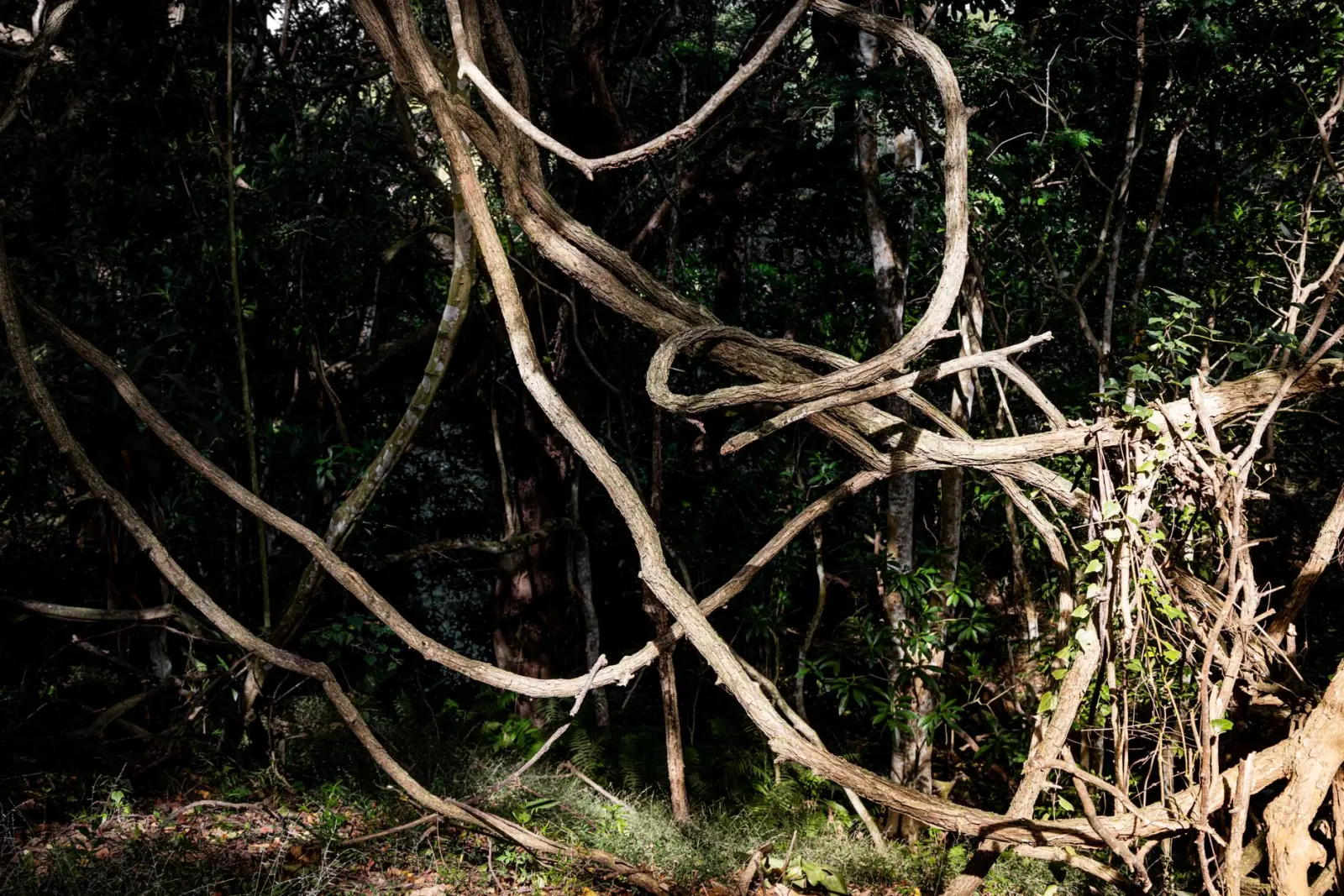
The term “vine forest” catches many people off guard when they encounter it. It sounds like a poetic invention, but it describes a real structural condition you notice immediately once you’re actually moving through one. The canopy isn’t a neat layered system. Instead, woody vines – sometimes as thick as a human torso – wrap around trees, cascade between levels, and create a suffocating tangle that changes how light moves through the forest and how animals navigate it. The difference between a typical rainforest and a vine forest isn’t semantic. It’s a fundamental shift in how the ecosystem is organized.
I’ve spent time in both types of forests across Central America and Southeast Asia, and the distinction becomes obvious within the first hour of walking. In a conventional rainforest, you move through relatively defined strata. There’s a canopy layer, an understory, a shrub layer, and forest floor. Light filters down in predictable ways. In a vine forest, the architecture collapses into something more chaotic. Lianas – the woody vines that define these spaces – create horizontal bridges and vertical highways that blur the boundaries between layers. A tree fifty meters up might be directly connected to the forest floor by a single vine thick enough to climb. The whole system feels more three-dimensional and less stratified.
What Triggers Vine Proliferation
Vine forests emerge under specific conditions, and they’re not random. The key factor is disturbance. When a rainforest experiences significant canopy damage – from windstorms, landslides, selective logging, or natural die-offs of dominant tree species – the light regime changes dramatically. Suddenly, the forest floor and mid-story receive far more direct sunlight than they normally would. This is where vines have their competitive advantage.
Unlike trees, which invest years in building a solid trunk and crown, vines are essentially fast-track colonizers. They grow rapidly, require less structural investment, and can exploit gaps in the canopy by climbing existing trees rather than competing for space at ground level. A vine can reach the canopy in a few years, whereas a tree might take decades. When you have abundant light and a forest full of standing trees to climb, vines proliferate. They spread across the canopy, blocking light from reaching new tree seedlings, and the forest gradually becomes dominated by this climbing architecture rather than traditional tree growth.
The secondary growth forests that emerge after logging or major disturbance often become vine forests for exactly this reason. I’ve seen this pattern repeatedly in Central America, particularly in areas that were logged 20 to 40 years ago. The original canopy was removed or severely damaged. Pioneer species and fast-growing trees colonized the space, but so did vines. Over time, the vines became so dominant that the forest structure fundamentally changed. What you get is a forest that looks dense and lush but is actually held together by climbing plants rather than self-supporting trees.
Soil and Moisture Conditions Matter
Disturbance alone doesn’t guarantee vine forest development. The underlying soil and water conditions also play a role. Vine forests tend to develop in areas with reliable moisture but where soils are either degraded or nutrient-poor. This seems counterintuitive – you’d expect rich soils to support more vigorous growth – but the dynamic is different. In nutrient-rich, well-structured soils, tree species can establish and grow quickly enough to shade out vines. The trees win the competition for space and light.
In degraded or sandy soils with poor nutrient retention, trees grow more slowly. Vines, being more flexible in their nutritional requirements and able to parasitize existing trees for support, gain a relative advantage. They can grow fast even when soil conditions would slow down tree establishment. I’ve observed this in Southeast Asian forests where tin mining or agricultural abandonment left behind poor soils. The vine forests that developed in those areas are structurally different from vine forests in more nutrient-rich disturbed sites. The vines are thicker and more aggressive, and the tree component is weaker.
Moisture availability also matters. Vine forests are most common in tropical regions with high and consistent rainfall. The vines need water to grow rapidly, and the climbing strategy only works if there’s enough energy flowing through the system. In drier tropical forests or seasonal forests with pronounced dry seasons, vines exist but don’t dominate to the same degree. The forest structure remains more tree-based because water stress limits vine growth more severely than it limits established tree growth.
The Functional Consequences
Living in or moving through a vine forest creates practical challenges that reveal why the structure matters ecologically. The density of vines makes visibility poor. You can’t see far ahead or assess the terrain easily. Branches and vines hang at head and shoulder height constantly. Movement is slower and more exhausting because you’re constantly ducking, pushing through, or finding ways around obstacles. Wildlife faces similar constraints, though they’re adapted to it in ways humans aren’t.
The reduced light at ground level in a vine forest creates a different understory ecology. Seedling diversity is lower because many tree species can’t establish in the deep shade. Herbaceous plants and shrubs are sparser. The forest floor is often cleaner – less dense vegetation – because the vines are shading everything out. This actually makes walking easier at ground level, even though the canopy is more chaotic. The trade-off is that the forest feels more uniform and less botanically diverse at eye level.
For animals, vine forests offer different resources and challenges than traditional rainforests. The vines create highways for arboreal species. Monkeys, sloths, and other tree-dwelling animals can move more easily through the canopy because the vines provide continuous pathways. Ground-dwelling animals face a more open understory, which can be advantageous for movement but offers less cover. The overall biodiversity in a vine forest is often lower than in a mature, undisturbed rainforest, but the composition of species is different rather than simply impoverished.
How Vine Forests Recover or Persist
Vine forests aren’t necessarily permanent. Over time, if disturbance ceases and conditions stabilize, a vine forest can transition back toward a more tree-dominated structure. Shade-tolerant tree species gradually establish in the understory. As these trees grow and their crowns expand, they shade out the vines. The vines don’t disappear entirely – they remain part of the forest structure – but they stop being the dominant architectural feature. This transition can take 50 to 100 years or more, depending on site conditions and the species pool available for recolonization.
However, some vine forests persist because the conditions that favor vines remain stable. If soil quality doesn’t improve, if disturbance events recur periodically, or if the original tree species composition is lost, the vine forest structure can become self-perpetuating. The vines shade out tree seedlings, preventing tree regeneration. The forest becomes locked into a vine-dominated state. This is particularly common in heavily logged or degraded areas where the original forest composition has been altered so severely that natural recovery to the original state is unlikely.
The terminology “vine forest” is useful precisely because it describes a structural and functional condition, not just a botanical category. It’s a way of saying the forest is organized around climbing plants rather than self-supporting trees. Understanding why these forests develop – through disturbance, soil conditions, and moisture availability – helps explain why they’re common in certain regions and rare in others. It also clarifies that they’re not a separate forest type in the way that, say, mangrove forests or cloud forests are. They’re a structural variant that can emerge in tropical rainforest regions under the right combination of circumstances.