
Rainforest walks in hot weather demand a different approach than the typical trail advice you’ll encounter. After spending years moving through tropical forests across Southeast Asia, Central America, and West Africa, I’ve learned that the standard recommendations – start early, bring water, wear light colors – miss the actual problem. The issue isn’t just heat. It’s the combination of heat, humidity, and the forest’s own microclimate, which behaves nothing like open terrain.
The first thing to understand is that rainforests don’t cool down the way you’d expect. The canopy blocks direct sun, which sounds ideal, but it also traps moisture and prevents air circulation. On a 32°C day outside the forest, you might find 28°C inside, but the humidity sits at 90 percent or higher. Your sweat doesn’t evaporate. Your clothes stay soaked. The temperature advantage disappears almost immediately once you’re walking, because you’re generating heat faster than the environment can dissipate it.
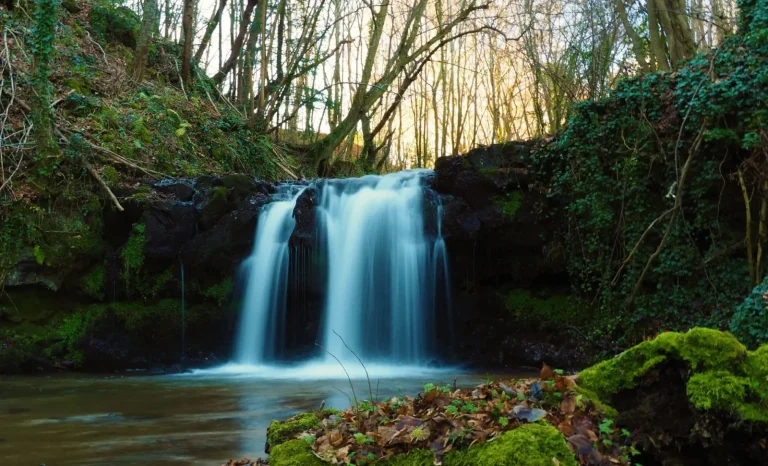
This reality shapes everything about route selection. Walks along rivers or streams perform noticeably better than interior forest trails. The water creates air movement and the sound of flowing water often indicates a breeze you can’t feel elsewhere. I’ve walked the same rainforest on different routes – one following a creek bed, another through closed canopy – and the creek walk felt 3 – 4 degrees cooler, even though the thermometer read the same. The psychological benefit matters too. Knowing water is nearby reduces anxiety about overheating.
Timing and Distance Reality
Starting before dawn sounds logical, but it’s less effective than people think. In tropical regions, dawn comes quickly and the forest is already warm by 6:30 a.m. The real advantage of an early start isn’t cooler temperatures – it’s completing most of your walk before midday intensity peaks. A 10-kilometer walk that takes four hours in moderate conditions will take five or six in genuine heat, and the last hour becomes genuinely difficult. I’ve found that 8 – 12 kilometers is the realistic ceiling for a comfortable hot-weather rainforest walk. Longer distances push fatigue into dangerous territory.
The second timing factor is humidity cycles. Late afternoon humidity often drops slightly as the day progresses, but this varies by location and season. In some regions, afternoon walks work better than morning ones. In others, the opposite is true. Local knowledge matters here more than any rule. Asking someone who lives or works in the forest – a guide, lodge staff, or park ranger – about the actual best time produces better results than following guidebook advice.
Walking Pace and Energy Management
This is where most people misjudge themselves. In cooler climates, a steady walking pace maintains momentum and feels efficient. In rainforest heat, a slower pace with frequent pauses works better. I’ve watched experienced hikers push through, convinced they’re managing fine, only to hit a wall at the 70 percent mark. The body’s cooling system has limits, and once you exceed them, recovery takes time. A walk that feels slow – perhaps 2 – 2.5 kilometers per hour instead of 3.5 – allows your body to shed heat continuously rather than accumulating a deficit you’ll pay for later.
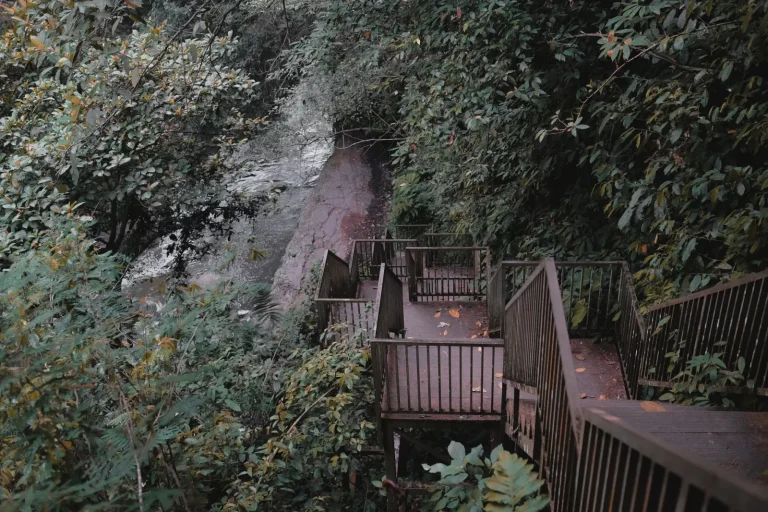
Pauses matter more than the walking itself. Sitting in shade for five minutes every 20 – 30 minutes of walking reduces overall fatigue significantly. This isn’t laziness. It’s physiology. Your core temperature drops during rest, and you resume walking in a better state. Walks that include natural stopping points – viewpoints, stream crossings, rest shelters – are inherently better than those that don’t, regardless of distance.
Trail Characteristics That Make a Difference
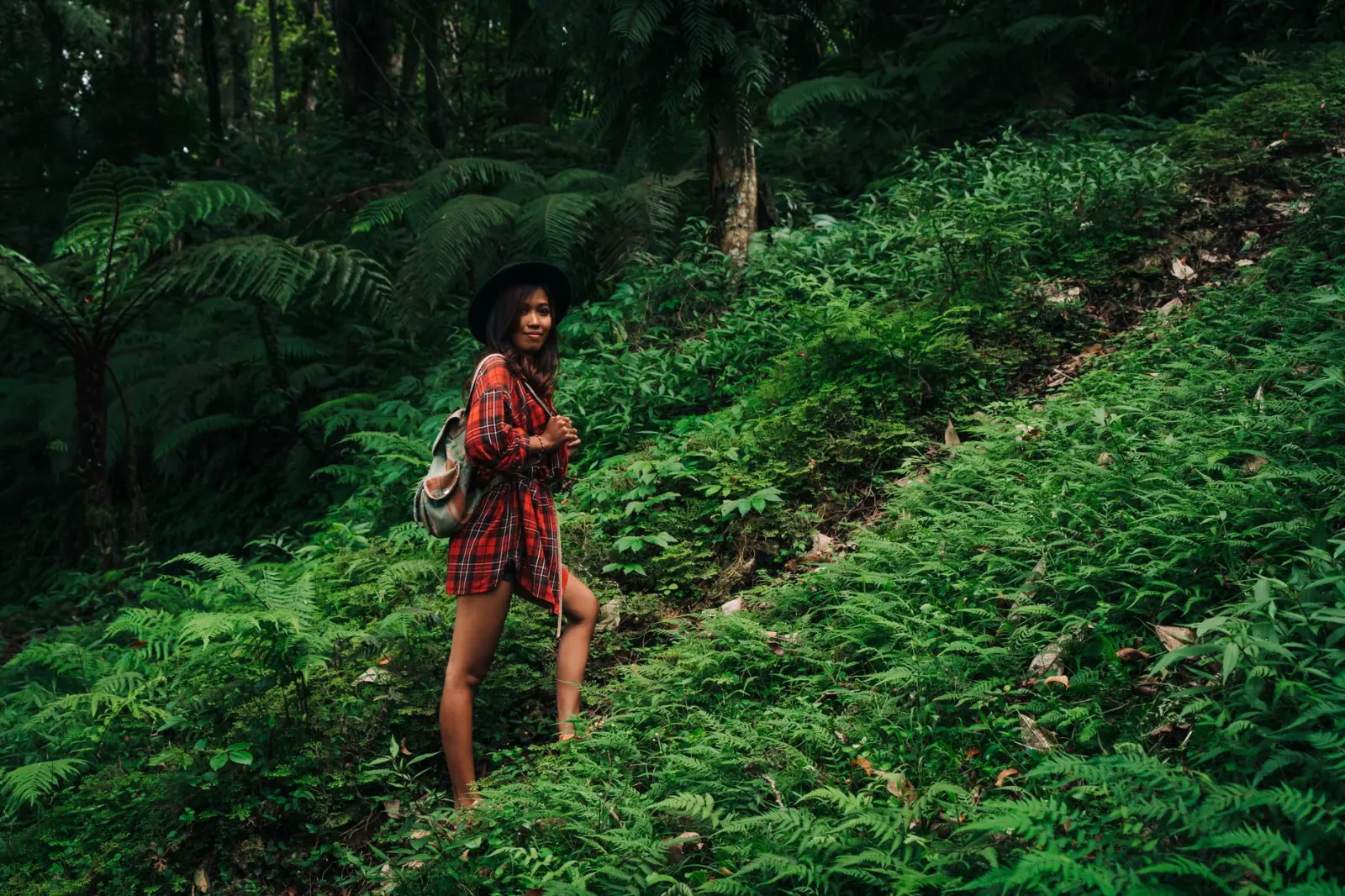
Not all rainforest walks are equal in terms of heat management. Elevation gain matters. A walk that climbs 300 meters in hot, humid conditions becomes exponentially harder than a flat walk of the same distance. The effort required to climb generates heat your body can’t shed. I’ve seen fit people struggle on steep tropical climbs while managing flat walks without issue. If you’re walking in genuine heat, prioritize flat or gently rolling terrain.
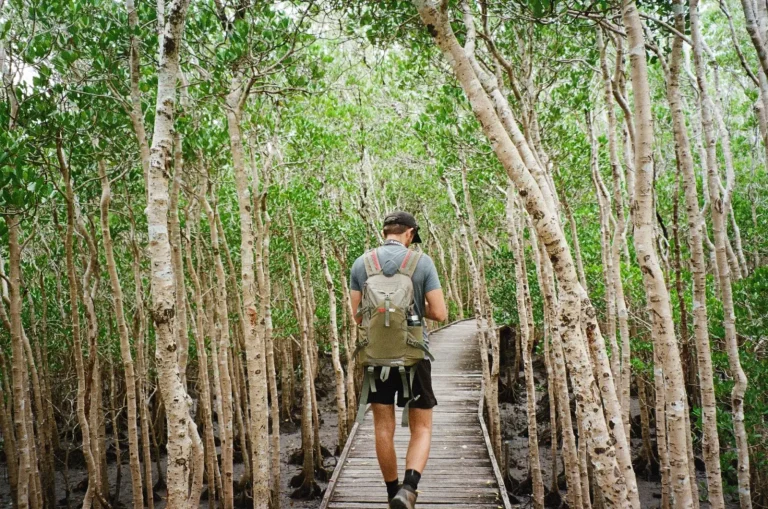
Trail width and vegetation density also affect the microclimate. Narrow trails through dense vegetation feel cooler and more humid than wider paths where more light penetrates. Wider trails can actually feel hotter because you’re exposed to more direct light, even under the canopy. Trails that pass through different vegetation zones – dense forest, then more open areas, then back to dense – create natural temperature variation that feels less monotonous than consistent conditions.
Muddy or wet sections are common in rainforests and tend to feel cooler underfoot, which provides genuine relief. Walking on mud requires more effort, but the psychological and physical cooling effect often justifies the extra work. Sections with exposed rock or dry ground, by contrast, absorb and radiate heat more noticeably.
Hydration and Electrolytes
The standard advice to drink two liters of water applies, but it’s incomplete. In hot, humid conditions, you lose electrolytes faster than you lose water. Drinking plain water without replacing sodium and potassium becomes counterproductive after a certain point. Your body needs both. Electrolyte tablets, sports drinks, or even salted snacks make a measurable difference in how you feel and recover. I’ve noticed that walks where I paid attention to electrolyte balance felt easier than those where I focused only on water volume.
The practical limit for carrying water is also worth considering. A 3-liter capacity is reasonable for a half-day walk. Beyond that, the weight of the water itself becomes a heat-generating liability. If a trail is longer than what you can comfortably carry, either shorten the walk or find a route with water sources you can refill from. Many rainforest walks pass streams or have water stations. Knowing these locations beforehand changes the feasibility calculation.
Specific Rainforest Walks Worth Considering
The Danum Valley in Borneo has trails that follow the river system closely, which keeps temperatures manageable. The walks are moderate distance, well-maintained, and the water proximity is genuine relief. The Arenal region in Costa Rica offers several walks through secondary forest with good canopy coverage and stream access. Neither location is cooler than anywhere else, but the trail design accounts for heat better than many alternatives.
In Southeast Asia, the trails around Khao Yai in Thailand perform well because they’re relatively short and follow water features. The Kinabalu Park trails in Borneo are higher elevation, which helps with temperature, though the climb itself is demanding. In Central America, the trails in the Corcovado National Park vary widely, but the ones near the coast have better air movement than interior routes.
The pattern across these walks isn’t that they’re cooler – they’re not. It’s that they’re designed or naturally suited to shorter distances, water proximity, and reasonable pacing. That combination matters more than the specific location.
Walking rainforests in heat is manageable once you stop expecting the forest to be a cool refuge and start treating it as a hot, humid environment where pacing, timing, and route selection determine comfort. The walks that work best are those where you move slowly, pause regularly, and stay near water. Everything else is secondary to those three factors.