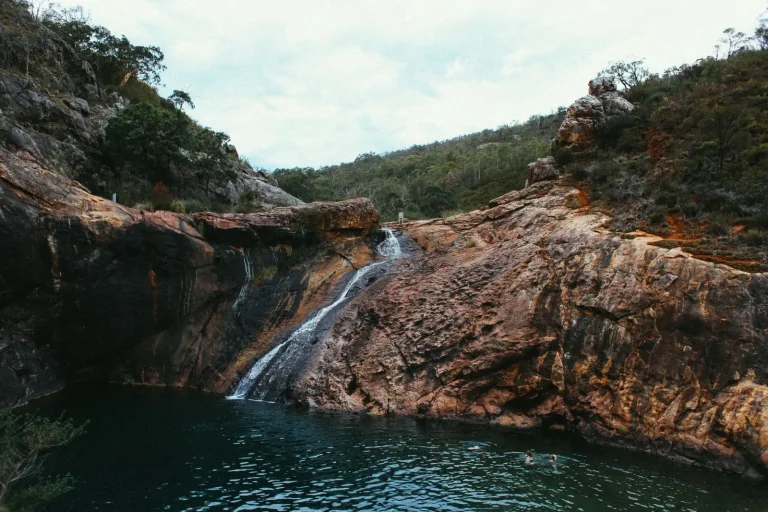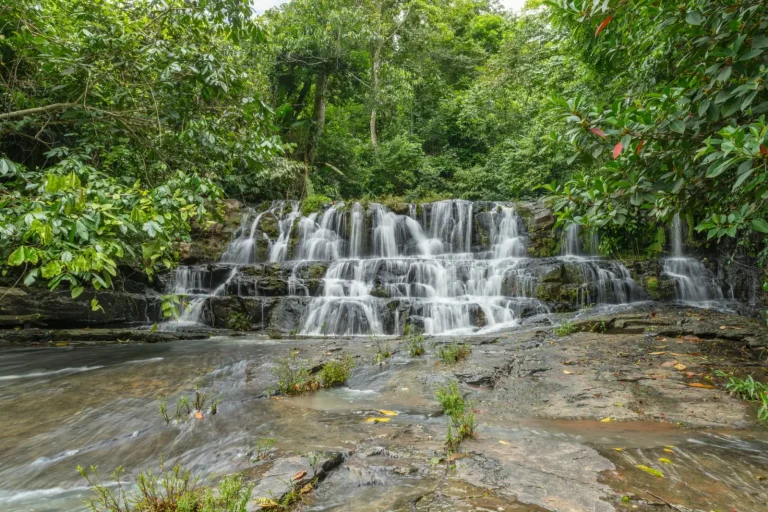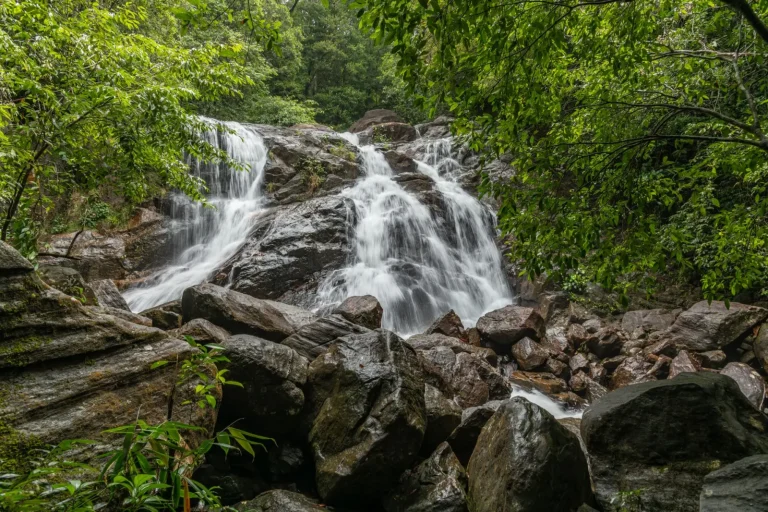

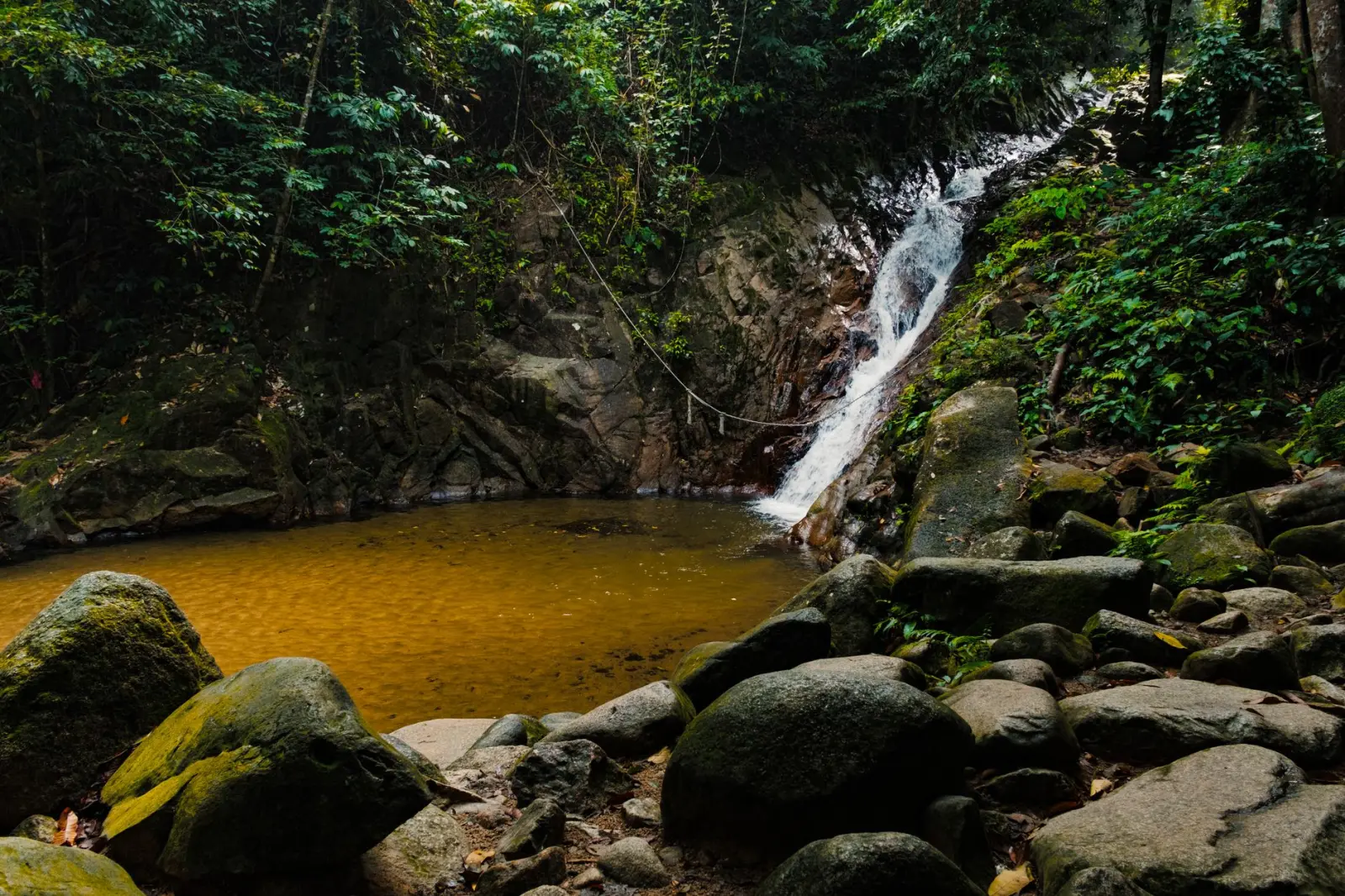
Spending time in rainforests, you notice that waterfalls don’t simply disappear into chaos. Below most significant cascades sits a pool – sometimes shallow and temporary, sometimes deep enough to swim in for hours. These pools aren’t accidents of geography. They form through a specific interplay of water force, rock composition, and time. After years of moving through rainforest terrain and observing how water behaves in these ecosystems, the mechanics become fairly clear, though the details shift depending on local conditions.
The most obvious force at work is the waterfall itself. Water falling from height carries enormous kinetic energy. When it hits the base, that energy has to go somewhere. The impact doesn’t simply dissipate into the surrounding area – it concentrates, creating a localized zone of intense turbulence. This turbulent water, moving at high velocity and carrying suspended sediment and small rocks, acts like a grinding tool against the bedrock below. Over months and years, this grinding action carves deeper into the underlying stone.
The type of rock matters enormously. In rainforests, you’re often dealing with basalt, granite, or softer sedimentary layers. Basalt and granite are harder and resist erosion more stubbornly, which means pools beneath waterfalls in these areas tend to be shallower but more stable. Softer rocks – sandstone, shale, or weathered volcanic material – erode faster, creating deeper pools more quickly. I’ve seen pools in granite-based terrain that barely change over years, while pools in softer rock can deepen noticeably within a single rainy season.
The Role of Sediment and Abrasion
The water itself carries the tools that deepen the pool. During heavy rainfall, a waterfall’s flow increases dramatically, and it carries sand, gravel, and small stones from upstream. This sediment-laden water becomes abrasive. The rocks and sand tumbling in the pool’s base act like sandpaper, wearing away at the bedrock. This process is slow but relentless. The heavier the sediment load and the faster the water moves, the more aggressive the erosion becomes.
What’s often overlooked is that erosion isn’t uniform around the pool. The most intense scour occurs directly beneath the waterfall’s impact zone. This creates a depression – sometimes quite pronounced – that deepens faster than the surrounding pool floor. Over time, this can produce pools with an uneven bottom, deeper in the center and shallower around the edges. The shape of the falling water matters too. A narrow, concentrated stream carves a narrow, deep hole. A broader cascade spreads the erosive force across a wider area, creating a shallower, wider pool.
Water Dynamics and Pool Stability
Once a pool reaches a certain depth, its behavior changes. Deeper pools have greater volume and slower water circulation. The water falling into the pool doesn’t immediately drain away – it swirls, creating eddies and currents that move in complex patterns. This circulation is crucial. It prevents sediment from accumulating too quickly and keeps the pool from filling in. In shallow pools, sediment settles fast and the pool can become choked with debris. In deeper pools, the circulation keeps finer sediments suspended longer, allowing them to flow out through the downstream channel.
The outflow point – where water exits the pool to continue downstream – is critical to the pool’s persistence. If the outflow is narrow or elevated, water backs up and the pool deepens. If the outflow is wide or low, water drains quickly and the pool remains shallow. Over time, the outflow channel itself erodes. As it deepens, it can lower the water level of the entire pool. I’ve seen pools that were once deep enough to dive into become wading-depth within a few years because the downstream channel eroded and lowered the outflow level.
Seasonal Variation and Long-Term Patterns
Rainforest pools aren’t static. During the wet season, increased water volume deepens pools and accelerates erosion. During drier periods, water flow decreases, erosion slows, and sediment can accumulate. This creates a cycle. A pool might deepen significantly during months of heavy rain, then stabilize or even become shallower during the dry season as sediment settles and fills in some of the carved space.
The lifespan of a pool depends on the balance between erosion and infilling. In some locations, a pool can persist for decades or longer, maintained by the continuous erosive action of falling water. In others, a pool might exist for only a few years before the downstream channel erodes enough to lower the water level, or before upstream changes redirect the waterfall’s flow. Landslides, which are common in steep rainforest terrain, can shift the entire system. A slide upstream might change the waterfall’s volume or location, and a slide downstream might alter the outflow channel dramatically.
The geology beneath the surface also plays a hidden role. Rainforest rocks are often fractured and layered. Water percolates through these fractures, weakening the structure from below. A pool might appear stable until a particular layer of softer rock is exposed, at which point erosion accelerates. Similarly, if water finds a path through subsurface fractures, it can drain away without leaving a visible outflow, causing a pool to mysteriously empty despite continued waterfall input.
Understanding pool formation isn’t just academic. For anyone spending extended time in rainforests – whether hiking, camping, or conducting fieldwork – these pools are often the only reliable fresh water source. Knowing why a pool exists and how stable it is can mean the difference between finding water and facing a difficult situation. A pool fed by a strong, consistent waterfall and backed up by an elevated outflow is likely reliable. A pool fed by a thin trickle, with a low and eroded outflow channel, might disappear or become inaccessible within weeks. The physical evidence is usually visible if you know what to look for.