

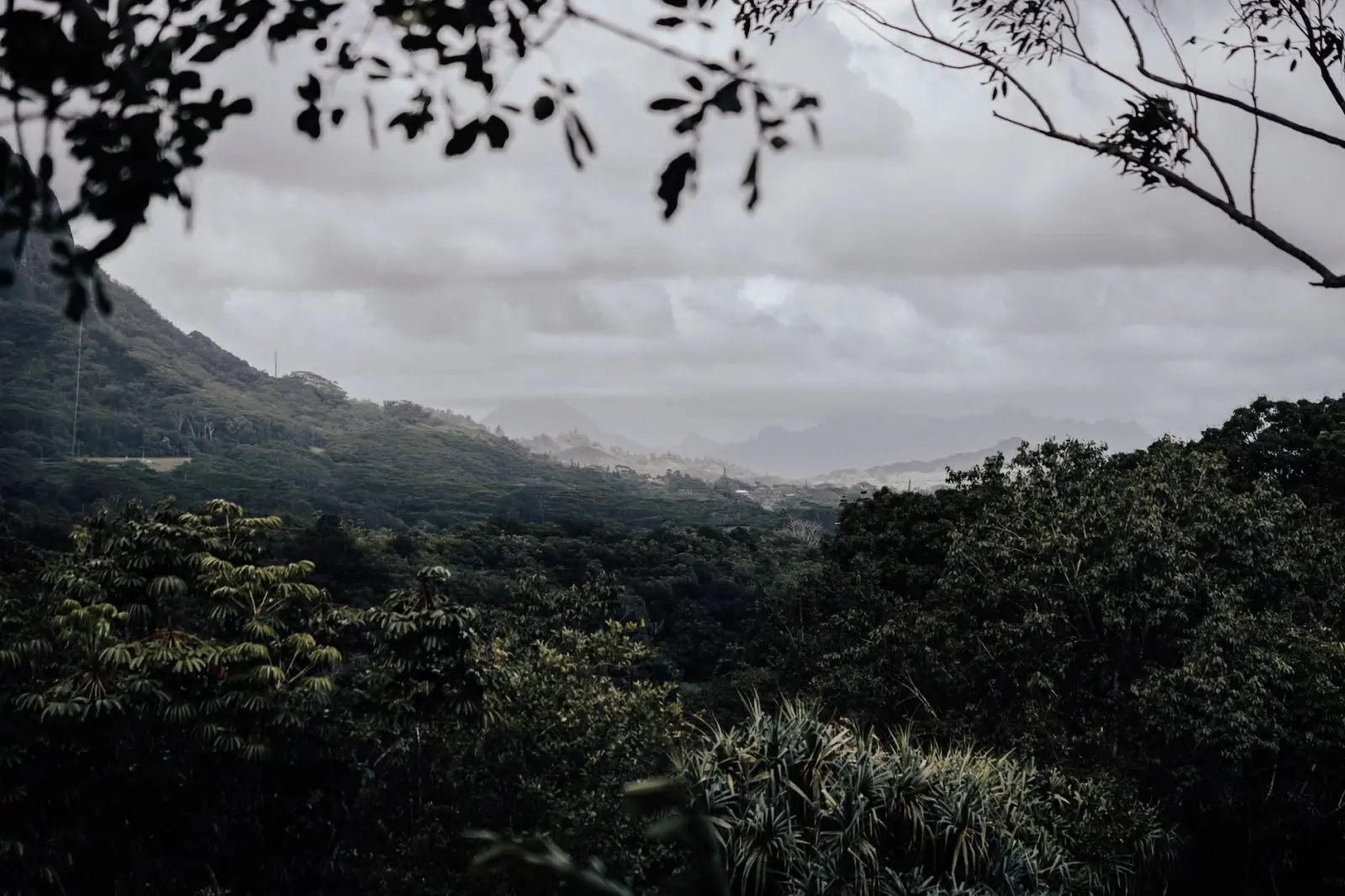
After spending time on rainforest trails across several continents, I’ve noticed a pattern: most walks marketed with “scenic lookouts” deliver either dense forest or a view obscured by humidity and haze. The issue isn’t the forest itself – it’s that rainforests are, by definition, places where vegetation dominates the landscape. Finding a trail that combines actual forest immersion with genuine visual payoff requires understanding what creates those breaks in the canopy and when they’re most likely to be clear enough to matter.
The mechanics are straightforward. Lookouts in rainforest settings typically exist where elevation changes sharply, where water has carved valleys, or where the forest has been disturbed by storms or landslides. These aren’t accidents. They’re the result of geography and ecology working together. A ridge walk will give you more consistent views than a valley floor trail, but it also means more exposure to wind and sun. A waterfall hike will lead to clearings, but those clearings are often small and crowded. Understanding this trade-off before you commit to a walk saves time and manages expectations.
Elevation Gain and Actual Visibility
Walks that climb significantly tend to deliver views, but the relationship isn’t linear. A 300-meter gain over two kilometers might give you one decent vista halfway through. A 600-meter gain over four kilometers often gives you sustained views from the midpoint onward. The effort compounds, though. Humidity in rainforests means that even modest elevation feels steeper than it would in temperate forests. Your legs tire faster. Your breathing becomes labored. By the time you reach a lookout, you might be too fatigued to stay long or to appreciate what you’re seeing.
I’ve found that the best rainforest lookout walks are those where the major elevation gain happens early. You push hard for the first hour or ninety minutes, reach an elevated section, and then the trail either plateaus or descends gently. This structure lets you recover while still being positioned to see outward. Trails that save their climbing for the end are brutal – you’re tired when you finally reach the view, and you have to descend in the dark if you’ve misjudged your timing.
Timing and Atmospheric Clarity
The time of day matters more than most guides acknowledge. Early morning – starting before 7 a.m. – gives you the clearest air. Mist burns off, light is directional, and the landscape has definition. By mid-morning, humidity rises. By afternoon, haze is nearly universal in tropical rainforests. If a walk is worth doing for its views, it’s worth starting early. This also means finishing before the light gets flat and gray, which happens earlier in rainforest regions than in open terrain.
Seasonal timing is equally important but harder to predict. In monsoon regions, the wet season brings daily afternoon rain and persistent cloud cover. The dry season offers clearer skies, but “dry” is relative – rainforests rarely feel dry. Some regions have a shoulder season where rainfall drops but humidity hasn’t fully peaked. That window is often only a few weeks. Checking local rainfall patterns and speaking with guides who work those trails year-round is worth the effort if you’re specifically chasing views.
Water Features as Natural Viewpoints
Waterfalls create natural clearings. The water needs space to fall, and vegetation doesn’t grow well in the constant spray. This means waterfall hikes almost always have at least one point where the canopy opens. The catch is that these spots are often crowded, especially on weekends or during peak tourist seasons. The clearing around a popular waterfall can feel like a viewing platform rather than a wilderness experience. If you’re purely after views, this might not matter. If you want solitude, you’ll need to either start very early or choose less-trafficked falls.
River valleys sometimes offer extended views, particularly if the river is wide enough that vegetation doesn’t completely overhang it. Walking alongside a river for several kilometers can give you a sense of the landscape’s scale in a way that a dense forest walk cannot. The trade-off is that river trails are often muddy, especially after rain, and they tend to be hotter because the water reflects and intensifies the sun. Insect pressure is also higher near water in tropical regions.
Ridge Walks and Exposure
Trails that follow ridgelines are the most reliable for consistent views. A ridge walk means you’re elevated above the surrounding forest, and vegetation on ridge tops tends to be shorter and less dense than in valleys. This is partly because ridges are windier and drier. The downside is that ridge walks are more exposed to weather. A clear morning can turn into a cloudy, windy afternoon quickly. Ridge walks also tend to be more technically demanding – footing is often uneven, and there’s less room for error if the trail is steep.
I’ve done ridge walks in Central America, Southeast Asia, and northern Australia. The pattern holds: the views are worth the effort, but the conditions can change fast. Bringing a light rain jacket is essential, even if the forecast looks clear. The wind on exposed ridges can be surprisingly strong, and it cools you down quickly after exertion. Many people underestimate how cold a ridge can feel at altitude in the tropics.
Managing Expectations on Humid Days
Some rainforest walks are worth doing even if the views aren’t perfect. A trail through old-growth forest, even without lookouts, offers something that open landscapes don’t – the sense of being inside a living system. The sounds are different. The light is different. The air smells different. If you’re on a hike and the views don’t materialize because of cloud cover or haze, the walk isn’t ruined. It’s just a different experience.
That said, if you’re specifically looking for scenic lookouts and the conditions are poor, it’s reasonable to skip the walk or shorten it. There’s no prize for pushing through poor visibility just to reach a lookout you can’t see. Local guides can usually tell you whether conditions are worth attempting on a given day. They’ve seen the same trails dozens of times and know what “clear enough” looks like.
The best rainforest walks with genuine views tend to be those where the forest itself is the primary reward, and the lookouts are a bonus rather than the entire point. This mindset shift – from hunting for a specific view to enjoying the journey and appreciating whatever clarity you find – tends to result in better experiences overall. The walks that deliver most consistently are those that combine moderate elevation gain, early morning timing, and a route that follows water or ridgelines. Everything else is weather and luck.



