Spending time in tropical rainforests teaches you quickly that rain doesn’t simply fall straight down. What reaches the ground is often a fraction of what actually enters the canopy from above. After years observing how water moves through these forests – from the top of the tallest emergent trees down through layers of vegetation – the mechanics of this interception become less mysterious and more clearly understood as a fundamental feature of how rainforests function.
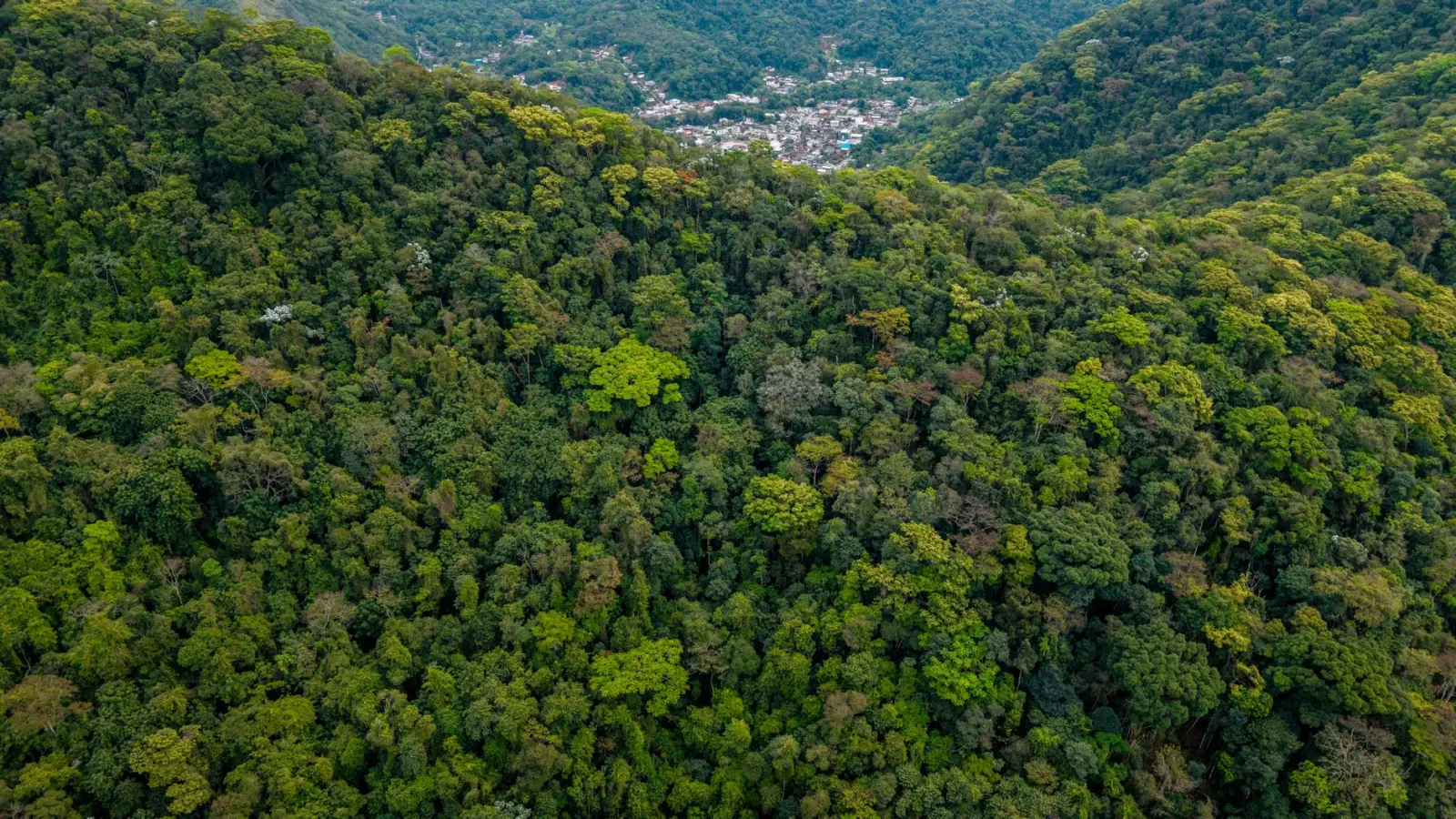
The sheer density of leaves, branches, and woody material in a rainforest canopy creates an enormous surface area that encounters falling rain before anything reaches the soil. A mature rainforest canopy can be 30, 40, or even 50 meters deep in some cases, with multiple overlapping layers of vegetation. Each layer – the emergent trees towering above everything, the main canopy proper, the understory, and the shrub layer – presents its own obstacle to rainfall. The amount of water that never touches the ground in some rainforests can exceed 50 percent of total annual precipitation, though this varies considerably depending on rainfall intensity, leaf size, branch angle, and the specific structure of the forest.
The Interception Process
What happens physically is straightforward in concept but complex in execution. Rain enters the canopy and strikes leaves, branches, and vines. Some water runs off immediately along leaf surfaces and branch angles, flowing downward in a somewhat predictable pattern. Other water is temporarily held on leaf surfaces, in the crevices of bark, or in the cups formed by certain leaf arrangements. This water either evaporates directly back into the atmosphere or eventually drips down to lower layers.
The efficiency of this process depends on several factors that become apparent when you’re actually in the forest during and after rainfall. Large-leaved plants intercept more water per leaf than small-leaved plants, but they also shed water more readily once they reach saturation. Smaller leaves, particularly those of understory plants, tend to hold water longer and allow more gradual dripping. The angle of branches matters significantly – nearly horizontal branches shed water differently than steeply angled ones. Even the texture of bark influences how water flows; rough bark channels water in specific patterns, while smooth bark sheds it more uniformly.
Rainfall intensity changes everything. A light drizzle might be almost entirely intercepted and evaporated before reaching lower layers, while a heavy downpour overwhelms the canopy’s capacity and drives water through more quickly. I’ve observed the same forest receiving different proportions of rainfall reaching the ground depending entirely on whether the rain came as a gentle afternoon shower or a sudden tropical deluge. The forest’s water-holding capacity isn’t infinite, and once leaves and branches are saturated, additional rain passes through rapidly.
Vertical Water Distribution
The way water eventually reaches the ground is rarely uniform. Rainfall doesn’t drip evenly across the forest floor. Instead, it follows specific pathways determined by the structure of the canopy above. Water tends to concentrate along major branches and tree trunks, creating what’s sometimes called stemflow – water that runs down the trunk rather than dripping from branch tips. In some cases, a significant portion of the water that does reach the ground arrives via these trunk flows rather than as diffuse dripping from foliage.
This concentration has real consequences for the forest below. Soil directly around tree bases receives substantially more water than areas between trees. Erosion patterns reflect this uneven distribution. Nutrient cycling is affected because water moving down trunks carries dissolved compounds from the canopy, depositing them in concentrated zones rather than spreading them evenly. Root systems have adapted to this reality, with many trees developing root patterns that take advantage of the concentrated water flow near their own trunks.
The timing of water delivery also matters. Water that’s held in the canopy and released gradually over hours or days reaches the ground differently than water that flows through quickly during active rainfall. Gradual dripping allows more infiltration into soil, while rapid flow can cause surface runoff and erosion even in forests where the ground is typically permeable. The forest floor’s ability to absorb water is partly determined by how the canopy above regulates delivery.
Evaporative Loss and Atmospheric Cycling
A substantial portion of intercepted rainfall never reaches the soil at all. It evaporates directly from leaf surfaces, from wet bark, and from water held in epiphytic plants and moss-covered branches. This process, called interception loss, can account for 10 to 30 percent of total rainfall in many tropical forests, sometimes higher in drier seasons or during periods of high wind and sun exposure. The water returns to the atmosphere without ever contributing to groundwater, streamflow, or soil moisture.
This evaporative loss isn’t wasted in an ecological sense. It’s part of how rainforests regulate their own microclimate. Water evaporating from the canopy cools the air, increases humidity, and contributes to the formation of clouds and continued precipitation. The forest is essentially recycling its own water supply, with a significant portion of the moisture in the air above a rainforest having evaporated from the forest itself rather than coming from distant ocean sources. This self-reinforcing cycle is one reason why large-scale deforestation can reduce rainfall in regions that were previously forested.
Practical Implications for Forest Dynamics
Understanding canopy interception helps explain several observable features of rainforest ecology. The forest floor, despite being in a wet environment, can actually experience periods of relative dryness during gaps between rainfalls, particularly in the understory where less water penetrates through multiple canopy layers. Plants adapted to these conditions have developed specific strategies – shallow root systems that take advantage of the moisture that does reach them, waxy leaves that reduce water loss, and the ability to tolerate temporary drought stress.
Stream hydrology in forested watersheds is directly influenced by interception patterns. Streams flowing through intact rainforest tend to have more stable, less flashy flow regimes than streams in deforested areas, partly because the canopy moderates how quickly rainfall becomes runoff. When forests are cleared, not only does more water reach the ground, but it reaches it faster and more intensely, leading to erosion, flooding, and changes in water temperature and chemistry that affect aquatic ecosystems.
The presence of epiphytes – plants that grow on trees without rooting in soil – is also tied to canopy interception. These plants, including many orchids, bromeliads, and ferns, depend on the moisture that accumulates in the canopy. They create their own small water-holding systems in leaf axils and root masses, contributing to the overall water storage capacity of the canopy and creating microhabitats for countless invertebrates and small vertebrates. The canopy’s ability to hold and slowly release water supports an entire community of organisms that would not exist in a forest with different interception characteristics.
After years in tropical forests, the takeaway is that rainfall in these ecosystems is fundamentally different from rainfall in temperate zones or open landscapes. The canopy isn’t simply receiving water and letting it fall through. It’s actively managing water – storing it, evaporating it, redirecting it, and controlling the rate and location of its delivery to the ground. This process shapes everything from soil development to nutrient cycling to the structure of plant communities. It’s one of the reasons why rainforests are so productive and so sensitive to disturbance. Remove or significantly alter the canopy, and you’re not just losing trees. You’re disrupting a finely tuned system for capturing, storing, and cycling water that the entire ecosystem depends on.