Mary Cairncross sits on the Blackall Range in Queensland’s Sunshine Coast hinterland, and it’s one of those places that looks deceptively simple from a distance. The reserve covers around 57 hectares of subtropical rainforest, which doesn’t sound like much until you’re actually in it, moving through the canopy layers and trying to understand how the forest organizes itself. After spending considerable time walking these trails, I’ve noticed that most visitors arrive with a particular idea of what a rainforest should look like – dense, impenetrable, impossibly green – and the reality is both more subtle and more instructive than that expectation.
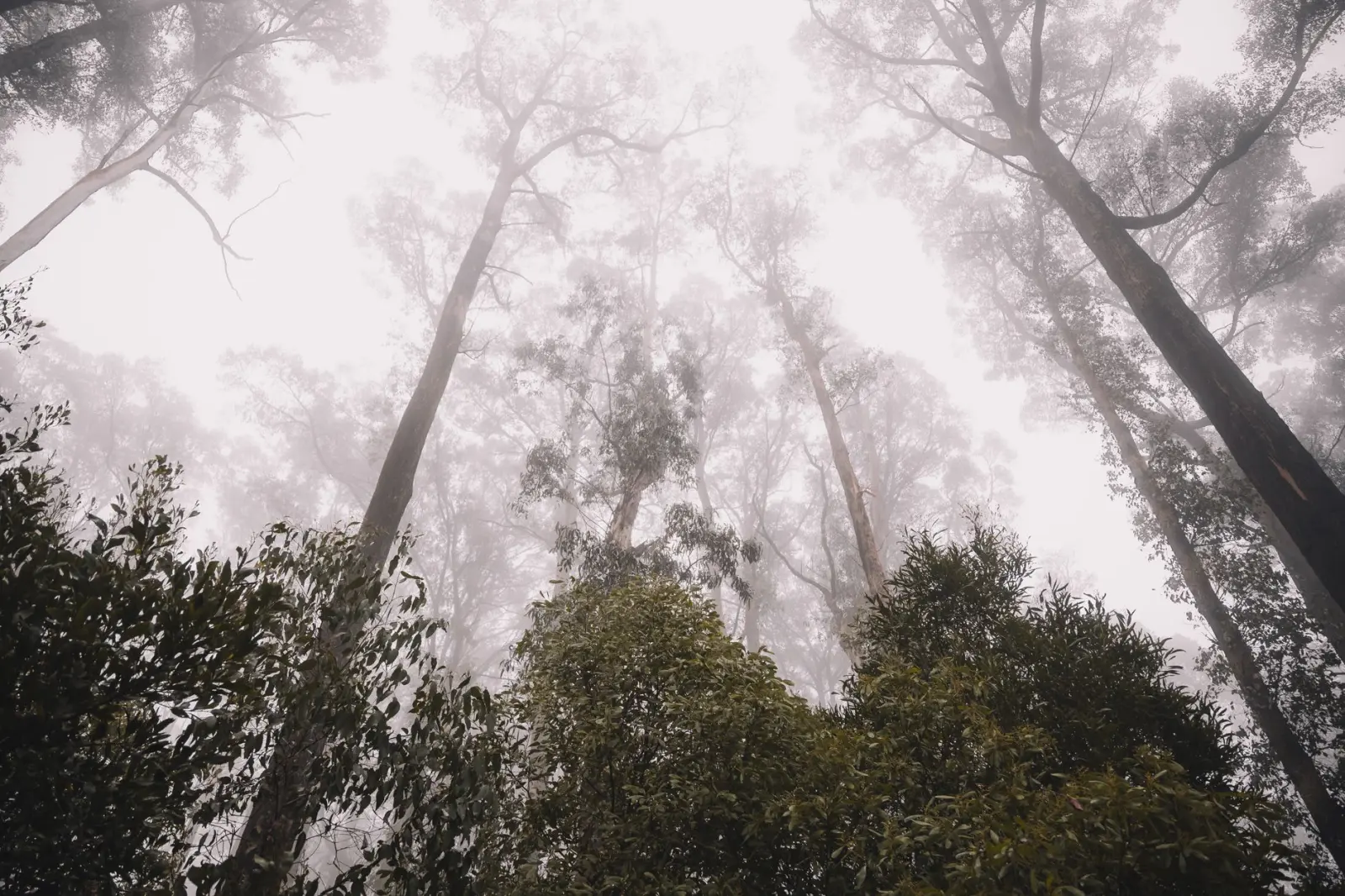
The first thing that strikes you about Mary Cairncross is the vertical structure. This isn’t a wall of vegetation. It’s a layered system, and once you recognize that, the forest becomes readable. The canopy sits high, maybe 30 to 40 meters up in places, and beneath it there’s a mid-story of smaller trees and shrubs, then an understory, then the forest floor itself. Each layer has its own light regime, humidity, and cast of inhabitants. Walking through this gradient, you move from relative openness at ground level into progressively dimmer conditions as you look upward. This layering is why the same forest can feel spacious in some sections and claustrophobic in others – it depends entirely on where you are in that vertical stack.
The trails themselves are well-maintained, which is both an advantage and something worth understanding. The main loop is manageable for most fitness levels, taking roughly 45 minutes to an hour depending on pace and how often you stop. But the maintenance also means you’re experiencing a curated version of the forest. The edges have been cleared, fallen trees removed, and the walking surface kept relatively even. This is necessary for access, but it does mean you’re not seeing the full chaos of forest succession. In undisturbed sections, you’d encounter far more deadwood, more tangle, more evidence of the constant cycle of growth and decay. What you see at Mary Cairncross is the forest under management, which is instructive in its own way.
Light and the Canopy Dynamics
The subtropical rainforest canopy here is dominated by several species – fig trees, cedar, and various eucalypts among them – and the way they compete for light shapes everything below. On overcast days, which are common enough in this region, the forest floor remains dim even at midday. On clear days, shafts of light penetrate to the understory, and you notice how the smaller plants orient themselves to catch these moving patches. This isn’t random. The forest is constantly reading the light environment and responding to it.
What becomes apparent after multiple visits is how much of the forest’s character depends on rainfall and season. During the wetter months, the understory is dense and lush, and the trails can become genuinely muddy. In drier periods, the vegetation pulls back slightly, and you can see further into the forest structure. Neither state is more “authentic” than the other – both are normal operating conditions for subtropical rainforest. But it does mean that a single visit gives you only a snapshot of what the place actually is. The forest is dynamic in ways that aren’t always obvious during a single walk.
What the Understory Reveals
Spend time looking at the understory plants, and you start to notice patterns. There are ferns – lots of them – and climbing vines that use the trees as scaffolding to reach the light above. There are palms, some native to this region and others that have naturalized over decades. The presence of these different species tells you something about the forest’s history and current condition. Invasive species do appear here, as they do in most managed reserves, but they’re not dominant. The native structure is intact enough that it can hold its own.
The forest floor itself is where the real work happens, though you might not think so at first glance. The leaf litter is thick, and beneath it is the dark humus layer where decomposition is constant. This is where the nutrients cycle – fallen leaves, dead wood, animal matter all breaking down and becoming available to the living plants above. The smell of the forest floor, that rich earthy scent, is the smell of this process. It’s not decorative. It’s fundamental to how the forest persists.
Practical Realities of Walking Here
The trails can be slippery after rain, more so than you might expect. The leaf litter and exposed tree roots create natural hazards that aren’t dangerous if you’re paying attention but can catch you off guard if you’re moving quickly or distracted. Wear shoes with good grip. The humidity is persistent, even on days that don’t feel particularly warm. You’ll notice it in how your clothes feel and how quickly you might fatigue if you’re not acclimated to it.
The reserve is accessible year-round, but timing matters. Early morning is quieter and cooler. Midday can be genuinely warm, and the trails can become crowded on weekends. There’s a small parking area and basic facilities, which means this isn’t a remote experience. It’s a suburban rainforest, accessible and managed, which is exactly what it is. That’s not a criticism. It means the forest is available to people who might not otherwise encounter subtropical rainforest ecology at all.
Wildlife presence is real but often subtle. You’re more likely to hear birds than see them, particularly in the canopy. Insects are everywhere, though you might not notice them unless you’re looking. Larger animals like wallabies or possums are present but tend to be active at dawn or dusk. Snakes do occur in the reserve, as they do throughout Queensland, but encounters are rare and typically involve the snake leaving before you know it was there. The forest isn’t hostile. It’s just indifferent to human presence in the way wild systems tend to be.
After multiple visits across different seasons, what becomes clear is that Mary Cairncross isn’t a destination that reveals itself in a single walk. The landscape teaches something different each time – about canopy structure on a clear day, about the speed of decomposition after rain, about how light moves through the layers, about the quiet persistence of subtropical forest ecology. It’s a place where the forest’s actual complexity gradually becomes visible if you’re willing to spend time with it.