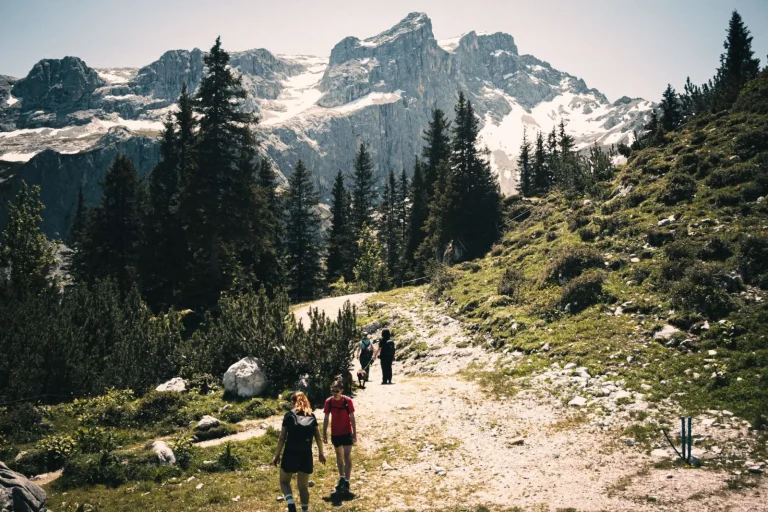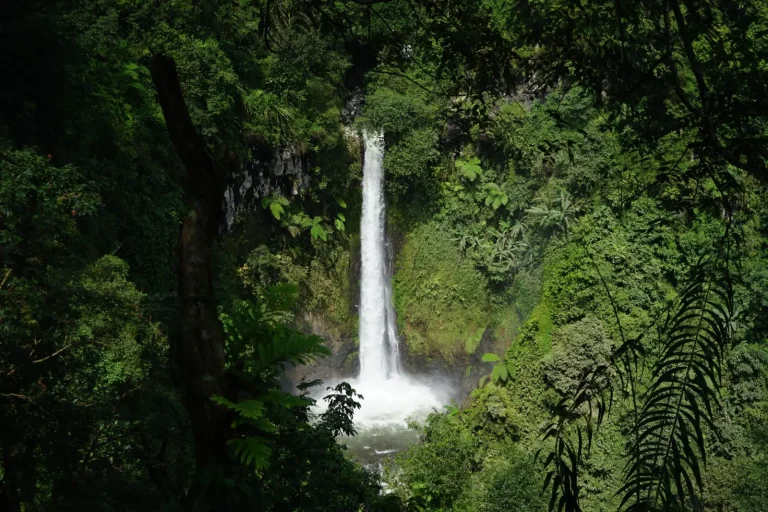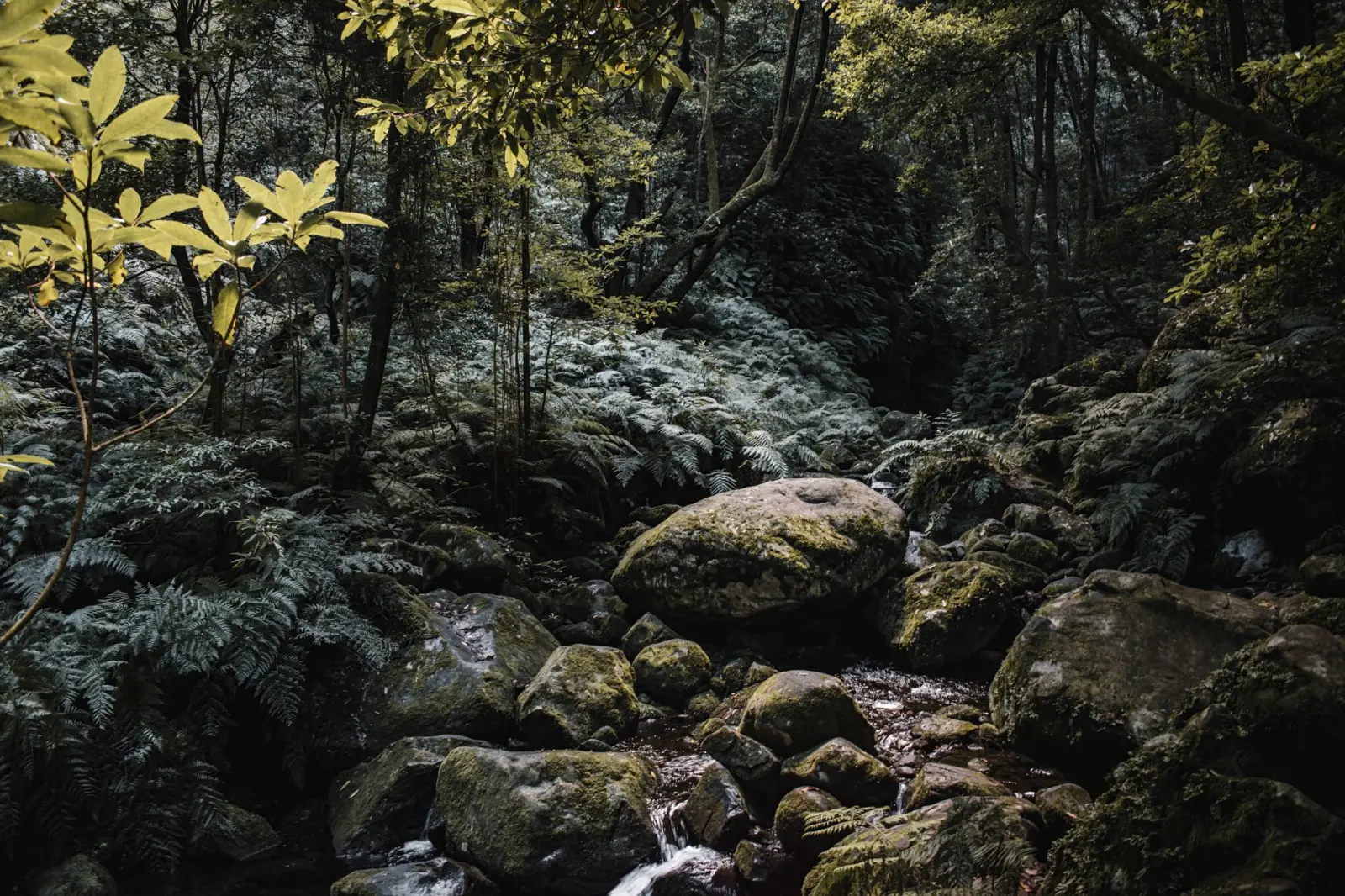
The forest around Booloumba Falls sits in a pocket of subtropical rainforest on the Conondale Range, and it behaves differently depending on when you arrive and how prepared you are for what the terrain actually demands. I’ve walked these trails many times across different seasons, and the experience shifts noticeably. Most visitors arrive expecting a straightforward waterfall walk, then encounter something more complex – not dangerous, but requiring attention to footing, timing, and physical readiness.
The main approach follows Booloumba Creek upstream toward the falls. The path itself is well-used and marked, but “well-marked” in a rainforest context means you’re following a line of foot traffic and occasional trail markers, not a manicured boardwalk. The forest floor is uneven. Exposed tree roots cross the path frequently, and after rain, sections become slippery. The creek runs alongside much of the route, which is pleasant until you realize the noise masks the sound of your own footsteps and makes it harder to judge distance or time elapsed.
Terrain and Physical Demand
The walk to the falls is often described as moderate, and that’s accurate if you’re comparing it to major alpine hikes. But “moderate” here means sustained, not flat. There’s a consistent gentle-to-moderate gradient, with sections of steeper scrambling near the falls themselves. The distance is roughly 2.5 to 3 kilometers one way, depending on which access point you use and where exactly you stop. That doesn’t sound demanding until you’re moving carefully over roots and rocks for 45 minutes to an hour.
The rocks near the creek are slick year-round. Even when the creek level is low and the rock surfaces look dry, they’re often covered in a thin layer of algae or moss that provides almost no traction. I’ve seen people slip on what appeared to be solid stone. Proper footwear matters here more than distance. Runners or trail shoes with good grip work better than smooth-soled boots or sandals. The creek itself is tempting to cross at various points, but the rocks are unstable and the current, even when shallow, can shift your footing faster than you’d expect.
Timing and Crowd Patterns
Booloumba Falls attracts regular foot traffic, especially on weekends. The car park fills by mid-morning on warm days, and the trail becomes noticeably busier. If you start early – before 8 or 8:30 AM – you’ll have a quieter experience and avoid the heat building up through the canopy. The forest provides shade, but it’s humid shade. Midday walking here feels heavier than the same distance in open terrain, and fatigue accumulates faster than distance alone would suggest.
The falls themselves are modest in volume most of the year. This isn’t Niagara. After heavy rain, the flow increases and the pool at the base becomes less inviting for swimming. In dry periods, the falls become a trickle, and the appeal shifts entirely to the forest walk itself. The best time to visit is usually a few days after rain, when the creek has flow but isn’t surging, and the ground has dried enough that mud isn’t an issue.
What the Forest Demands
The rainforest environment here is dense but not impenetrably thick. The canopy is high, and the understory is relatively open in places. However, the humidity is constant. Even on cooler days, you’ll be damp within the first 20 minutes of walking. This affects how you pace yourself. People often underestimate how much fluid they’ll need. A small water bottle is insufficient for most people on a full walk to the falls and back. Two liters is a reasonable baseline, more if the day is warm.
Insects are present but not overwhelming. Mosquitoes can be active near the creek, particularly in warmer months or after rain. Leeches appear in wet conditions, usually after significant rainfall. They’re not dangerous, but encountering them tends to unsettle people. Salt or insect repellent works, but the best approach is to check your legs and arms after the walk rather than panic during it. Ticks are less common on this trail than in drier eucalyptus forest, but they’re still present.
The light changes noticeably through the day. Early morning brings softer light and clearer visibility. By midday, the canopy filters everything into a greenish dimness that makes it harder to judge terrain depth and distance. Late afternoon light becomes dappled and uneven, which increases the chance of misjudging a step. This isn’t a reason to avoid walking at any particular time, but it’s worth being aware of how visibility shifts and adjusting your pace accordingly.
Navigation and Orientation
The trail to the falls is straightforward to follow. You’re essentially following the creek upstream, and the path rarely branches in confusing ways. The main risk isn’t getting lost but rather losing track of how long you’ve been walking or how far you’ve come. The sameness of the forest – similar trees, similar undergrowth, similar creek sounds – can make distance feel distorted. People often think they’re closer to the falls than they actually are, then feel more fatigued than expected when they finally arrive.
A GPS device or phone with offline maps is useful, not because you’ll need it to find the way, but because it gives you concrete information about pace and distance. This helps you judge whether you have enough time and energy to continue or turn back. The forest doesn’t provide obvious landmarks for self-assessment, so external reference points become valuable.
The walk back down is easier on the legs than the ascent but harder on the knees and hips. The descent is where most minor injuries occur – twisted ankles, strained knees from braking on slopes, or slips on wet rock. The return journey often feels longer psychologically, even though it’s the same distance, because fatigue makes the terrain feel more challenging.
Visiting Booloumba Falls and the surrounding forest is a straightforward outing if you approach it with realistic expectations about terrain, humidity, and pacing. The forest itself is the main attraction, not a backdrop to the waterfall. The walk works best when you’re prepared for sustained movement over uneven ground, when you’ve brought adequate water, and when you’ve started early enough to avoid the heat and crowds of midday. The experience is worth the effort, but it rewards attention and realistic self-assessment more than enthusiasm.