The forest around Gherulla Falls sits in that awkward middle ground where it’s neither remote enough to demand serious preparation nor straightforward enough to treat casually. I’ve walked these trails enough times to recognize the patterns – the way conditions shift through the day, how the terrain surprises people who’ve only seen photos, and where most visitors run into genuine friction rather than genuine danger.
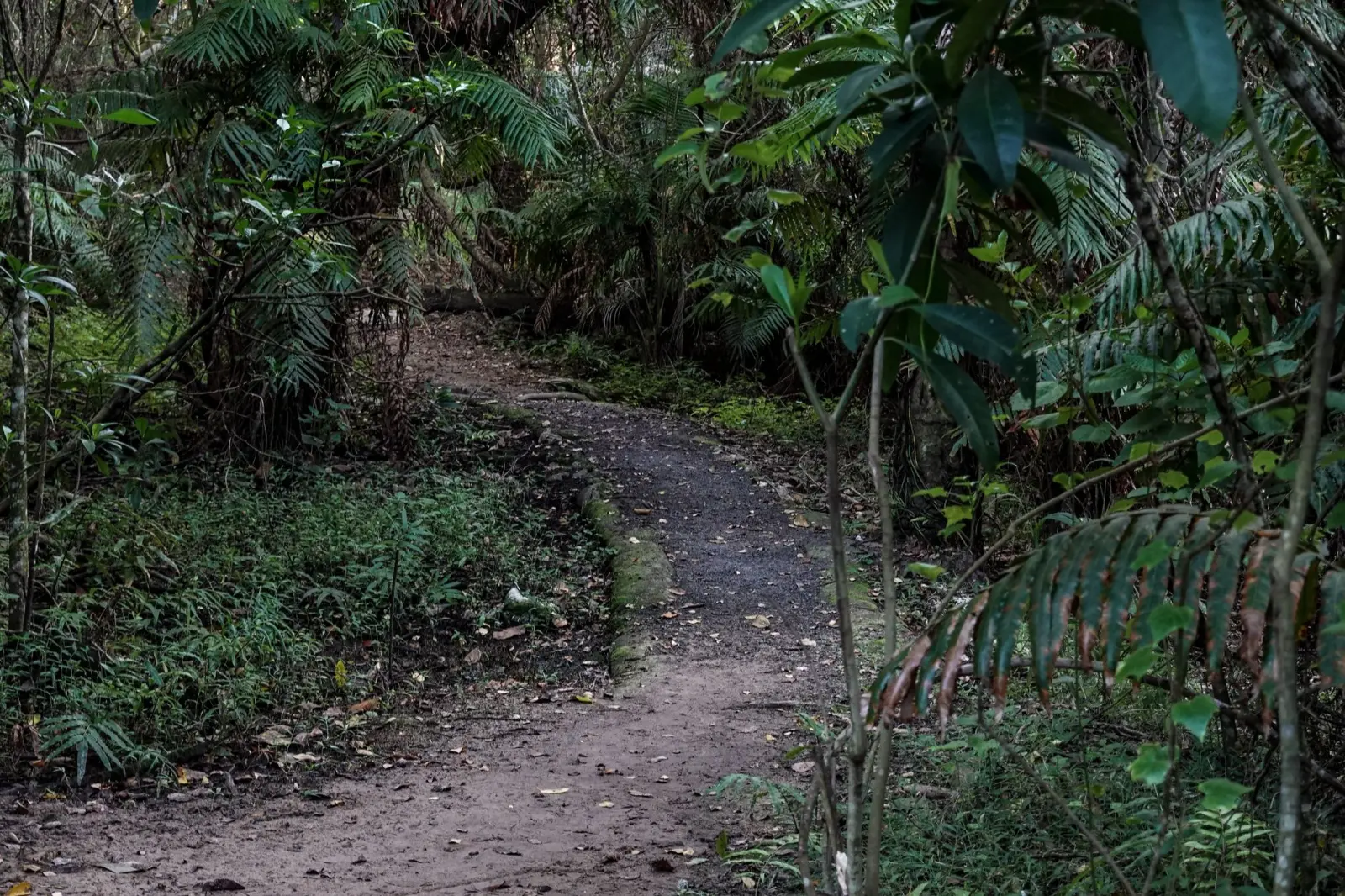
What strikes you first is the density. The forest here isn’t the open eucalyptus woodland you might expect from Queensland. It’s subtropical rainforest in transition, thick with vines, palms, and understory growth that crowds the walking line. The canopy sits low enough that you’re always aware of it, and the humidity hangs regardless of season. On paper, the distance to the falls is manageable. In practice, the forest eats time in ways that don’t show up on a map.
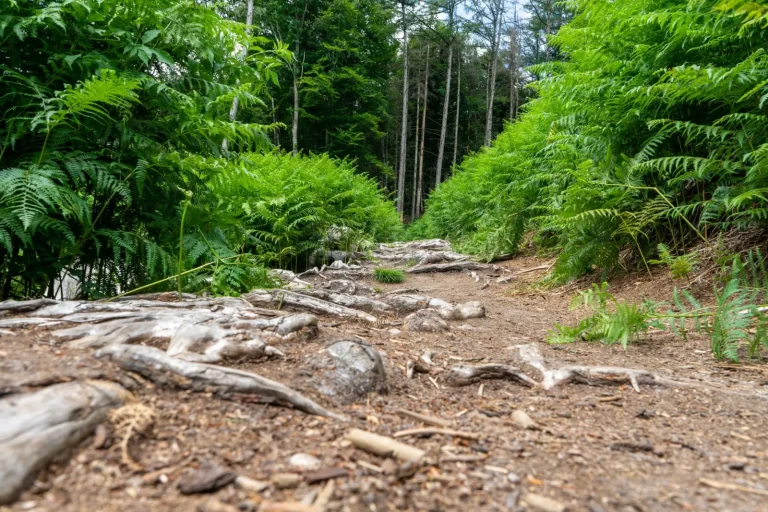
The track itself is reasonably maintained, but “maintained” means different things depending on when you last visited and how much rain has fallen. Sections that were clear two weeks ago can be overgrown enough to slow your pace noticeably. The ground is rarely flat. Exposed tree roots form natural steps, and the soil underneath tends toward clay that becomes slick after rain. This isn’t dramatic terrain, but it’s the kind that accumulates fatigue in your legs and makes you watch your footing constantly rather than letting your mind wander.
Water and Seasonal Variation
The falls themselves respond sharply to rainfall. After a dry spell, you’re looking at a modest cascade – still worth the walk, but it won’t feel dramatic. After heavy rain, the volume changes everything. The water moves faster, the mist reaches further into the forest, and the whole character of the place shifts. The creek crossing below the falls can be ankle-deep or knee-deep depending on what happened upstream in the previous week. This matters more than most people anticipate. A crossing that’s simple one week becomes genuinely awkward the next, and there’s no reliable way to know in advance except by calling ahead or checking recent visitor reports.
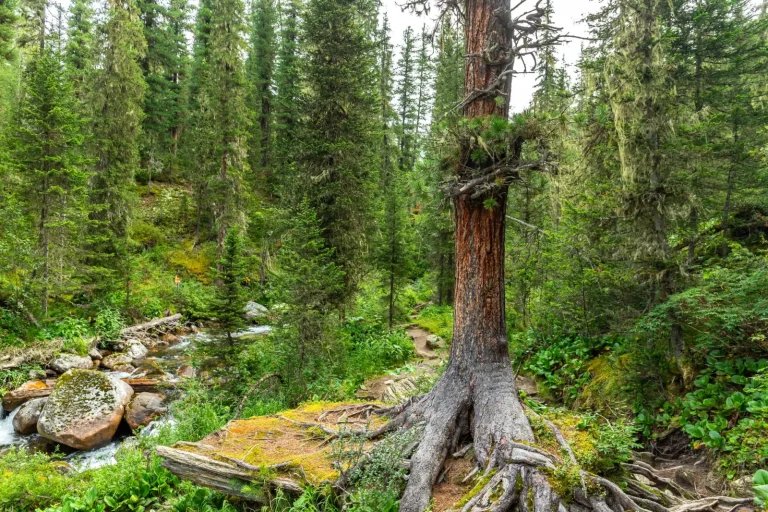
The forest floor around the falls stays damp most of the year. Moss covers rocks and fallen logs, and the stone surfaces near the water are consistently slippery. I’ve seen confident walkers lose their footing in places that looked stable. The spray from the falls extends further than you’d expect, and on humid days, the mist clings to everything. This creates an almost perpetual wet surface that doesn’t dry quickly even when the sun breaks through the canopy.
Timing and Energy Management
Starting early matters here, not because of darkness or safety concerns, but because the forest is genuinely more pleasant in the morning. The humidity is lower, the light is better, and you’re not competing with the day’s accumulated heat. By mid-afternoon, the temperature and moisture combine in a way that makes the walk feel heavier than it should. People often underestimate how much the forest environment itself drains energy, separate from the physical effort of walking.
The round trip typically takes two to three hours depending on pace and how long you spend at the falls. That sounds straightforward until you factor in the actual conditions – the need to pick your way carefully, the stops to recover footing, the time spent navigating around obstacles. A fit person moving quickly can do it in under two hours. Someone taking a more measured pace, especially in heat or humidity, might need closer to three and a half. The variation is real and worth accounting for when planning the day.
What the Forest Reveals Over Time
The wildlife presence is subtle. You’re unlikely to see large animals, but the forest is clearly inhabited. Bird calls are constant, and you’ll notice evidence of smaller creatures – scratches on bark, disturbed leaf litter, the occasional snake (usually departing quickly). The snakes here are generally non-aggressive, but they’re present enough that wearing closed shoes and watching where you place your hands on rocks or logs is sensible rather than paranoid.
Insects are a factor that varies wildly by season and recent weather. Leeches appear after rain, particularly in damper sections. They’re not dangerous, but they’re persistent and unpleasant. Mosquitoes can be significant depending on the time of year. Neither of these is a reason to avoid the walk, but they’re real enough to be worth acknowledging. Insect repellent works to a point, and long sleeves in the right season make a tangible difference.
The forest floor itself tells you about the area’s history. You’ll notice sections where trees have fallen and been slowly reclaimed, areas of denser regrowth, and spots where the understory has opened up. This isn’t random – it reflects past storms, fire history, and natural cycles of growth and decay. Recognizing these patterns helps you understand why the terrain changes character as you move through the forest.
Practical Navigation and Route Finding
The main track is marked well enough that getting lost is unlikely, but navigation still requires attention. There are junctions where side trails branch off, and it’s easy to take a wrong turn if you’re not actively tracking where you are. The markers are there, but they’re not aggressively obvious. This is actually fine – the forest isn’t complex enough to trap you, and backtracking a few hundred meters is a minor inconvenience rather than a crisis.
Water sources exist along the walk, but they’re not reliable for drinking without treatment. The creek water is clear in places, but it’s still creek water. Carrying enough water from the start is simpler than trying to filter or treat it on the trail. Most people find that two liters is adequate for the round trip, though this varies with temperature and individual needs.
The forest around Gherulla Falls rewards attention rather than speed. It’s the kind of walk where the experience depends heavily on conditions and timing, and where the gap between an easy afternoon and a genuinely tiring one can come down to factors like when you started and how much rain fell last week. There’s nothing here that should discourage anyone reasonably fit, but there’s also nothing that justifies treating it as trivial. The forest is straightforward enough to navigate and walk through, but engaged enough to demand respect and basic preparation.