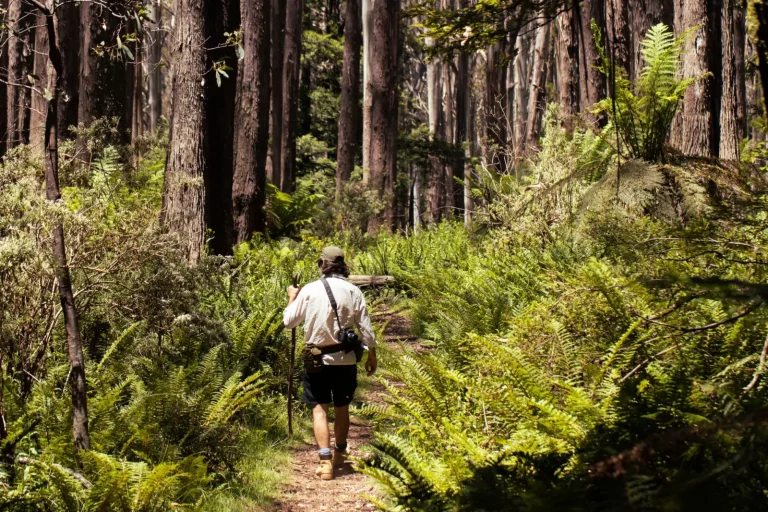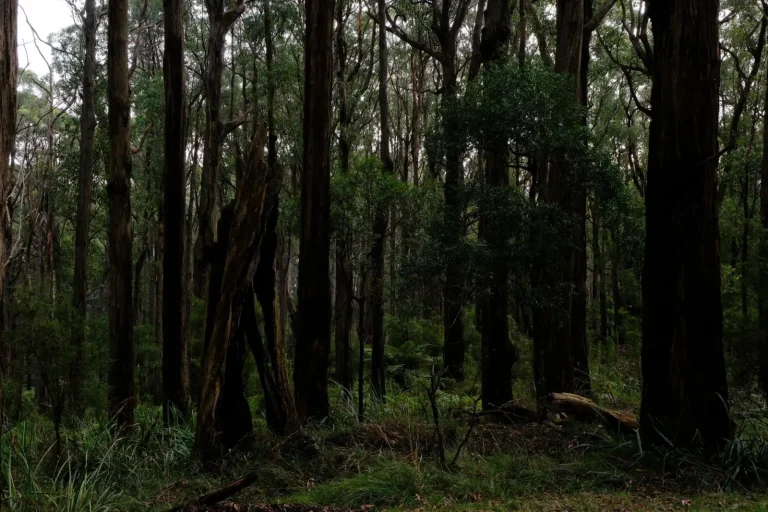
The forests around Mount Wollumbin – locally known as Mount Warning – operate on their own logic. After spending considerable time moving through these ranges, you develop a feel for how they behave across seasons and weather patterns. The landscape looks deceptively straightforward from a distance, but the reality of walking through it involves a different set of conditions than what most people anticipate.
The dominant forest type changes with elevation and aspect. Lower sections tend toward subtropical rainforest with dense canopy coverage, while higher elevations shift toward open eucalyptus woodland. This transition isn’t gradual. You’ll walk through thick understory for a stretch, then suddenly emerge into more open terrain where visibility extends further. The floor changes too – from deep leaf litter and root systems to compacted earth and exposed rock. Understanding which section you’re moving through matters because it affects pace, footing stability, and how quickly you can cover distance.
Drainage patterns shape the forest layout more than most walkers realize. Water runs downhill in predictable channels, and the vegetation responds accordingly. Gullies develop dense vegetation because moisture persists there. Ridge lines and elevated areas have sparser growth and better drainage underfoot. If you’re walking cross-country rather than sticking to marked trails, reading the topography helps you choose easier ground. Conversely, if you find yourself slipping repeatedly or sinking into soft ground, you’ve likely drifted into a drainage line without noticing.
Seasonal Moisture and Ground Conditions
The forest floor responds dramatically to rainfall. After heavy rain, the ground becomes treacherous in ways that aren’t immediately obvious. Leaf litter masks saturated soil and hidden holes. Roots become slick. What looked like stable ground becomes unstable within hours of wet weather. I’ve seen experienced walkers lose their footing on sections they’d walked dozens of times, simply because moisture changed the friction profile of the terrain.
Drier periods create their own complications. Hard-packed earth becomes unforgiving on joints, particularly knees and ankles. Exposed roots become trip hazards rather than grip points. The canopy coverage, while providing shade, also means that moisture lingers longer in shaded sections even when surrounding areas have dried out. You might walk from dry to wet ground multiple times in a single outing without any rain occurring.
Late spring through early autumn generally offers the most stable walking conditions. Winter brings persistent moisture, particularly in southern-facing gullies. Summer heat can be intense under the canopy, and the humidity creates its own fatigue factor beyond simple temperature. The “best” season depends on what you’re trying to achieve, but consistency of ground conditions tends to favor the shoulder seasons.
Navigation and Visibility
The forest canopy is thick enough that GPS becomes unreliable in many sections. Marked trails solve this problem, but they also concentrate foot traffic, which accelerates erosion and creates ruts that channel water. Established tracks are generally well-maintained and easy to follow, but they also tend to take the most direct route rather than the easiest route. Off-trail navigation requires map reading skills and comfort with uncertainty.
Visibility changes throughout the day as light angles shift. Early morning and late afternoon create long shadows that can obscure terrain features. Midday offers the clearest sight lines, though the contrast between sun and shade can make it harder to judge distances. Overcast conditions flatten the landscape visually, making it harder to judge gradient and distance. These aren’t minor aesthetic differences – they affect how quickly you can move and how easily you spot hazards.
The forest creates acoustic confusion. Sound travels unpredictably through dense vegetation. A stream that sounds close might be several hundred meters away. Wind in the canopy masks other sounds. This matters less if you’re walking alone, but it becomes relevant if you’re trying to coordinate with others or navigate by sound.
Physical Demands and Pace
The terrain around Wollumbin rarely offers sustained flat walking. Most routes involve significant elevation change, often over short distances. The gradient isn’t always steep enough to feel like a climb, but it’s consistent enough that it accumulates fatigue. What feels like a moderate walk in terms of distance can leave you more tired than expected because of the constant micro-adjustments your legs and core make to manage uneven ground.
Rock outcrops appear frequently, particularly at higher elevations. These aren’t usually technical scrambles, but they do require attention and deliberate foot placement. Loose rock is common enough that you can’t assume every surface will hold your weight. Wet rock becomes significantly more hazardous – friction drops substantially, and the risk of slipping increases disproportionately.
The combination of terrain variability and elevation change means that pace is unpredictable. A section that looks straightforward might slow you down considerably due to ground conditions. Conversely, sections that appear difficult might move faster than expected. This makes time estimation challenging. Most people underestimate how long it takes to cover distance in these forests because they’re accustomed to walking on more consistent terrain.
Vegetation and Natural Hazards
Stinging trees occur in the subtropical sections of the forest. These aren’t common along main trails, but they do exist. The sting is memorable and unpleasant. It’s not dangerous in a life-threatening sense, but it’s incapacitating enough that you’ll want to avoid contact. Learning to identify them – the heart-shaped leaves and distinctive appearance – is worthwhile if you’re spending time off-trail.
Leeches appear after rain, particularly in wetter sections. They’re more of an annoyance than a genuine hazard, but they’re persistent enough to affect comfort. Salt or insect repellent helps, but prevention is easier than removal. Checking your legs and ankles regularly during and after wet-weather walks becomes routine.
Snakes exist in these forests but encounters are rare. The terrain and vegetation don’t create ideal snake habitat in most sections. Noise and movement tend to alert them to your presence before you get close. The main practical concern is simply being aware of where you’re placing your hands and feet, which is good practice regardless.
Fallen trees and branches create obstacles that accumulate over time. Storms knock down larger trees, and smaller branches fall continuously. Well-maintained trails are cleared regularly, but off-trail sections can become genuinely difficult to navigate after significant weather events. This isn’t a permanent condition – the forest clears itself through decay and wind – but it can make certain routes impassable for weeks or months after storms.
The forests around Wollumbin reward attention and experience. They’re not hostile, but they do demand respect for their conditions. The same walk feels entirely different depending on season, recent weather, and time of day. This variability is part of what makes returning to these ranges worthwhile – the landscape is consistent enough to learn, but variable enough that it never becomes entirely predictable.