Whian Whian State Forest sits in the hinterland behind the Gold Coast and Byron Bay, and it’s one of those places that looks deceptively straightforward on a map. The trails wind through subtropical rainforest, and the elevation changes are moderate enough that most people assume a walk here will be a pleasant afternoon outing. What I’ve found over repeated visits is that the forest operates on its own schedule, and the experience tends to diverge from what first-time visitors expect.
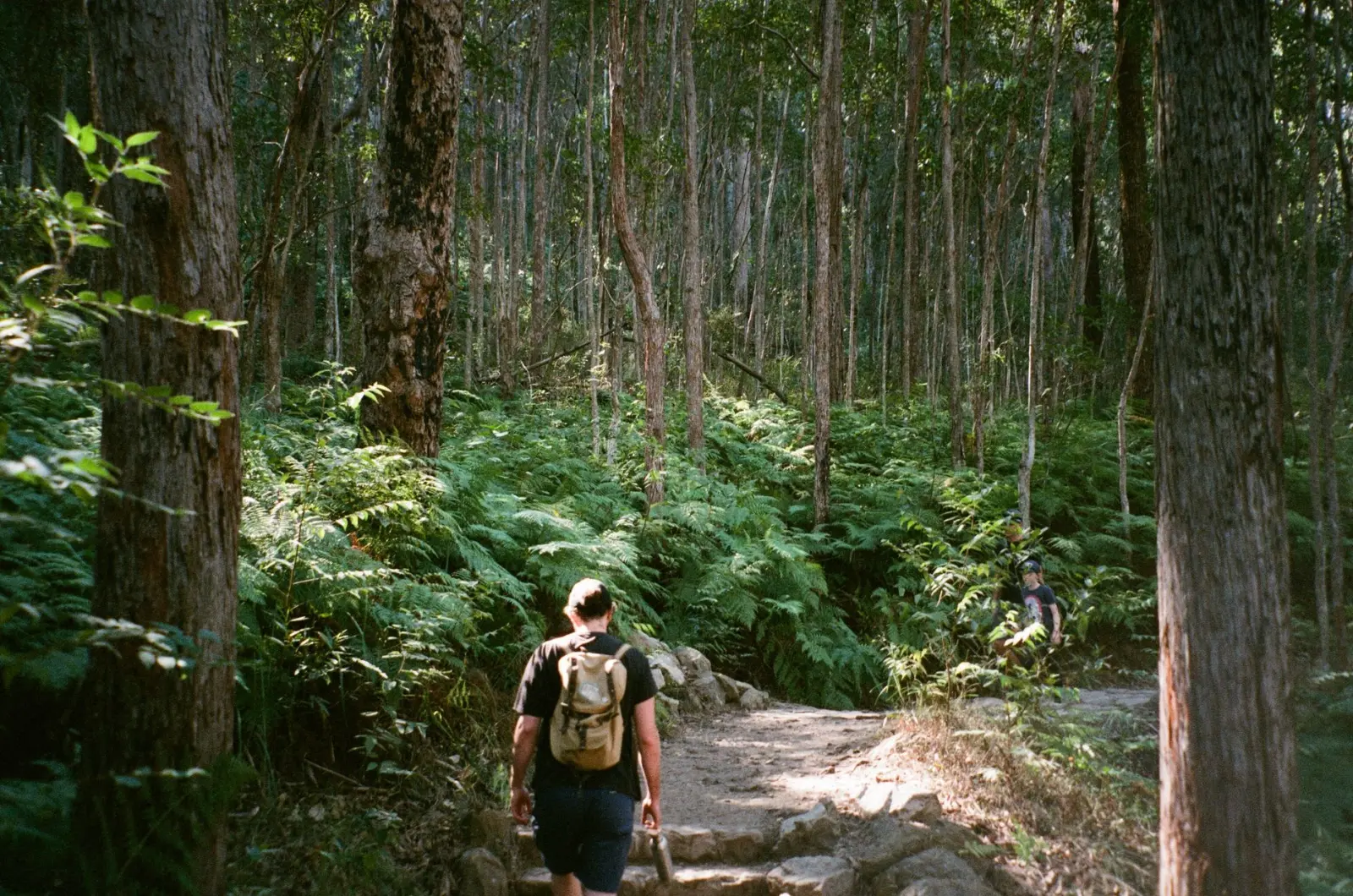
The main thing that catches people off guard is how the forest changes your sense of distance and time. A trail marked as three kilometres doesn’t feel like three kilometres when you’re moving through dense canopy cover with uneven ground beneath your feet. The visual reference points disappear quickly once you’re deep into the trees. You lose sight of the ridge lines and sky that normally help you gauge progress. The forest closes in, and suddenly you’re moving through a tunnel of green where every section looks similar to the last. I’ve watched people who were confident at the trailhead become noticeably quieter and more focused after thirty minutes, not because anything is wrong, but because the environment demands more attention than they anticipated.
The Ground and What It Demands
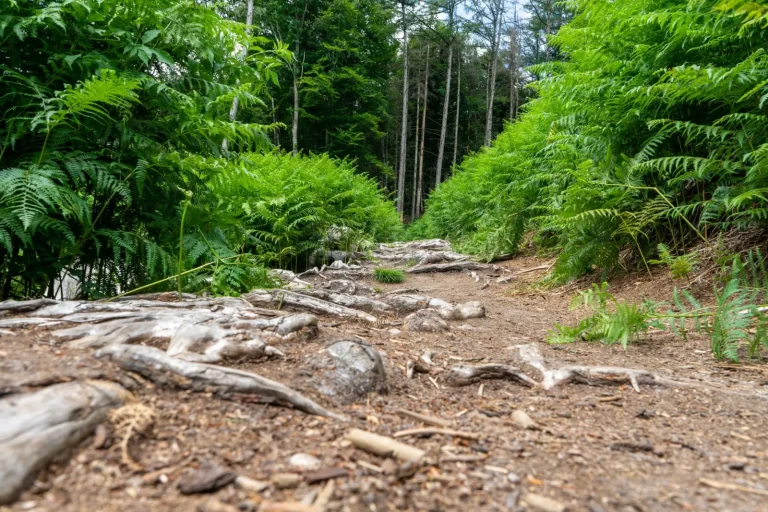
The terrain here is genuinely technical in places, even though the elevation gain is modest. The forest floor is layered with root systems, fallen logs, and sections of exposed bedrock that can be slippery after rain. Unlike manicured walking tracks, there’s no consistent surface. You’ll move from compacted earth to loose gravel to slick rock to deep leaf litter, sometimes within the space of a few metres. Your feet and ankles are working constantly to adjust. This is the kind of walking that builds fatigue differently than a steady climb on a clear path would. You’re not just covering distance; you’re problem-solving with every step.
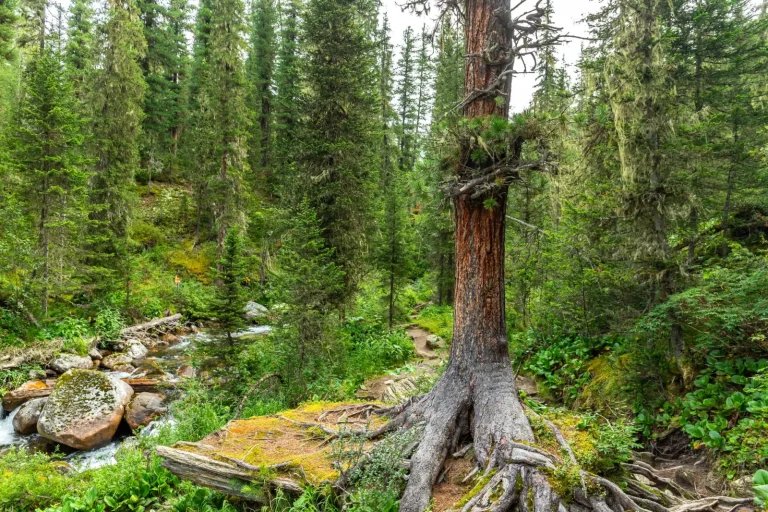
The moisture in the air and the density of vegetation mean the forest stays damp even when it hasn’t rained for days. Moss covers rocks and fallen logs, which looks beautiful but makes them genuinely slippery. I’ve seen experienced walkers lose their footing on what looked like a stable log crossing. The ground is also unforgiving if you misstep. Twisted ankles happen here more often than people admit, partly because the terrain is unpredictable and partly because fatigue sets in faster than people expect. Proper footwear matters more than most trail guides suggest. Trail runners or light hiking boots with good ankle support are practical choices. Flat shoes or sandals are asking for trouble.
Timing and the Pace Reality
Most people underestimate how long a walk in Whian Whian actually takes. The forest doesn’t reward speed. You can’t maintain a steady pace because the ground won’t let you. You move in bursts, picking your way over obstacles, then finding a smoother section where you can move a bit faster. Over a full walk, this adds up. A trail that guidebooks say takes ninety minutes often takes two to two and a half hours for people who aren’t familiar with the forest. This isn’t because people are slow; it’s because the terrain requires it.
Starting early matters. The light quality changes dramatically as the day progresses. In the morning, shafts of light cut through the canopy and create visual clarity. By mid-afternoon, the forest becomes noticeably dimmer and more shadowed. This affects not just visibility but also your psychological state. Walking in progressively darker forest, even if you’re not running late, creates a low-level tension that builds as the afternoon stretches on. I’ve noticed people become more cautious and move more slowly in the dimmer light, which is the right instinct, but it also means a walk that started comfortably can feel rushed by the end if you didn’t account for the light change.
Water and What to Carry
The forest is humid, and the exertion of navigating uneven terrain means you’ll sweat more than you might expect. People consistently underestimate their water needs here. A two-hour walk in Whian Whian requires more water than a two-hour walk on an open, well-maintained trail elsewhere. I’ve seen people reach the halfway point and realize they’re thirstier than anticipated, with only half their water remaining. There are creek crossings on some trails, and while the water is there, relying on it without filtration or purification is a gamble. Carrying more water than seems necessary is the practical choice.
Beyond water, the forest environment means you’re exposed to more variables than a straightforward trail walk. Insects are present but not overwhelming in most seasons. Leeches can be an issue during wet periods, particularly in the damper gullies. They’re not dangerous, but encountering them is unpleasant if you’re not expecting it. Sunscreen and insect repellent are useful even in the forest because the dappled light still allows UV exposure, and mosquitoes and other insects are active in the humid environment.
The Sensory Experience and Navigation
What makes Whian Whian distinct is how the forest engages your senses in ways that can be disorienting if you’re used to more open trails. Sound travels differently in dense forest. Birdcalls echo and reverberate in ways that make it hard to judge direction or distance. The smell is constant – rich, earthy, with the decomposition of leaf litter creating a distinctive forest floor scent. The visual environment is repetitive enough that some people experience a mild sense of visual fatigue after an hour or so of moving through similar-looking sections.
Navigation is straightforward if you’re on a marked trail and paying attention, but the forest’s visual similarity means that if you do step off the main path, it becomes obvious quickly. The marked trails are generally well-maintained, with blazes or cleared sections that are visible if you’re looking for them. But the forest doesn’t forgive inattention. Staying on the trail requires active awareness, not just casual walking. This is worth noting because it means the walk demands more mental engagement than a simple stroll.
The physical recovery after walking Whian Whian is often different from what people expect. The elevation gain is modest, so people often assume they won’t be sore. But the constant micro-adjustments required by the uneven terrain, combined with the mental engagement of navigating the forest, creates a particular kind of fatigue. Legs can feel tired in a different way than they would after a steady climb. Some people experience more soreness in their feet and ankles than in their major leg muscles, which is a direct result of the terrain demanding constant stabilization.
Returning to Whian Whian after time away, I notice the same patterns repeating. The forest operates consistently. It’s neither hostile nor particularly forgiving. It simply requires that you move through it on its terms – carefully, with attention, and with realistic expectations about pace and time. People who approach it that way tend to find it rewarding. Those who expect it to be a casual walk often find themselves more tired and less satisfied than they anticipated. The forest itself doesn’t change; the difference is in what you bring to it.