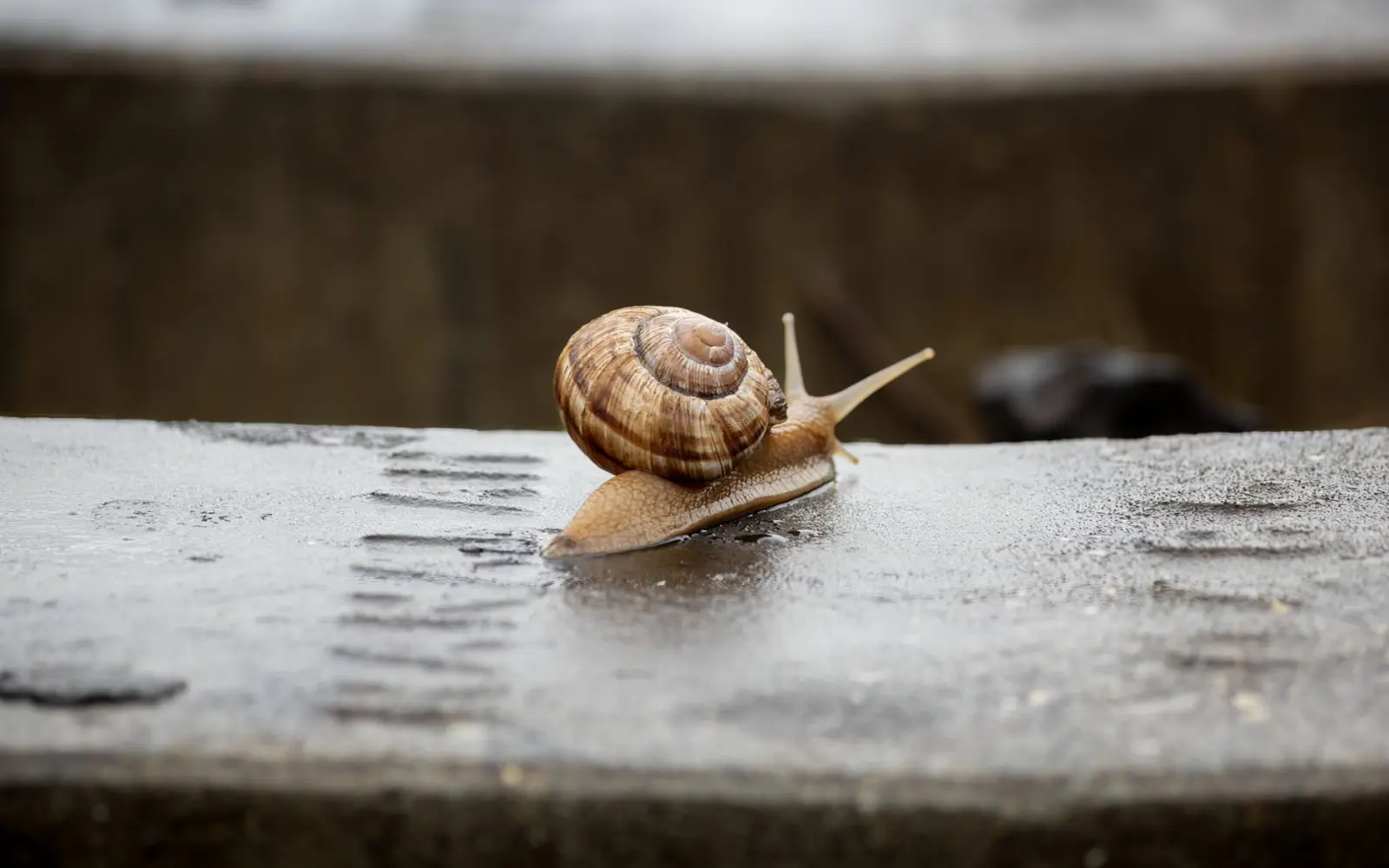
Walking through an Australian rainforest after rain, you notice them almost by accident – small shells clinging to leaf litter, bark, or the underside of fallen logs. Land snails are everywhere in these forests, yet most visitors never register their presence. They move slowly, hide during dry periods, and operate mostly at night or in the dampest hours of dawn. Over years of moving through these forests, I’ve come to see them as a reliable indicator of forest health and moisture conditions. They’re not charismatic, but they’re fundamental to how these ecosystems actually function.
The rainforests of eastern Australia – from tropical Queensland down through New South Wales – host a remarkable diversity of land snail species. Many are endemic, found nowhere else on Earth. Some are tiny, barely visible without close inspection. Others, like certain species in the Camaenidae family, reach sizes that make them impossible to miss once you know what to look for. What strikes me most is how localized many populations are. A species might be restricted to a single valley or a particular type of forest substrate. This specificity means that land snails are sensitive barometers of habitat change. When forest is cleared, fragmented, or altered, snail populations respond quickly and often disappear entirely.
Moisture and Microhabitat
The fundamental constraint for any land snail is water loss. Unlike aquatic snails, they’ve abandoned the water but haven’t fully escaped their dependence on it. Their bodies are mostly water, and their shells, while protective, are permeable to moisture. In a rainforest, this isn’t usually a problem – humidity hovers high, rainfall is frequent, and the forest floor stays damp. But the microhabitat matters enormously. A snail sheltering under loose bark on a fallen log experiences very different conditions than one exposed on the open forest floor. I’ve spent enough time turning over logs and examining leaf litter to know that snails aren’t randomly distributed. They cluster in pockets of higher moisture and organic matter.
During dry spells, even in rainforest, snails retreat into dormancy. They seal themselves into their shells using a mucus plug and wait. This isn’t hibernation exactly – it’s more like suspension. They can remain sealed for weeks or months, their metabolism dropping to a minimum. The timing of when they emerge depends partly on rainfall but also on humidity levels and temperature. I’ve observed that after a light rain, snails don’t necessarily emerge. They seem to assess whether conditions are stable enough to justify the energy cost of moving and feeding. A sustained wet period, or high overnight humidity even without rain, triggers activity.
Diet and Feeding Patterns
Most Australian rainforest land snails are herbivorous or detritivorous. They feed on decaying leaves, fungi, algae, and soft plant material. Some species show preferences – certain snails favor particular types of leaf litter or fungal growth. I’ve noticed that snail abundance often correlates with the presence of specific fungi on the forest floor. They’re not just eating the fungi; they’re also dispersing spores through their feces, which means snails and fungi have a relationship that goes both ways. This kind of ecological interconnection is easy to overlook if you’re just cataloging species, but it’s central to understanding what these snails actually do in the forest.
Feeding activity is almost entirely nocturnal or crepuscular. During the day, snails hide. At night, particularly on humid nights, they move across the forest floor, leaving visible slime trails. These trails serve multiple purposes – they reduce friction as the snail glides along, but they also leave the snail vulnerable to dehydration. The energy cost of producing mucus is significant, which is why snails don’t move casually. Movement is purposeful: toward food, toward shelter, or toward a mate. The amount of movement I observe in a population tends to reflect how favorable conditions are. On poor nights – cool but not wet enough – snails move less and feed less. On optimal nights, the forest floor seems alive with activity.
Reproduction and Population Dynamics
Most Australian land snails are hermaphrodites, possessing both male and female reproductive organs. This doesn’t mean they self-fertilize; most still require a partner. Mating can be a slow, deliberate process. I’ve watched snails circle each other for extended periods before copulating. Afterward, they may lay eggs singly or in small clusters, often in moist soil or leaf litter. The eggs are relatively large and take weeks to hatch. Juveniles are miniature versions of adults and face the same moisture challenges, which is why juvenile survival rates are often low during dry periods.
Population growth in land snails is slow compared to insects or small mammals. A single snail might produce dozens of offspring per year, but many of those won’t survive to adulthood. Predation, desiccation, and competition all take their toll. This slow reproduction rate means that snail populations are vulnerable to overharvesting and slow to recover from disturbance. In areas where rainforest has been fragmented, isolated snail populations can decline to extinction without any obvious external cause – simply because the population is too small to sustain itself. Genetic diversity drops, breeding success declines, and the population spirals downward.
Predators and Defence
The shell is the obvious defense, but it’s not impenetrable. Certain predators – some beetles, some birds, some reptiles – have learned to break or extract snails from their shells. I’ve found shells with neat holes drilled through them, the work of specialized predators. Other predators simply crush the shell or dissolve it with digestive acids. The shell itself is made of calcium carbonate, which means snails need adequate calcium in their environment. In areas with poor soil or acidic conditions, shells may be thinner and more vulnerable. Some snails have evolved thicker shells in response to predation pressure, but this comes at a metabolic cost.
Beyond the shell, some snails produce distasteful mucus or toxins. I’ve noticed that certain species are avoided by some predators while others aren’t. Whether this is chemical defense or simply learned avoidance is hard to say without laboratory work, but in the field, it’s observable that predation pressure isn’t uniform across snail species. Some are clearly more vulnerable than others. This variation in vulnerability means that predation can shape the composition of snail communities over time, favoring more defensive or cryptic species.
Rainforest Type and Distribution
Not all Australian rainforest is the same, and snail communities reflect these differences. Tropical rainforest in far north Queensland supports different species than subtropical rainforest in New South Wales. Within a single rainforest, different microhabitats support different assemblages. Wet gullies with dense vegetation and high moisture support more snails than drier slopes. Rocky areas with limestone or other calcium-rich substrates support snails better than acidic sandy soils. The diversity of snail species in an area is partly a function of rainforest age and stability. Older forests with complex structure and deep soil accumulation tend to have higher snail diversity.
I’ve spent time in regrowth rainforest – areas that were cleared decades ago and have regenerated. These forests have fewer snail species and lower abundances than old-growth forest. This isn’t just because the forest is younger; it’s because the soil structure, leaf litter depth, and microhabitat complexity take a long time to rebuild. A regrowth forest might be structurally similar to old-growth after 30 or 40 years, but the invertebrate communities, including snails, lag behind. Some species may never recolonize if the source populations are too distant or if suitable habitat corridors no longer exist.
Fragmentation is perhaps the greatest threat to rainforest snails. A snail population isolated in a small forest patch faces extinction risk from random environmental variation alone, quite apart from any direct human impact. Small populations are vulnerable to disease, to a single bad dry year, or simply to demographic chance. The loss of connectivity between forest patches means that recolonization after local extinction becomes impossible. Over the past few decades, I’ve watched snail populations decline in fragmented rainforests while populations in larger, more intact forests have remained stable. The pattern is consistent enough that it’s no longer surprising – it’s expected.
Land snails are not the kind of wildlife that draws attention or funding. They don’t have the appeal of birds or mammals, and most people never notice them. Yet they’re integral to rainforest function, processing leaf litter, dispersing fungal spores, and serving as prey for numerous predators. Their presence or absence tells you something real about forest condition. When I walk through a rainforest and find abundant snails, I know the forest is functioning well. When snails are scarce or absent, I know something has shifted – whether it’s moisture stress, habitat degradation, or isolation. They’re quiet indicators, but they’re reliable ones.