The border ranges sit at an elevation where the forest changes character several times within a single day’s walk. I’ve moved through these areas enough to recognize the patterns, and they’re worth understanding before you commit to spending time there. The forests aren’t uniformly dense or uniformly open. They shift. The trail quality shifts. The way your body responds shifts. Most people underestimate how much attention these transitions demand.
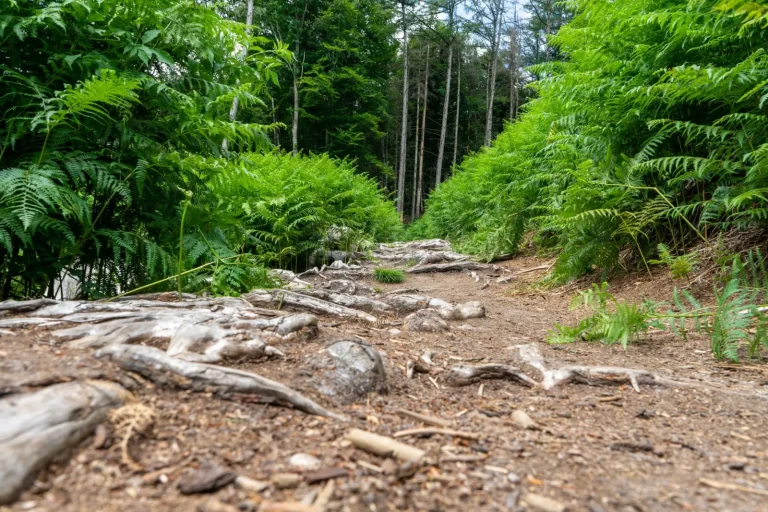
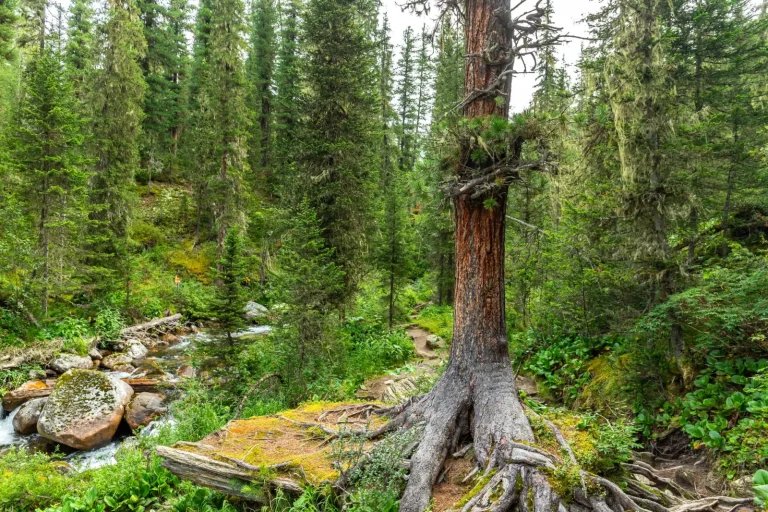
What strikes you first is the canopy density. In the lower sections, where the elevation sits between 800 and 1200 meters, the forest is thick enough that midday feels like late afternoon. The light doesn’t penetrate cleanly. This changes your pace without you necessarily noticing it happening. You’re not moving faster or slower by choice, but the visual environment makes you more cautious. Roots become more obvious. Rocks catch your eye differently. A trail that looks straightforward on a map becomes a series of small decisions about foot placement. After six or seven hours of this, your legs feel the cumulative effect more than they would on a clearer trail at the same distance.
Moisture and Ground Conditions
The forest floor in border ranges holds water in ways that drier regions don’t. Even when there hasn’t been recent rain, the soil stays damp. This matters more than people typically account for. Wet ground compresses differently under your weight than dry ground does. Your feet sink slightly more. The impact travels up through your ankles and knees differently. Over the course of a full day, this subtle difference accumulates into real fatigue. Your muscles work harder to maintain the same pace because the ground isn’t giving you the same mechanical return.
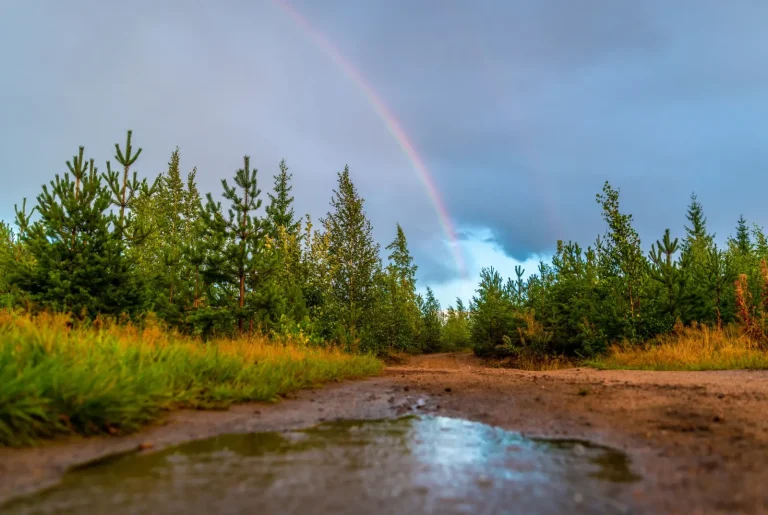
When rain does come, the transformation is immediate. Trails that were merely damp become slick. Sections that were navigable become genuinely hazardous. I’ve watched experienced walkers slip on what looked like minor slopes because the leaf litter was masking wet rock or compacted clay underneath. The forest doesn’t drain quickly. Water pools in depressions and along the trail bed itself. You end up either stepping through water or picking your way along the margins, which slows everything down and requires constant attention to balance.
Navigation Complexity
Marking systems in border range forests vary considerably. Some sections have clear blazes or cairns. Others have minimal marking, and you’re relying on the trail being obvious enough to follow by wear pattern alone. This works fine until it doesn’t. I’ve spent time backtracking because what looked like the main trail was actually a game trail or a spur that locals use but wasn’t the official route. The forest doesn’t care about your map. Multiple paths can look equally plausible when you’re standing in the middle of dense vegetation with limited sight lines.
GPS helps, but it’s not a complete solution. The canopy can degrade signal quality, and relying entirely on a device means you’re not developing the observational skills that actually keep you safe. The real navigation happens through noticing which direction the trail bed slopes, where the wear pattern is deepest, which way vegetation has been disturbed. These observations take time and attention. They’re also the things that get abandoned first when you’re tired or moving quickly.
Timing and Daylight
The canopy density means darkness arrives earlier than it would in open terrain. You might think you have an hour of usable light remaining, and then you step into a section where the trees are particularly dense, and suddenly you’re working with thirty minutes. This compresses your decision-making window. If you’re not certain about the trail ahead, you either stop and camp where you are or you push forward into diminishing visibility. Neither option is ideal, and both are more common than they should be because people misjudge how quickly light disappears under heavy forest cover.
Starting early becomes non-negotiable. A 7 a.m. departure that would be leisurely on an open ridge trail becomes necessary discipline in border range forest. You need the full daylight window. You also need buffer time for the inevitable slowdowns that dense forest creates. A trail that should take eight hours often takes nine or ten. Accounting for that in your daily planning is straightforward in theory and harder in practice when you’re tired and want to make progress.
Physical Demands Beyond Distance
The distance covered is only part of what your body processes. The constant micro-adjustments to balance on uneven ground, the repetitive stepping over roots and rocks, the visual attention required to navigate safely – these create a different kind of fatigue than steady walking on a clear trail. Your legs might feel fine, but your feet, ankles, and knees accumulate stress from the irregular surface. Your eyes and nervous system work harder than they do in more open environments.
Hydration needs are different too. The cool, damp environment makes you less aware of fluid loss. You’re not sweating visibly. The air feels moist. People often drink less than they should, and then they hit a section without water access and realize they’ve misjudged their reserves. Water sources in border range forests are generally reliable, but they’re not uniformly distributed. A map might show a stream, but the stream might be fifty meters off the trail, requiring a detour. This matters when you’re already tired and your water bottle is lower than you’d like.
The psychological component shouldn’t be overlooked. Forests create a particular kind of sensory environment. You’re surrounded by vegetation. Your sight lines are limited. Sound carries differently. For some people, this is peaceful. For others, it creates low-level stress that accumulates over hours. That stress is real, and it affects how your body responds to physical exertion. I’ve seen people who are perfectly fit struggle more in dense forest than on exposed terrain simply because the environment doesn’t suit their nervous system.
Practical Realities
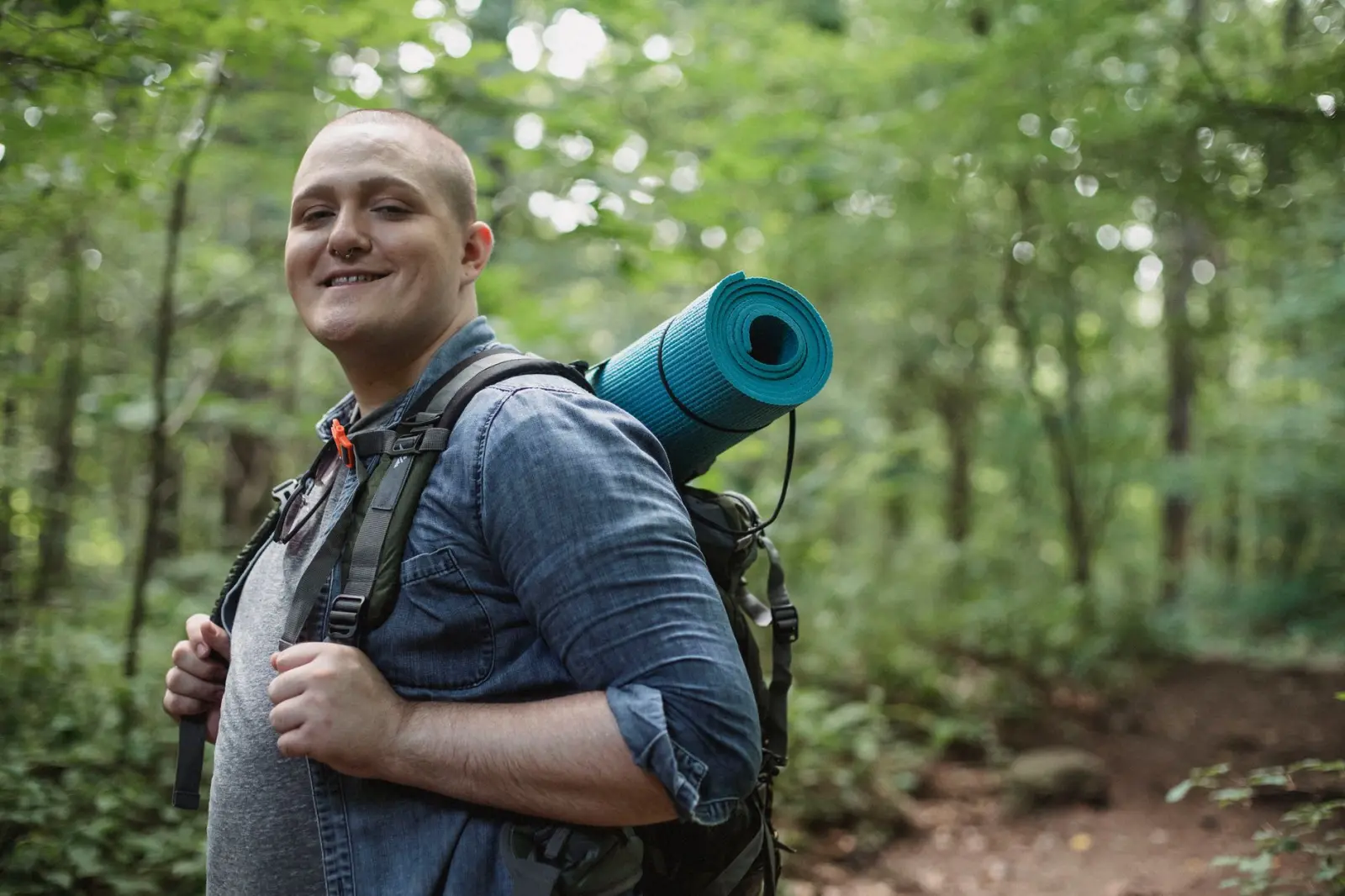
Camping in border range forest requires different considerations than alpine or open-terrain camping. The ground is often soft and damp, which affects how well your sleeping pad insulates. Moisture can be an issue even in a tent. Ventilation matters more than people expect. A tent that works fine in drier conditions can become problematic when surrounded by humid forest air and damp ground. Morning condensation is nearly universal.
Wildlife encounters are generally minimal, but the forest environment means you’re more likely to startle animals and be startled in return. Snakes, in particular, are present in many border range forests, and the low visibility means you need to be more careful about where you place your hands and feet, especially when scrambling or moving off-trail. This adds another layer of attention that contributes to overall fatigue.
After multiple days moving through border range forest, the cumulative effect becomes obvious. Your legs feel heavier. Your feet hurt in specific ways – blisters, pressure points, general soreness – that are distinct from road walking. Your knees might ache. Your attention span for navigation decisions shortens. This is normal. It’s also a signal that you’re pushing your body in a specific way that requires respect and planning. Underestimating these demands is the most common mistake people make when planning multi-day forest walks in border regions.