The McPherson Range after rain is a different animal. The forest doesn’t just become wetter – it transforms. What was a straightforward walk becomes a negotiation with mud, slippery rock, and vegetation that clings to your legs with surprising persistence. I’ve walked these ridges and valleys dozens of times across seasons, and the post-rain conditions reveal things about the terrain that dry weather masks entirely.
The first thing you notice is how quickly water moves through the forest. Within hours of rain stopping, the canopy drips steadily onto the understory, and the ground squelches underfoot. This isn’t just surface moisture. The volcanic soil here absorbs water rapidly, then becomes almost frictionless once saturated. Roots that normally grip well become slippery anchors. Rocks that were solid footholds turn into skating rinks. The change is immediate and unforgiving.
Visibility changes too. Mist clings to the valleys and ridgelines, particularly on the higher sections of the range. You lose the distant views that usually orient you. The forest closes in. Sounds carry differently in wet conditions – everything feels muffled and close. This affects how you navigate. You rely more on the track itself, on markers, on the texture of the ground beneath your feet. GPS becomes less reliable when the canopy is thick and moisture is heavy in the air.
The Mud and What It Tells You
Mud here isn’t uniform. The deeper sections of the range, where water drains from higher elevations, develop thick, sticky mud that cakes onto boots and makes each step heavier. This isn’t just inconvenient – it changes your pace and your energy expenditure significantly. A walk that takes two hours in dry conditions can stretch to three or more when you’re working against mud that grabs at your sole with every step.
The character of the mud shifts depending on the track. In areas with heavy foot traffic, the mud becomes compacted and slippery rather than sticky. These sections are actually more dangerous than the loose mud. Your boot can slide sideways without warning. I’ve seen experienced walkers lose their footing on what looked like a manageable slope, simply because the mud had compressed into something closer to wet clay than earth.
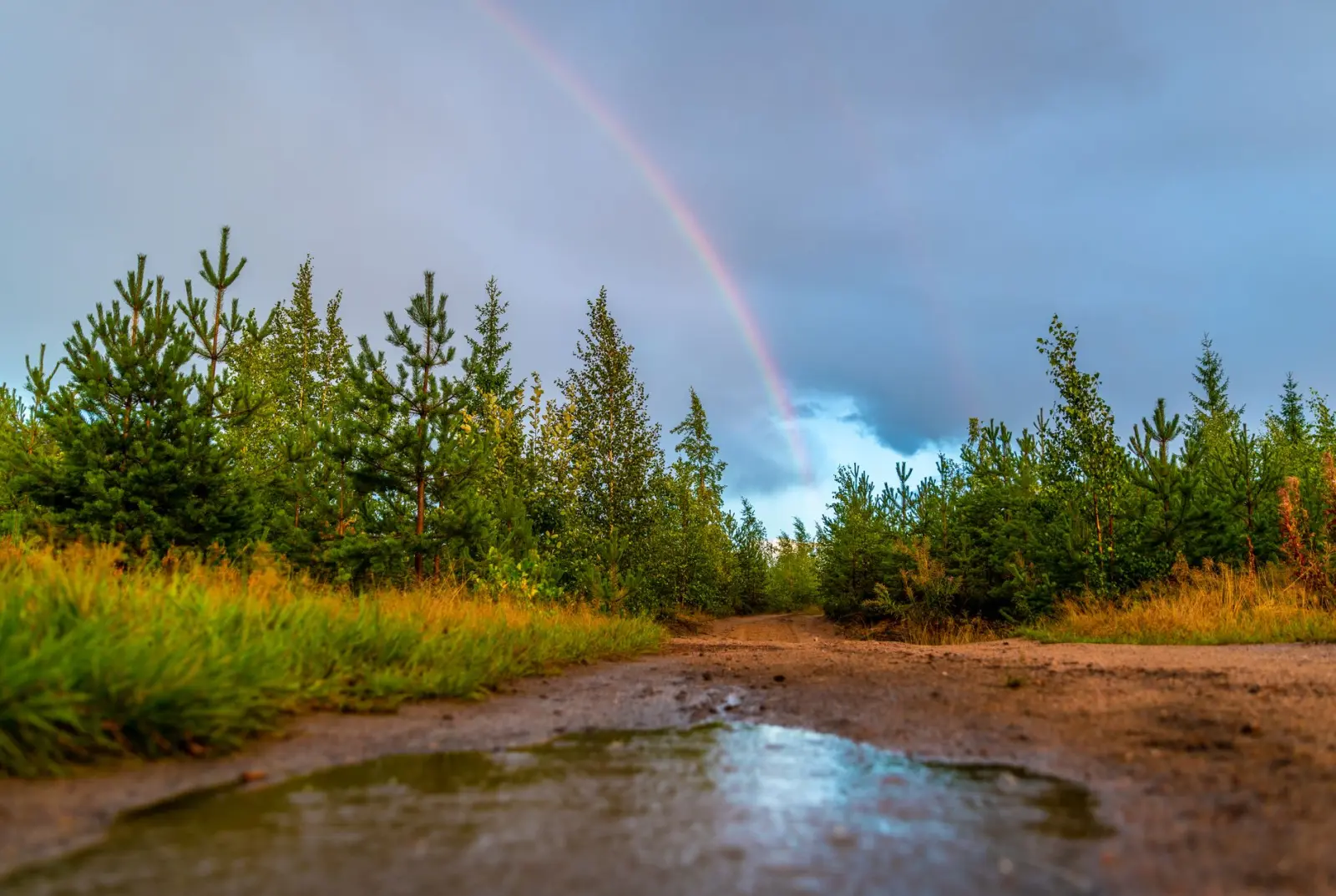
Areas that drain poorly – flat sections, slight depressions in the track – become temporary streams. Water flows down the trail itself, eroding the edges and creating channels. Over time, repeated rain events cut these channels deeper. You end up walking in a trench, which actually provides some stability, but it also means your footing is uneven and your ankles work harder to stay level.
Rock and Root Hazards
The exposed rock on the McPherson Range is mostly basalt and other volcanic stone. When dry, it provides excellent grip. When wet, it becomes genuinely treacherous. The moisture fills microscopic pores in the stone, and your boot sole loses contact. This is where most slips happen – not on mud, but on rock that looks solid but feels like ice underfoot.
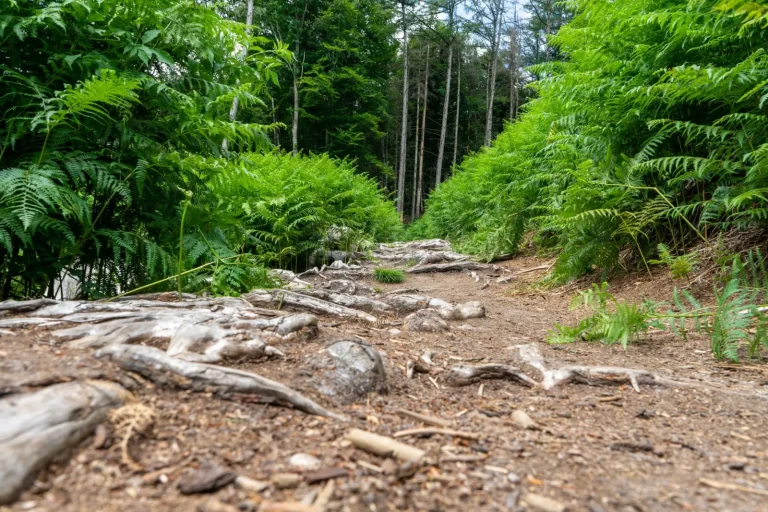
Roots are equally problematic after rain. The forest floor is dense with exposed tree roots, particularly on the steeper sections. Wet roots are as slippery as wet rope. They’re also harder to see clearly because the forest is darker when overcast and misty. You can catch your toe on a root you didn’t spot, or your boot can slide off one that looked like a solid step. The combination of reduced visibility and slippery surfaces means you move slower and more deliberately, which is wise.
What’s less obvious is how rain affects the stability of the ground around roots and rocks. Soil that’s been saturated loses cohesion. A root system that normally holds the surrounding earth in place becomes less effective when the soil is waterlogged. This means sections that are normally stable can become unstable after heavy rain. Small landslips are rare on the McPherson Range, but they do happen, particularly on steeper slopes where water is flowing downhill.
Vegetation and Visibility
The understory vegetation – ferns, shrubs, low trees – becomes a different obstacle when wet. Every plant you brush against releases water onto your clothing. Your legs get soaked from the knees down within the first hour, regardless of whether it’s still raining. This might seem minor, but it affects temperature regulation and comfort over a longer walk. Wet clothing cools you down faster, and in the cooler months, this becomes a genuine consideration.
Visibility through the vegetation also suffers. Wet leaves and fronds hang lower, partially obscuring the track. The reduced light from overcast skies makes it harder to spot where the trail goes, especially at junctions or where the track is less defined. This is where local knowledge or detailed maps become essential. A walker who knows the route can navigate by memory and feel. Someone unfamiliar with the terrain can easily take a wrong turn.
The forest smells different after rain too, though this is more than just aesthetics. The smell comes from decomposing organic matter being activated by moisture. It’s a sign that the forest floor is active and saturated. It’s also a reminder that fungi and other organisms are thriving, which means the ground is soft and can be unstable in places.
Timing and Fatigue
Walking in wet conditions is more tiring than dry conditions, even on the same route. Your muscles work harder to maintain stability and control. Your attention is more focused on foot placement. This mental engagement is fatiguing in itself. A walk that feels moderate in dry conditions can feel genuinely strenuous when wet. I’ve noticed that people often underestimate how much slower they’ll move and how much more energy they’ll expend.
The best time to walk the McPherson Range after rain is actually not immediately after the rain stops. The first hour or two sees water still flowing and dripping heavily. By three to four hours after rain ends, much of the excess water has drained, but the ground is still saturated. This is usually when conditions are most manageable – wet enough to be slippery, but not so wet that water is actively flowing down the tracks.
Weather patterns matter too. A brief, heavy downpour followed by clearing skies is different from steady rain over several hours. The forest drains faster after intense rain because water moves through quickly. Steady rain saturates the soil more thoroughly, and it takes longer for conditions to stabilize. If you’re planning to walk, checking not just whether it rained, but how it rained, gives you better information about current conditions.
The McPherson Range is walkable after rain – people do it regularly. But it demands respect for changed conditions. The terrain is the same, but the surface properties shift entirely. Speed decreases, risk increases, and the experience becomes more about managing footing and stability than enjoying views or distance. That’s not a criticism of the range. It’s simply what happens when water enters the equation.