The rainforests around Coffs Harbour sit at an odd intersection. They’re close enough to reach in under an hour from town, yet far enough removed that most visitors never venture beyond the immediate tourist zones. After spending considerable time in these pockets of subtropical forest, I’ve learned that the difference between a forgettable walk and a genuinely worthwhile experience often comes down to timing, realistic expectations, and knowing which areas actually deliver what you’re after.
The region’s rainforests aren’t the dense, impenetrable jungle of tropical Queensland. They’re older, more settled ecosystems where the canopy is established and the understory feels navigable. The soil is rich volcanic loam in places, and the humidity sits at a level that’s noticeable but not oppressive if you start early. Most people arrive mid-morning and leave frustrated because the carpark is full and the track feels crowded. That’s not a reflection of the forest itself.
Dorrigo National Park and the Rainforest Centre
Dorrigo sits about 35 kilometres inland from Coffs Harbour, perched on a plateau where the air temperature drops noticeably as you gain elevation. The Rainforest Centre is the obvious entry point, and yes, it draws crowds. The facilities are solid – proper carpark, toilets, café – and the initial walking loop from the centre is well-maintained. But this is where most people stop, and it’s also where most people experience the forest as a series of photo opportunities rather than an actual environment.
The real value at Dorrigo comes if you push past the loop. The Lyrebird Track extends deeper into the park and requires a bit more commitment. You’ll see fewer people, the canopy closes in more genuinely, and you get a sense of how the forest actually functions rather than how it’s been packaged for visitors. The walk takes around two hours return and isn’t particularly difficult, but it does demand you arrive early enough to have the trail largely to yourself. I’ve done this walk at 7 AM on a weekday and encountered perhaps three other people across the entire time. The same walk at 10 AM on a weekend becomes a procession.
Never Never Rainforest Reserve
Never Never sits closer to town, roughly 20 kilometres south, and operates on a smaller, quieter scale. It’s a private reserve managed with genuine care, and that shows immediately. The carpark is small, which naturally limits visitor numbers. The walking options are modest – most people do the main loop in 45 minutes to an hour – but the forest itself is dense and undisturbed.
What makes Never Never worth the visit is the absence of infrastructure theatre. There’s no café, no visitor centre, no gift shop. You pay a modest entry fee and walk into forest that feels like forest rather than a tourist attraction with trees. The canopy is thick enough that you notice the humidity shift, and the bird activity is genuine rather than incidental. I’ve found that people who come here expecting a major experience often leave underwhelmed because they’re measuring it against the Rainforest Centre. People who come expecting a quiet walk in actual forest leave satisfied. The distinction matters.
Coffs Harbour Botanic Gardens and Surrounding Tracks
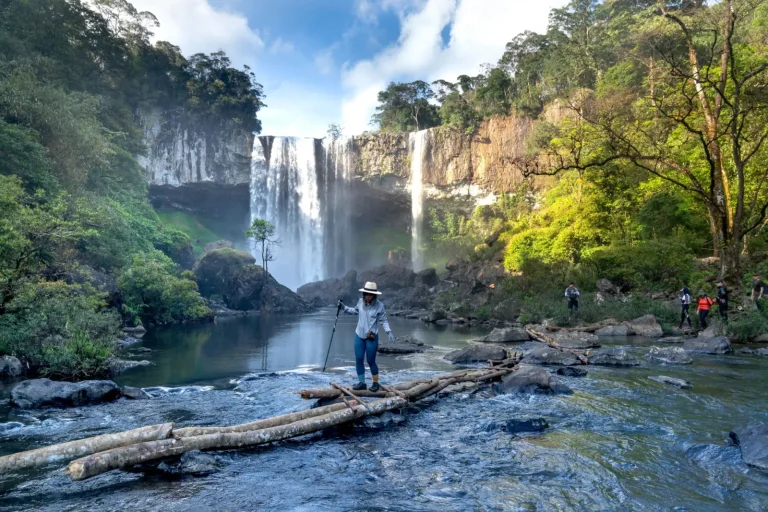
The Botanic Gardens themselves are more manicured than wild, but they serve as a reasonable entry point if you’re short on time or energy. The real rainforest experience begins on the tracks that connect through the surrounding bushland. The walk to Orara Falls involves a gentle descent through transitional forest – not pure rainforest, but close enough – and the waterfall itself is a legitimate destination rather than a photo prop.
The challenge with this area is that it’s become increasingly popular, and the tracks show wear. The path to the falls is now quite eroded in sections, which means your footing requires attention. It’s not dangerous, but it’s no longer the casual stroll that older descriptions suggest. If you’re visiting during or shortly after rain, the track becomes slippery and considerably less pleasant. The falls themselves are underwhelming in dry conditions – more of a seep than a cascade – so timing matters more than most guides acknowledge.
Practical Realities and Timing
The subtropical climate around Coffs Harbour means that rainforest walks are genuinely better in cooler months. October through April brings humidity that accumulates through the day, and by midday the experience becomes more about managing sweat than enjoying the forest. May through September is cooler and more comfortable, though you’re more likely to encounter rain. That rain, however, doesn’t ruin the experience – it actually enhances it. The forest is more active, the air smells richer, and the light filtering through the canopy is more interesting.
Most people underestimate how much earlier they need to arrive to avoid crowds. If you want solitude or even semi-solitude at any of these locations, you’re looking at being on the track by 7 AM or 7:30 AM. By 9 AM, the carparks begin filling. By 10 AM, you’re navigating around other people for most of the walk. This isn’t a criticism of the forests or the parks – it’s simply how these spaces function during peak hours. If you’re visiting during school holidays or weekends, the early arrival becomes even more critical.
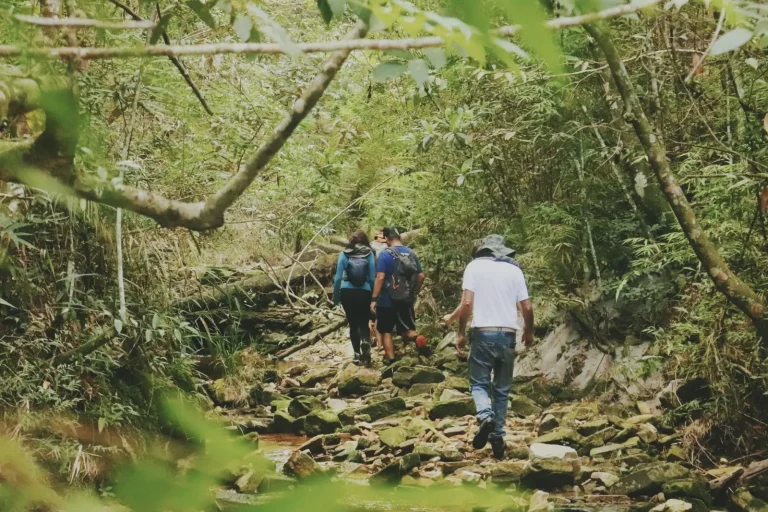
The physical demands of these walks are modest. None of them require serious fitness or technical ability. What they do require is realistic pacing. The forest is humid, the ground is uneven, and your body works harder than flat terrain suggests. Walking a two-hour rainforest loop is not the same as walking two hours on a flat track. Budget extra time and accept that you’ll move more slowly than you might on other terrain.
The insects are present but not usually problematic if you’re moving. Mosquitoes emerge at dusk, so finishing your walk by mid-afternoon keeps you ahead of them. Leeches exist in the wetter areas, particularly after rain, but they’re more of a nuisance than a genuine hazard. Wearing long socks and tucking your pants into them is an effective deterrent if you’re concerned. Most people who encounter them simply remove them and continue.
What Often Gets Overlooked
The rainforests around Coffs Harbour are genuinely worth visiting, but they’re not transformative experiences. They’re pleasant, well-preserved pockets of subtropical forest that offer a genuine change of environment from the coast. That’s valuable in itself, but it’s not the same as visiting a major wilderness area. Expectations matter enormously here. If you arrive expecting pristine, untouched jungle, you’ll be disappointed. If you arrive expecting a pleasant walk through managed forest with genuine ecological interest, you’ll likely enjoy yourself.
The best experiences I’ve had in these areas have come from visiting on weekdays, starting early, and spending time simply sitting quietly rather than rushing through to complete the walk. The forest reveals itself differently when you’re not moving constantly. Bird calls become distinguishable, the layering of the canopy becomes apparent, and the sheer density of life becomes noticeable. This requires patience and a willingness to move slowly, which runs counter to how most people approach tourist activities.