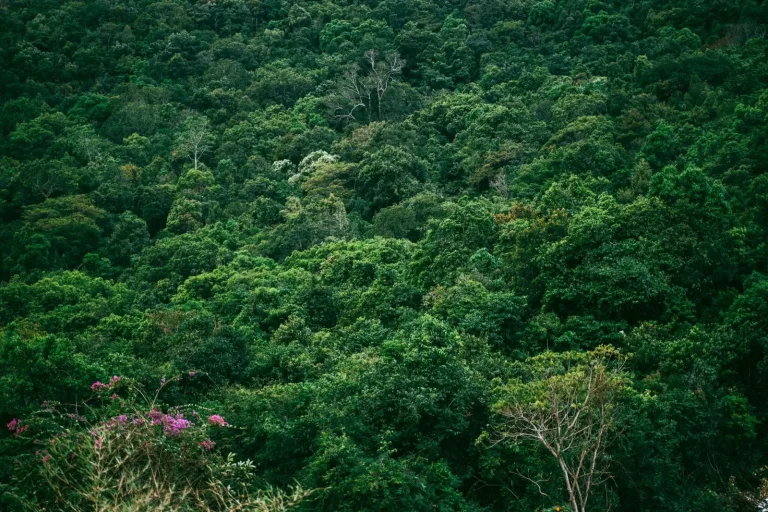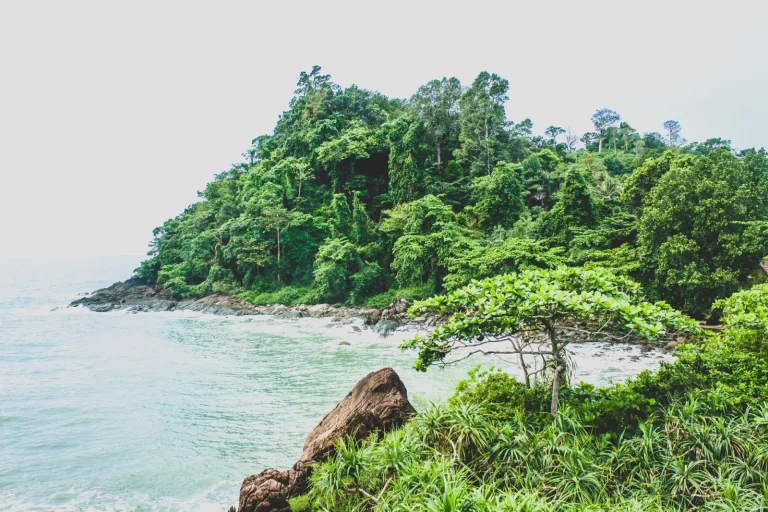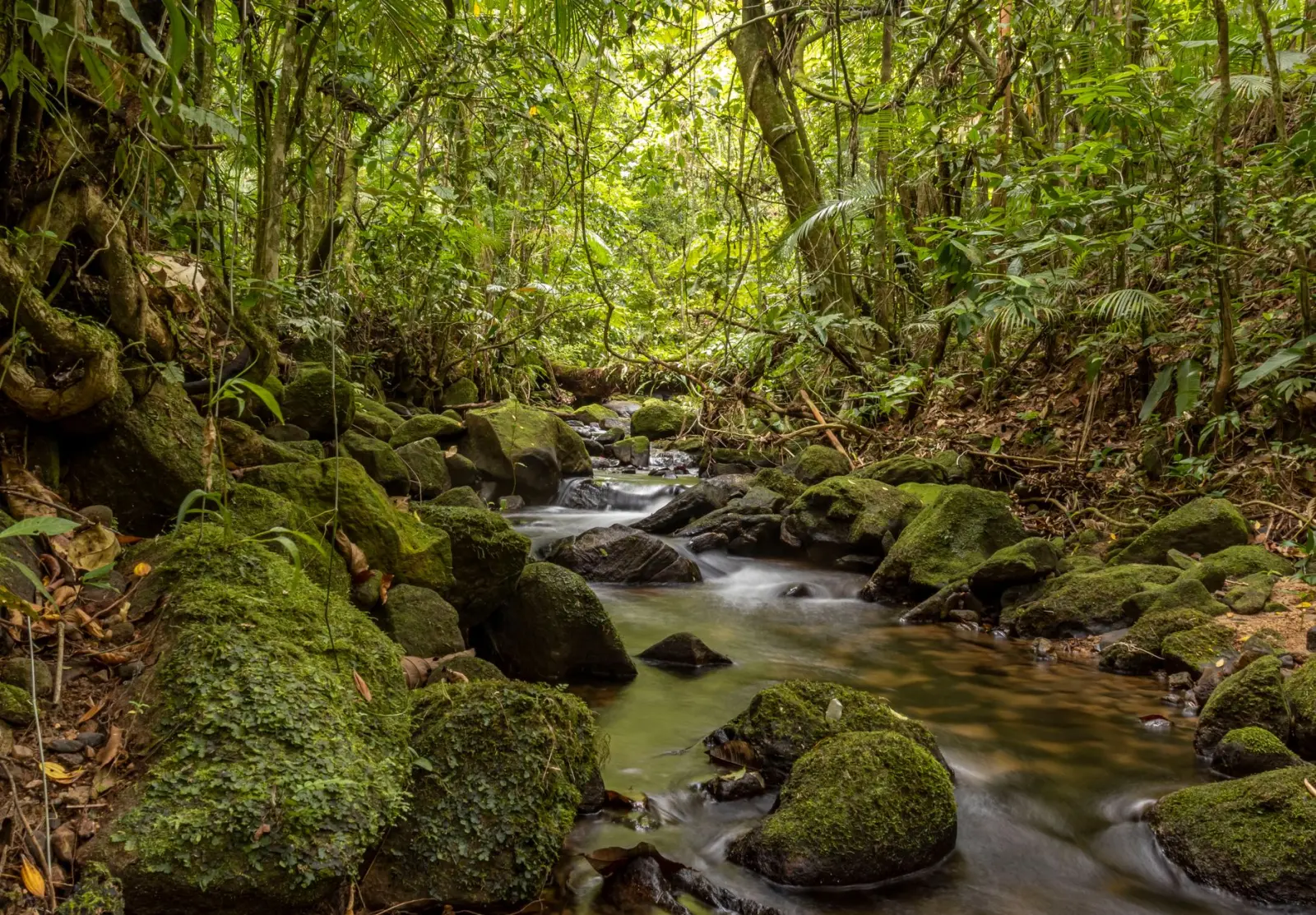
The forest around Never Never Creek sits in a pocket of northeastern Queensland that doesn’t announce itself well. You won’t find it crowded or heavily developed. Most people who end up there have either researched it deliberately or stumbled into it while exploring the broader Daintree region. What strikes you first is how quickly the landscape changes once you’re actually in it. The creek itself is modest – not a dramatic gorge or waterfall destination – but the forest density around it creates an entirely different world from the open areas you pass through to get there.
Access is the first real constraint. There’s no single obvious entry point, and the roads leading to various trailheads are rough. You’re looking at high-clearance vehicles or a willingness to park further out and walk longer. During wet season, some approaches become genuinely difficult. I’ve watched people arrive expecting to park near a walking track only to find the final stretch impassable after rain. The forest floor itself stays damp year-round, even in drier months, because of the canopy density and proximity to water. Your footwear matters more than most casual walkers assume. Regular hiking boots work, but anything with poor grip or inadequate ankle support becomes a liability quickly.
The Canopy and What It Means for Navigation
The forest canopy is thick enough that GPS becomes unreliable in places. This isn’t dramatic – you’re not completely lost – but it’s enough to make relying solely on a phone’s GPS risky. The tree coverage also means light levels drop significantly, even at midday. Your eyes adjust after twenty or thirty minutes, but initially it feels darker than you’d expect. Bring a headlamp or torch regardless of when you plan to be out. I’ve seen people turn back mid-afternoon because they misjudged how quickly light fades under that canopy.
Trails exist but aren’t always obvious. Some sections have been walked enough that a path is clear. Other areas require reading the landscape – looking for disturbed vegetation, worn earth, or the natural line water and animals take through the forest. If you’re not comfortable with that kind of navigation, you’ll find yourself moving slowly and second-guessing your direction frequently. The forest floor is a mix of exposed roots, fallen logs, and soft earth. Twisted ankles happen regularly, and they happen to experienced people as much as novices. The terrain doesn’t punish carelessness dramatically, but it punishes inattention consistently.
Water and the Creek Itself
Never Never Creek flows year-round, which is why the forest around it is so lush. The water is clear and cold. Swimming is possible and tempting, especially if you’ve been walking for a couple of hours in humid conditions. The creek bed has pools deep enough to immerse yourself, though the current varies depending on recent rainfall. After heavy rain, the water moves faster and the pools become less distinct. The rocks can be slippery, and the banks are steep in places. I’ve seen people slip while wading, and the consequences are minor until they’re not. A twisted knee in a remote forest is a different problem than a twisted knee in town.
The water itself is safe to drink if you’re willing to take the risk, but most people filter or boil it. The forest upstream is pristine, but there’s always the possibility of animal activity affecting water quality. Carrying your own water is practical if you’re only out for a few hours. If you’re planning a longer day, you’ll want to refill and treat it as you go.
Timing and Fatigue
The walk feels shorter than it actually takes. The terrain isn’t steep, but the uneven footing and root systems slow you down. A distance that might take ninety minutes on a clear trail takes two and a half hours here. People routinely underestimate how much time they need. The humidity adds fatigue that doesn’t show up in distance calculations. You’re not climbing elevation gain, but you’re working against moisture and heat and uneven ground simultaneously. By hour three, people start feeling it. By hour four, decision-making quality drops noticeably.
The best time to explore is early morning. You get cooler conditions, better light, and more time before fatigue becomes a factor. Midday walks are possible but less pleasant. Afternoon starts feel like a good idea until you realize you’re navigating dense forest in fading light. I’ve watched groups make that miscalculation and spend the last hour moving carefully and quietly, aware that mistakes cost more when visibility drops.
Seasonal Variation
Dry season, roughly May through September, is when the forest is most accessible. The ground is firmer, insects are less aggressive, and the heat is more manageable. Wet season brings higher water levels, slippery surfaces, and leeches. The leeches aren’t dangerous, but they’re persistent and unpleasant. Insect repellent helps marginally. Long sleeves and long pants reduce exposure, though they increase heat stress. Most serious explorers simply accept that wet season means dealing with leeches or avoiding the forest entirely.
Cyclone season overlaps with wet season. The forest itself is relatively protected by its density, but fallen trees become more common, and trails get obscured. I’ve walked through sections where recent falls created obstacles that required careful navigation or backtracking. The forest recovers quickly, but at any given time, especially after storms, the condition of informal trails is unpredictable.
Wildlife and Sound
You’ll hear the forest more than you’ll see wildlife. Bird calls are constant. Rustling in the undergrowth is normal. Most animals move away from people. Snakes exist but encounters are rare if you’re making normal noise and watching your footing. Cassowaries are in the region but typically avoid the thicker forest sections where most walking happens. I’ve never encountered one in the Never Never Creek area, though they’re present in the broader landscape.
The sound environment is worth noting because it’s disorienting if you’re not used to it. The constant background noise of insects and birds makes it hard to hear people who are thirty meters away. If you’re walking with others, you need to stay close or check in verbally. The forest swallows sound in unexpected ways.
Exploring this forest requires accepting that it’s not a manicured experience. It’s humid, it’s slow, and it demands attention. The reward isn’t dramatic – there’s no summit, no waterfall, no obvious spectacle. What you get is immersion in a genuinely wild forest system that’s still functional and intact. That’s increasingly rare, and it’s worth understanding what that actually demands from you before you commit to the walk.