After spending years moving through tropical rainforests, you notice something that doesn’t immediately register as significant: the way certain mature trees become crowded with smaller plants. It’s not random colonization. What appears to be a tangle of vegetation clinging to a branch or trunk is actually a functioning nursery – a microhabitat where seedlings establish, grow, and sometimes thrive better than they would on the forest floor. This phenomenon shapes how rainforests regenerate and influences what you see when you walk through them.
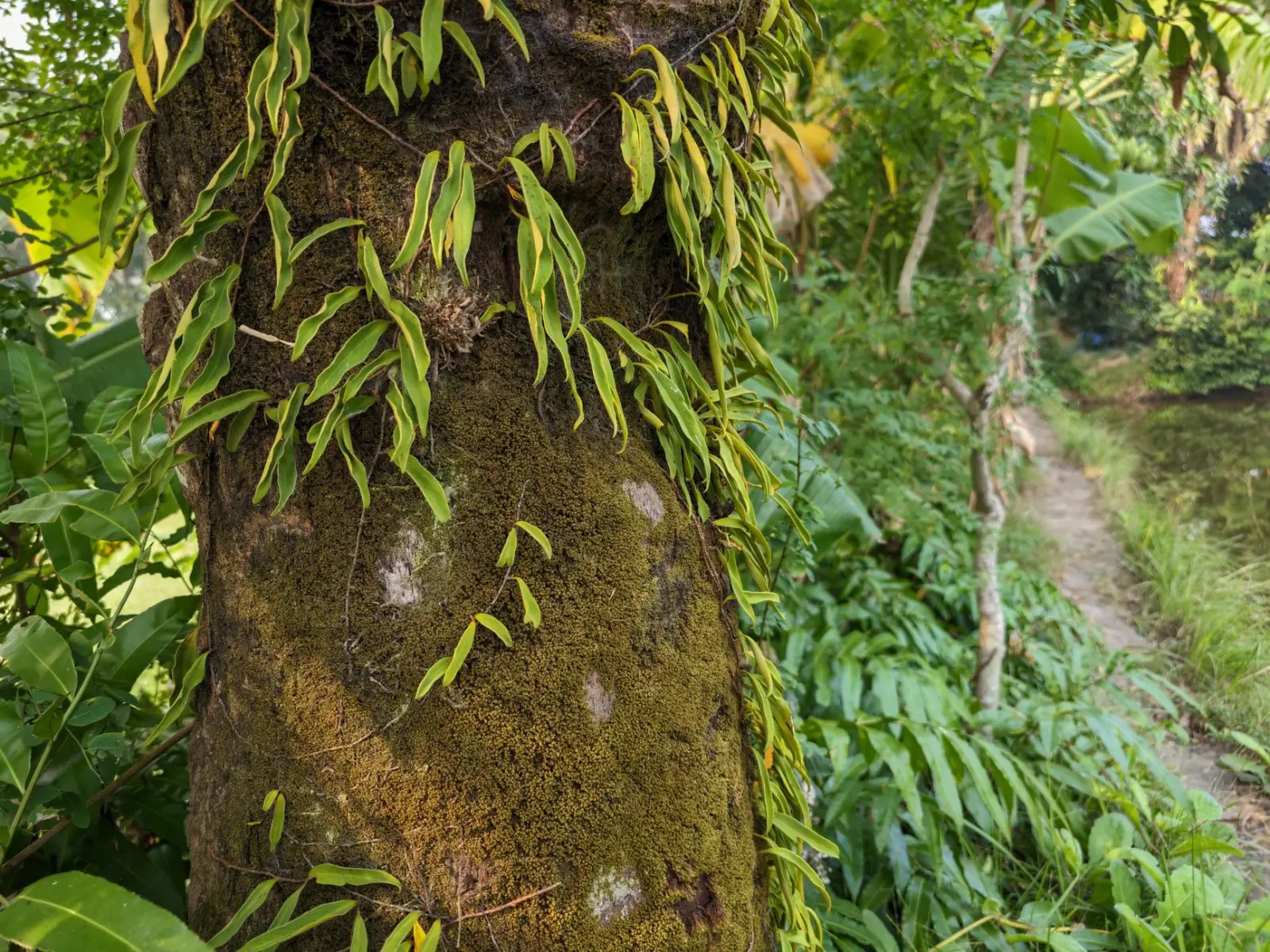
The mechanics start with basic physics and decay. As a large tree grows and ages, its bark becomes fissured and rough. Moss and lichen colonize these crevices, creating a thin but persistent layer of organic matter. Rain washes debris into these pockets – leaf fragments, seeds, bits of decomposing wood. Over time, what began as a microscopic crack becomes a shallow substrate capable of holding moisture and supporting root systems. You can run your hand along an old tree trunk and feel how different the texture is compared to a younger specimen nearby. That roughness is the beginning of a nursery.
Epiphytes as Soil Builders
Epiphytes – plants that grow on other plants without parasitizing them – play a central role in this process. Orchids, bromeliads, ferns, and various mosses establish themselves on branches and trunks. As they grow and eventually die, they accumulate as organic matter. Bromeliads are particularly effective because their leaf bases form cup-like structures that trap water and debris. I’ve seen bromeliads on a single branch holding enough organic material to support small ferns and even young woody plants. The bromeliad essentially becomes a container garden suspended in the canopy.
What’s often overlooked is the role of animal activity in this process. Birds and small mammals nest in the canopy and deposit seeds through their droppings. Insects fragment plant material. Decomposing animal matter adds nitrogen. The tree limb becomes less like a passive surface and more like an active ecosystem where multiple processes work simultaneously to create soil. This isn’t happening in isolation – it’s part of the broader forest metabolism, just occurring several meters above ground level.
The Seedling Advantage and Its Limits
For a seedling germinating on a tree branch rather than the forest floor, there are genuine advantages. Moisture retention can be better because accumulated organic matter holds water longer than bare soil. Sunlight exposure is often superior since the seedling sits above the dense understory shade. Competition for nutrients is initially less intense because fewer plants occupy the same space. I’ve observed seedlings on branches growing noticeably faster than siblings at ground level in the same forest.
But this advantage comes with serious constraints. The substrate is shallow and can dry out rapidly during dry seasons. Nutrients are limited – there’s only so much organic matter accumulating on a branch. Root systems must navigate around the host tree’s bark rather than penetrating deep soil. A seedling that reaches a certain size may outgrow the available resources and either stall or die back. The branch itself can break under the weight of established plants, particularly during heavy storms. I’ve found fallen branches littered with dead seedlings after tropical downpours, their root systems exposed and desiccating within hours.
Structural Changes Over Time
As seedlings establish and grow larger, they begin to physically alter the branch structure. Their roots, seeking deeper substrate, work into cracks and crevices. Some roots grow downward and eventually reach the main trunk or adjacent branches, establishing connection to the larger tree’s vascular system. Others remain superficial, creating a dense mat that further traps debris and moisture. The branch gradually becomes less like a simple wooden structure and more like a composite of wood, bark, accumulated soil, and living plant tissue.
Certain species are particularly effective at this transformation. Fig trees, for instance, often establish as epiphytes and eventually send aerial roots down the host tree’s trunk. Over decades, these roots can completely envelop the original host, creating what appears to be a hollow tree – the original host has died and decomposed, leaving behind only the fig’s root structure. This is the extreme end of the spectrum, but it illustrates how a branch nursery can evolve into something structurally significant within the forest.
The timing of this process is measured in years and decades, not seasons. A branch that begins accumulating organic matter in year one might support visible seedlings by year five or ten. A seedling that germinates on that branch might reach sapling size by year twenty. The forest doesn’t work on human timescales, and that’s important to remember when observing it. What looks static from a single visit is actually in constant, slow motion.
Practical Observations from the Field
When moving through rainforests, you start to notice patterns in which trees become heavily colonized and which remain relatively bare. Older trees with deeply furrowed bark are obvious candidates. Trees in the canopy emergent layer, where light is abundant, tend to accumulate more epiphytes than understory trees. Trees growing near fruiting neighbors receive more seed rain and thus support more seedlings. Trees in areas with consistent moisture – near streams or in regions with high rainfall – show more active epiphytic communities than those in drier microclimates.
The species of the host tree matters too. Some trees have bark chemistry or texture that discourages epiphytic growth. Others seem to actively support it. Hardwood species with slow-growing, persistent bark tend to accumulate more substrate than fast-growing trees that shed bark regularly. You can walk past two trees of similar age and size and find one festooned with plants while the other remains relatively bare. The differences are subtle but consistent once you begin looking for them.
Disturbance events reshape these dynamics significantly. A fallen tree creates an opportunity for seedlings to establish on its horizontal trunk, where water pools and organic matter accumulates differently than on vertical branches. Storm damage that breaks branches can expose seedlings to harsh conditions or, conversely, create new surfaces for colonization. Logging or selective cutting changes light levels and moisture patterns, which ripples through the epiphytic communities. The forest is responsive to disruption, and the seedling nurseries within it shift accordingly.
Understanding how rainforest trees function as nurseries isn’t academic curiosity – it’s central to grasping how these forests regenerate and persist. The process is slow, distributed across countless individual trees, and largely invisible from the ground. But it’s how genetic diversity moves through the canopy, how damaged areas recover, and how the forest maintains itself across generations. The next time you’re beneath a rainforest canopy and notice a branch crowded with vegetation, you’re looking at regeneration in action, even if nothing appears to be changing at that particular moment.