
The rainforest waterfalls within reach of Port Douglas carry a particular reputation that doesn’t always match what you’ll find on the ground. After spending considerable time moving between these sites across different seasons, I’ve learned that the gap between expectation and reality here is wider than most travelers anticipate. The falls themselves are genuine, the rainforest is dense and atmospheric, but the logistics of actually reaching them – and the condition they’re in at any given moment – require more planning than the casual visitor typically assumes.
Port Douglas sits at the gateway to the Daintree, one of Australia’s oldest tropical rainforests. The waterfalls clustered within an hour’s drive are accessible enough that they attract steady foot traffic, particularly during the dry season from May through October. What makes this region different from other waterfall destinations is the sheer volume of water that moves through these systems during and immediately after the wet season. Between November and April, rainfall can be substantial, and the creeks that feed these falls transform from modest streams into genuinely powerful flows. This creates a timing problem: the falls are most visually impressive when access is most difficult.
Mossman Gorge and Its Practical Reality
Mossman Gorge is the closest major waterfall system to Port Douglas, sitting roughly 20 minutes inland. The gorge itself is a narrow, dramatic cut through the rainforest where the Mossman River has carved through bedrock over millennia. The walk to the main swimming hole is short – around 2.4 kilometers return – and the track is well-maintained, which means it also absorbs the bulk of visitor traffic in the region. On any given day during peak season, you’re sharing the space with several hundred other people, often in waves that correspond to tour group schedules.
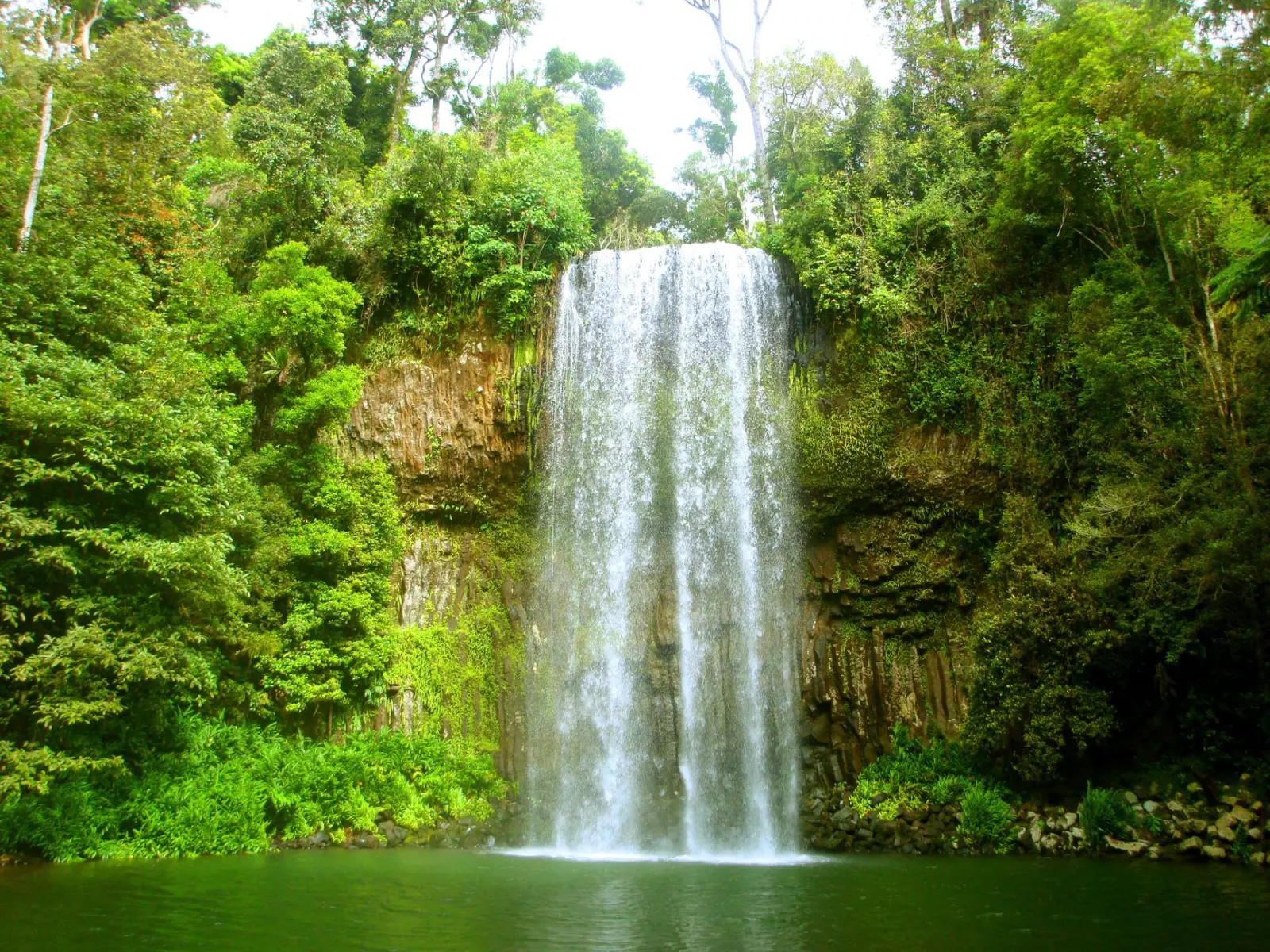
The water here is cold, even in summer. The gorge walls block direct sunlight for much of the day, and the depth of the pool means the temperature rarely climbs above what feels like a genuine shock to the system. The actual waterfall at the head of the gorge is modest in terms of height – perhaps 10 meters – but the volume of water dropping into that pool can be substantial after rain. The real value of Mossman Gorge isn’t the waterfall itself but the immersion in the rainforest environment. The vegetation is dense, the canopy is high, and the acoustic quality of the place – the sound of water, the absence of external noise – creates a distinct atmosphere that justifies the short drive.
What often goes unmentioned is that Mossman Gorge has a parking capacity issue. During school holidays and weekends, the car park fills by mid-morning, and the local council enforces a parking limit. If you arrive after 10 a.m. during peak season, you may find yourself turned away or forced to wait for spaces to open. The solution most travelers don’t know about is arriving by 7:30 a.m., which gives you the gorge in near-solitude for the first hour or so. The light is different at that time – softer, more filtered through the canopy – and the experience is substantially more peaceful.
Josephine Falls: The Harder Option
Josephine Falls lies further inland, near the small settlement of Wujal Wujal, roughly 40 minutes from Port Douglas. The walk to the falls is longer and steeper than Mossman Gorge, covering about 2.6 kilometers with a genuine elevation gain. The falls themselves are taller – approximately 20 meters – and the setting is more remote, which means fewer people and a different character altogether.
The track to Josephine Falls passes through rainforest that feels less manicured than Mossman. There are exposed tree roots, sections where the path narrows, and points where the gradient becomes noticeable. This isn’t extreme hiking, but it does require a reasonable level of fitness and appropriate footwear. I’ve watched people arrive in casual shoes and turn back within 10 minutes, so the physical demand is real enough to filter out a portion of the casual visitor base.
The pool at Josephine Falls is larger and deeper than Mossman Gorge, and the water temperature is similarly cold. The falls drop directly into this pool, and during high water, the force of that impact creates a visible disturbance across the surface. The surrounding rainforest is quieter here, partly because fewer people make the effort to reach it. If you’re looking for a waterfall experience that feels less crowded and slightly more adventurous, Josephine delivers that without requiring technical climbing skills or special equipment.
Seasonal Variation and Water Conditions
The single most important variable affecting these waterfalls is rainfall. During the dry season, the falls reduce to modest flows. Mossman Gorge maintains reasonable water volume because the gorge itself concentrates flow, but Josephine Falls can become almost anticlimactic if you visit during a dry spell. The wet season, by contrast, brings spectacular volume but also creates hazards. Swift currents, slippery rocks, and the risk of flash flooding make swimming inadvisable during heavy rain periods.
The optimal window tends to be the shoulder months – late April and early May, or late September and early October. At these times, there’s usually been enough recent rainfall to maintain good water flow, but the immediate danger of flash flooding has passed. The water is still cold, but the falls have presence and power. If you’re visiting during the dry season proper, expect the falls to be visually less impressive, though the conditions for hiking and swimming are safer and more pleasant.
Other Falls Worth the Detour
Emerald Pool, near the Daintree Discovery Centre, is a smaller but distinctive waterfall system. The walk is short, the setting is intimate, and the pool is genuinely beautiful. It’s less crowded than Mossman Gorge, partly because it requires a separate drive and isn’t part of the main Port Douglas tourist loop. The water here is slightly warmer due to the pool’s shallower profile and the amount of sunlight that reaches it.
Curtain Fig Tree, while not a waterfall, sits along the same general route and represents a different kind of natural spectacle. It’s a massive strangler fig that has consumed its host tree, creating a curtain-like structure of aerial roots. The walk is minimal, and it’s worth combining with a waterfall visit to create a more varied day.
Bloomfield Falls, further north toward Cape Tribulation, represents the outer boundary of practical day-trip distance from Port Douglas. The drive is roughly 90 minutes, and the walk is moderate. The falls are impressive, the setting is remote, and the rainforest character changes noticeably as you move further north. This is a full-day commitment rather than a half-day excursion.
The reality of rainforest waterfalls near Port Douglas is that they’re accessible and worth visiting, but they’re not isolated natural wonders. They’re embedded in a working tourism infrastructure, subject to seasonal variation, and best experienced with realistic expectations about crowds and conditions. The falls themselves are genuine, the rainforest is remarkable, but the experience you have depends heavily on when you go, how early you arrive, and what you’re actually looking for in a waterfall visit.