
Spend enough time working in or studying rainforests, and you notice something that satellite data and textbooks only hint at: the canopy doesn’t just sit there absorbing sunlight. It actively moderates temperature in ways that feel almost deliberate, though of course they’re the result of millions of years of adaptation. The difference between standing in direct sun outside the forest and stepping into the shade beneath a mature canopy can be 10 to 15 degrees Celsius. That’s not incidental. It’s the outcome of a system that has evolved to manage heat with remarkable efficiency.
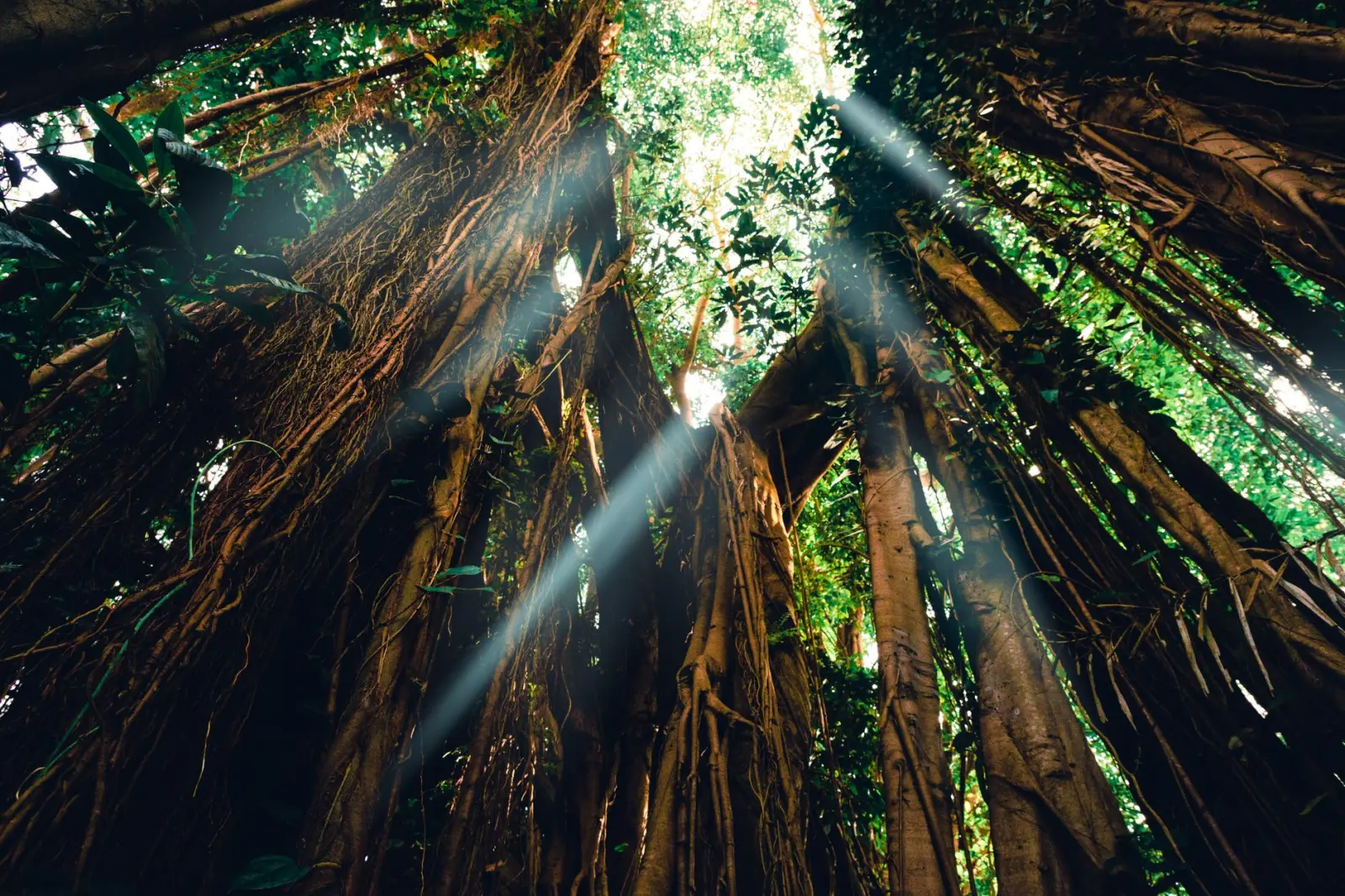
The mechanics start with structure. A rainforest canopy isn’t a single layer – it’s a series of them. The emergent layer pokes above everything else, the main canopy sits below that, and then there’s the understory, each with its own density and leaf arrangement. This vertical complexity matters enormously for temperature regulation. The upper layers take the brunt of solar radiation. Leaves at the top of the canopy are adapted to handle intense light and heat. They’re often smaller, tougher, and positioned at angles that reflect some radiation rather than absorbing all of it. The leaves lower down operate in filtered, diffuse light. They’re larger and thinner because they don’t need the same protection. This stratification means that heat doesn’t accumulate in one place. It’s distributed, absorbed, and dissipated across multiple levels.
Transpiration as a Cooling Engine
The real temperature regulation happens through transpiration. Trees in rainforests pull enormous quantities of water from the soil and release it as vapor through their leaves. A single large rainforest tree can transpire hundreds of liters of water in a day. When water evaporates, it takes energy with it – latent heat of vaporization. This is the same principle that cools your skin when you sweat. The difference is scale. In a rainforest, billions of trees doing this simultaneously creates a measurable cooling effect across the entire ecosystem.
I’ve noticed this most clearly when comparing temperature readings taken in intact forest versus recently cleared areas. The cleared land heats up faster and stays hotter longer. The intact forest, even on a hot day, maintains a more stable internal temperature. The transpiration rate in a healthy rainforest canopy can be so high that it actually influences local rainfall patterns and humidity. The water vapor released by the canopy rises, condenses, and contributes to afternoon cloud formation. This isn’t just atmospheric trivia – those clouds reflect incoming solar radiation and provide shade, which further reduces ground-level heating.
Leaf Arrangement and Light Interception
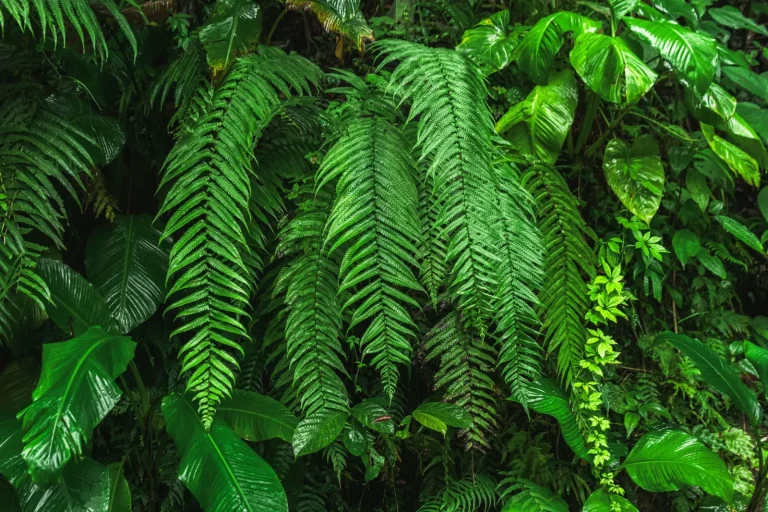
How leaves are arranged matters more than most people realize. Rainforest trees don’t have leaves arranged randomly. They’re positioned to maximize light capture in the understory while also managing heat load. Leaves tend to be arranged in what’s called a “mosaic” pattern – they fit together with minimal overlap, which allows light to penetrate deeper into the canopy while also preventing excessive heat accumulation on any single layer. This arrangement also reduces wind speed within the canopy, which slows water loss and heat transfer.
The color and texture of canopy leaves also play a role. Many rainforest leaves have a waxy coating that reflects some wavelengths of light while absorbing others. Some leaves have a silvery or pale undersurface that reflects heat when they’re turned by wind. These aren’t random features. They’re adaptations that have been selected for over time because they help the tree manage its thermal environment. Dark green leaves absorb more heat than lighter ones, and rainforest trees often have a mix of both, depending on their position in the canopy and their species.
The Stability Factor
What strikes me most about rainforest temperature regulation is its stability. The internal temperature of the forest doesn’t swing wildly the way open areas do. On a day when outside temperatures might range from 20 degrees Celsius at dawn to 35 degrees at noon, the forest floor might only vary by 5 or 6 degrees. This stability is crucial for the organisms living there. Insects, fungi, soil microbes, and plants have evolved to operate within narrow temperature ranges. A rainforest that loses its canopy loses this buffering effect almost immediately. Soil temperatures spike. Humidity drops. Decomposition rates change. The entire biological rhythm shifts.
The canopy also acts as an insulator at night. The dense layers of leaves trap heat that would otherwise radiate away from the forest floor. This is why rainforests in the wet season maintain relatively warm nights even when daytime temperatures are moderate. The canopy holds warmth in, while during the day it keeps excess heat out. It’s a two-way thermal regulation system.
Degraded or fragmented rainforests lose this capacity. When you remove patches of canopy, the remaining forest experiences edge effects – hotter, drier conditions that extend inward from the cleared area. Trees near the edge of a cleared patch experience higher temperatures and lower humidity than trees deep in the forest. This stress can make them more susceptible to drought, pests, and disease. I’ve seen this happen repeatedly in areas where selective logging has opened up the canopy. The forest doesn’t just look different; it feels different. It’s warmer, drier, and more variable.
Feedback Loops and Resilience
The temperature regulation system in rainforests is tied to moisture availability. High transpiration rates depend on adequate water in the soil. In a healthy rainforest, this creates a positive feedback loop. Trees transpire, moisture rises, clouds form, rain falls, soil stays wet, trees transpire more. But this loop is fragile. If the canopy is damaged or removed, transpiration drops, cloud formation decreases, rainfall patterns change, and the forest becomes drier. Once this cycle is disrupted, it’s difficult to restore. The forest becomes hotter and drier, which makes it harder for the canopy to recover.
This is why understanding canopy function matters beyond academic interest. The temperature regulation provided by rainforest canopies isn’t just a local phenomenon. It influences regional climate patterns. The moisture released by the Amazon rainforest, for example, influences rainfall patterns across South America. When you damage the canopy, you’re not just affecting that patch of forest. You’re altering the thermal and moisture dynamics of a much larger region.
Working with rainforests over time teaches you that they’re not passive environments that simply exist in a hot climate. They’re active systems that create and maintain their own conditions. The canopy regulates temperature through structure, through transpiration, through light management, and through the collective effect of billions of leaves working in concert. When that system is intact, it’s remarkably efficient. When it’s damaged, the effects are rapid and cascading.