

Purling Brook Falls sits in a landscape that looks deceptively simple from a distance. The forest around it is dense, layered, and changes character depending on where you are relative to the water and the season. I’ve spent enough time moving through these woods to understand that the experience shifts considerably based on timing and which direction you approach from. The falls themselves are modest – nothing that will leave you breathless – but the forest work to get there and the paths that branch away from the main attraction tell a different story.
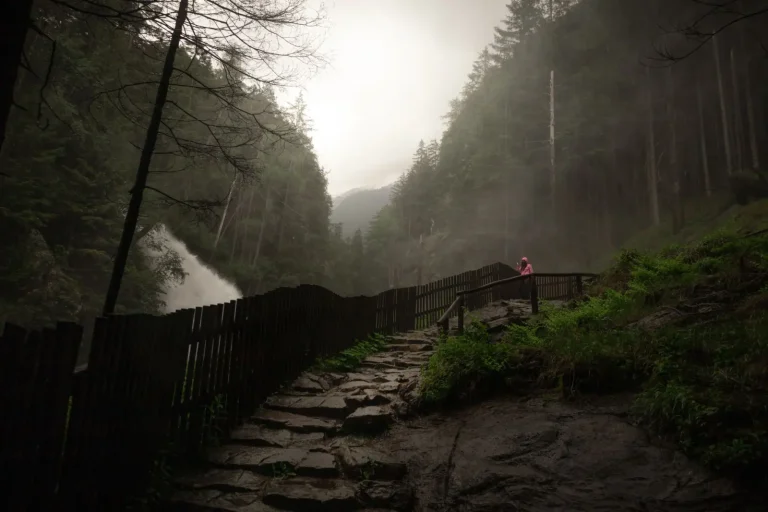
The terrain around the falls is where most people encounter their first real surprise. The ground isn’t uniform. You’ll find sections of packed earth that feel almost manicured, then suddenly the path becomes root-heavy and uneven. Rocks protrude at odd angles. In places where water drains toward the brook, the soil stays soft longer into the season, and your footing becomes less predictable. This isn’t dangerous terrain, but it demands attention. People who move through here assuming it’s a casual stroll often find themselves placing weight poorly and feeling fatigue earlier than expected.
Water and Seasonal Patterns
The brook itself is the organizing principle of the forest. Its presence shapes which plants grow where, how wet the ground stays, and what the air feels like as you move deeper into the woods. After heavy rain or spring snowmelt, the water moves aggressively. The sound changes. The spray reaches farther into the surrounding vegetation. The ground near the water becomes genuinely slick, not just damp. I’ve watched people slip on rocks that seemed stable seconds before. The water isn’t deep enough to be dangerous, but a fall onto wet stone hurts, and the embarrassment often exceeds the actual injury.
By mid-to-late summer, the flow drops noticeably. The falls become less dramatic. The rocks that were slippery become manageable. The forest feels drier, though the ground near the water still holds moisture. This is when most people visit, and it’s also when the trails show the most wear. Foot traffic compacts the soil, and erosion becomes visible on steeper sections. The forest doesn’t recover quickly from heavy use.
The Vegetation and What It Tells You
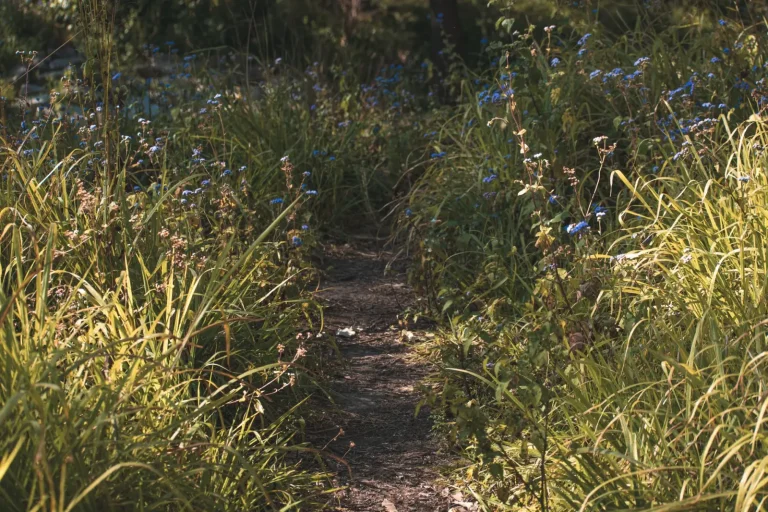
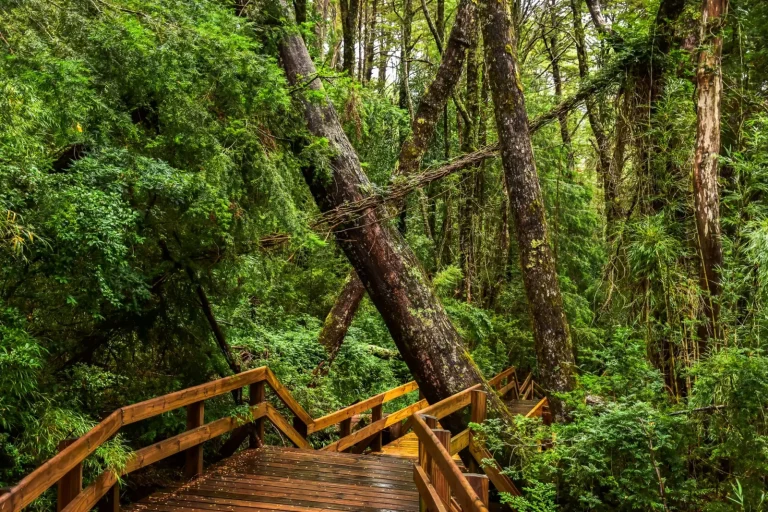
The plant life here is mostly deciduous forest with some hemlock and evergreen understory. In spring, the canopy is still opening, and light reaches the forest floor. Wildflowers appear – nothing showy, but present. By early summer, the canopy closes completely, and the forest becomes shadowed and cool. This affects how warm you’ll feel, how quickly moisture evaporates from your clothes if you get wet, and how visible the path remains. A trail that’s obvious in winter becomes harder to follow once the ferns and low vegetation fill in.
Poison ivy grows here. It’s not everywhere, but it’s common enough that you should know what it looks like and where it tends to establish itself. It favors disturbed areas and edges where light breaks through. Around the falls area, you’ll find it near the water where the canopy opens up. The three-leaflet pattern is distinctive, but people often miss it because they’re focused on the path or the view. I’ve seen visitors brush against it repeatedly because they didn’t recognize it until the reaction started days later.
Moving Through the Forest
The main trails are reasonably well-marked, but the marking system isn’t consistent. Some sections have blazes painted on trees. Other sections rely on the path being obvious enough that blazes seem unnecessary. When the forest floor is thick with leaves or snow, that assumption breaks down. People get turned around not because they’re lost in any dramatic sense, but because they took a deer trail or followed what looked like the main path and ended up slightly off course. It’s easy to correct, but it adds uncertainty and time to the hike.
The side trails that branch away from the main route to the falls are less maintained. They’re still walkable, but they require more awareness. Some lead to overlooks or quieter sections of the brook. Others peter out into dense vegetation or become too eroded to follow comfortably. I’ve explored most of them, and they’re worth the detour if you have time and energy, but they’re not obvious destinations. You have to be willing to move slowly and accept that you might backtrack.
Distance and time are often underestimated. The falls themselves are close to common trailheads – usually under a mile – but the forest doesn’t compress distance the way open terrain does. Trees, uneven ground, and the need to watch your footing all slow your pace. Add in time spent at the falls or exploring side paths, and a “quick walk” easily becomes a two-hour commitment. Fatigue accumulates differently in forest than on open trails. Your legs might feel fine, but the constant attention required to navigate safely creates mental fatigue that catches people off guard.
Practical Realities
Cell service is spotty. This isn’t a remote wilderness, but you can’t assume you’ll have a signal throughout your walk. The forest canopy blocks reception, and the topography doesn’t help. If you’re relying on GPS or need to call someone, test your connectivity before you get deep into the woods.
The trails can be muddy for extended periods after rain. Not impassable, but genuinely muddy in a way that makes footing uncertain and slows movement. Waterproof boots help, but they also trap moisture and heat if the weather warms up. There’s no perfect solution. You’re choosing between wet feet from water on the outside or sweat on the inside.
The forest around Purling Brook Falls isn’t crowded in the way that popular destinations become crowded, but it’s not solitary either. You’ll encounter other people, especially on weekends and in summer. The trails are narrow enough that passing requires coordination. The sound carries in the forest, so quiet moments are interrupted regularly. If you’re seeking isolation, come on a weekday or in the off-season.
Wildlife presence is real but usually subtle. Deer are common. You might see evidence of them – tracks, scat, browsed vegetation – more often than you see the animals themselves. Smaller creatures are everywhere but mostly invisible. Birds are vocal, especially in spring. Insects are present in season. This isn’t a place where you need to worry about dangerous wildlife, but it’s also not a manicured park. You’re moving through an ecosystem where other creatures have prior claim.
The forest around these falls rewards slow movement and attention. It’s not a destination you rush through to check off a list. The value is in noticing how the terrain changes, how the water shapes the landscape, how the forest responds to seasonal shifts. It’s familiar enough that you can walk it without constant vigilance, but alive enough that there’s always something to observe if you’re paying attention.