
After spending considerable time moving through Australian rainforests – particularly in Queensland’s wet tropics and northern New South Wales – I’ve developed a working sense of where these reptiles actually are and when you might encounter them. The common assumption is that geckos and skinks are everywhere in the rainforest, visible if you just look hard enough. The reality is far more specific. Most remain hidden most of the time, and the ones you do see depend heavily on light conditions, season, time of day, and whether you’re moving quietly or crashing through the undergrowth.
The first thing to understand is that geckos and skinks occupy completely different ecological niches despite both being small reptiles. Skinks are generally diurnal or crepuscular ground-dwellers and leaf-litter specialists. They move during the day, hunt in the open, and are relatively easy to spot if you’re paying attention to the forest floor. Geckos, by contrast, are almost entirely nocturnal. They spend daylight hours wedged into bark crevices, under loose bark, inside rolled leaves, or in tree hollows. You won’t see them hunting unless you’re out with a torch after dark, and even then, you need to know where to look.
Skinks: The Visible Ground Dwellers
Skinks are the reptiles you’re most likely to encounter during a daytime rainforest walk. The larger species – blue-tongues, for instance – are unmissable when they’re active. But the smaller, more numerous species require a different approach. They’re constantly moving through leaf litter, fallen branches, and low vegetation, feeding on insects and small invertebrates. The key is to walk slowly and deliberately, pausing frequently to scan the ground ahead. Most people walk too fast. When you move at normal walking pace, skinks detect the vibration and vanish into cover before you see them.
I’ve noticed that skink activity peaks in the first few hours after sunrise and again in the late afternoon. Midday heat, even in the rainforest where it’s sheltered and humid, tends to drive them deeper into cover or into more densely shaded areas. After rain is another productive time – the moisture brings insects to the surface, and skinks follow. The smaller species are cryptic by nature, relying on camouflage rather than speed. Once you train your eye to recognize the subtle movement of a three-inch skink against leaf litter, you start seeing them regularly. Before that training, you could walk past dozens without noticing.
Different rainforest zones support different skink communities. In the dense, wet canopy-dominated areas, you’re more likely to encounter arboreal or semi-arboreal species that hunt on low branches and fallen logs. In more open understory areas with better light penetration, ground-dwelling species are more abundant. The composition also shifts with altitude and proximity to the rainforest edge. Disturbed areas adjacent to rainforest often have higher skink populations because there’s more open space and more insect activity, though the species composition changes.
Geckos: Nocturnal and Cryptic
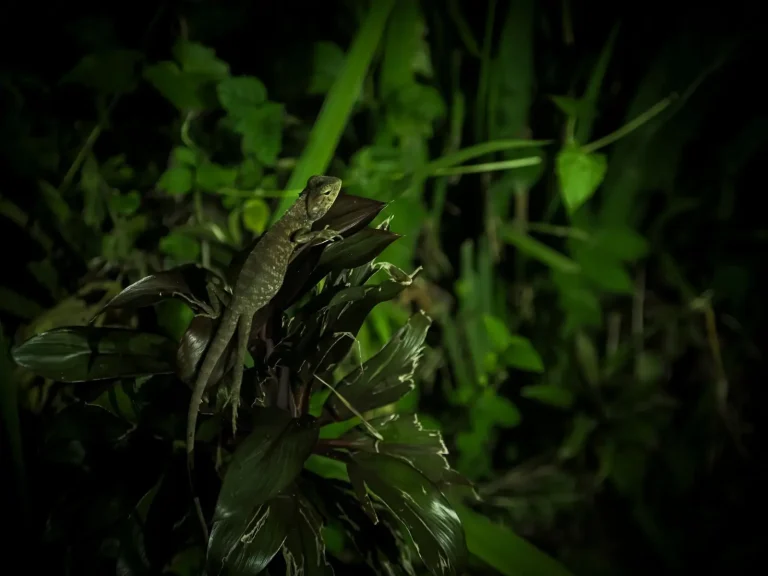
Seeing geckos requires a fundamentally different approach. You need to be out at night, which immediately changes the logistics of rainforest observation. Nocturnal rainforest work is slower, more deliberate, and requires proper lighting and footwear. A good torch – preferably one with adjustable brightness – is essential. Bright white light tends to make geckos freeze or retreat quickly, while red or amber light allows you to observe them longer without triggering an escape response.
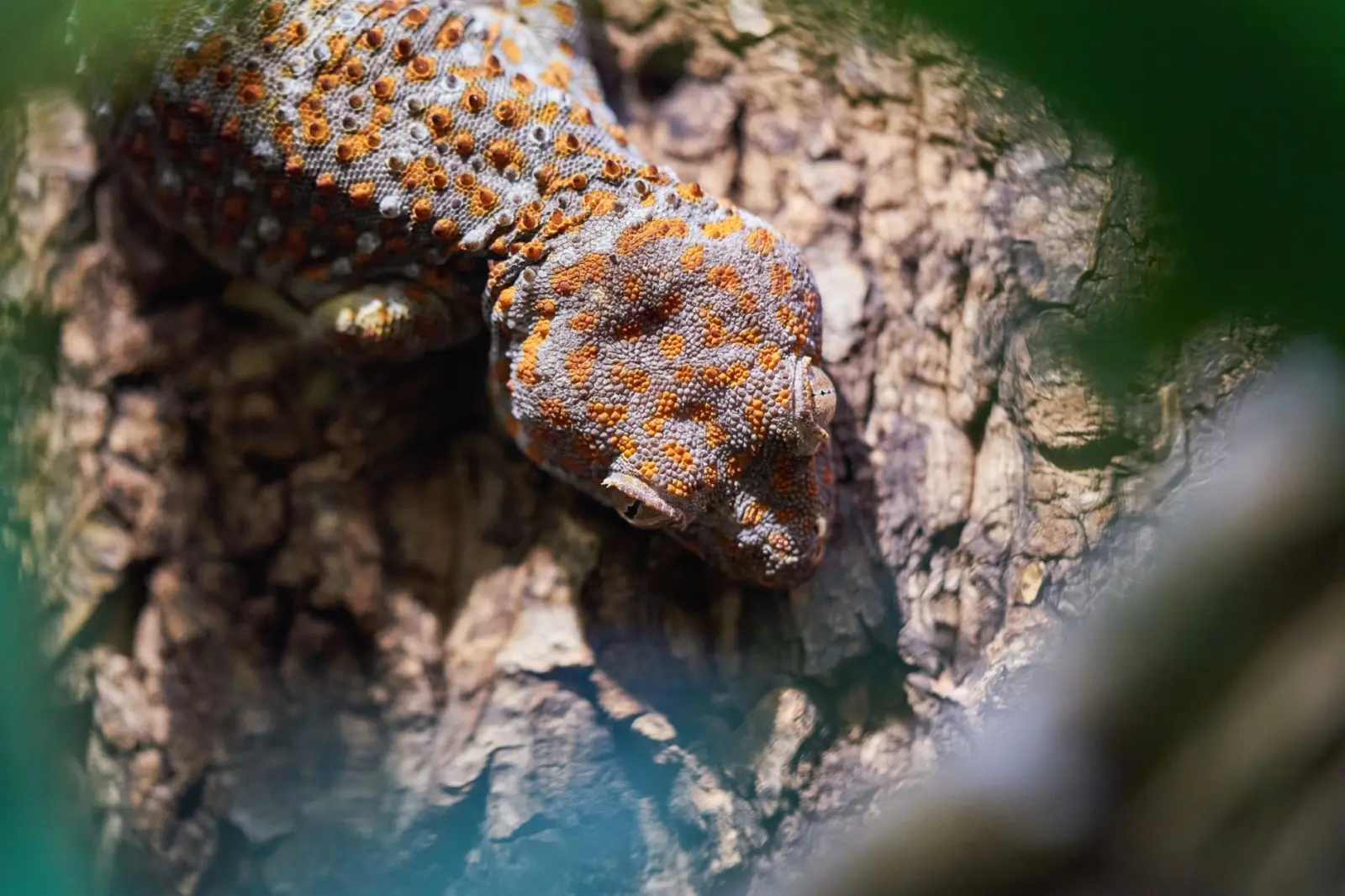
The most reliable method is to search tree bark systematically. Start at ground level and work upward, examining rough-barked trees and areas where bark is peeling or loose. Geckos position themselves where they can intercept insects attracted to the bark, and they rely on their coloration to blend seamlessly with their background. A mottled grey gecko on mottled grey bark is nearly invisible until you know what you’re looking for. Once you’ve found a few, you develop a search image – a mental template of what to expect – and subsequent finds come faster.
Leaf litter is another productive hunting ground at night. Smaller gecko species forage on the forest floor, particularly around decaying logs and in areas with dense moss and lichen growth. The invertebrate activity on the forest floor at night is extraordinary, and geckos position themselves to intercept that flow of prey. Again, movement is key. Geckos detect vibration and sudden light changes, so a slow approach with a steady, diffuse light source works better than a bright beam that you’re constantly moving around.
Seasonal and Climatic Variation
Rainforest reptile activity is not uniform throughout the year. During the wet season – roughly November through March in northern Australia – moisture levels are high, insects are abundant, and both skinks and geckos are more active and more visible. This is also the breeding season for many species, which drives increased movement and territorial behavior. The downside is that the rainforest itself is more challenging to navigate: trails are slicker, insects are more aggressive, and visibility can be reduced by heavy vegetation growth.
The dry season brings lower activity overall. Geckos and skinks are still present, but they’re less active and spend more time in refugia. Skinks become harder to find because they’re moving less and spending more time in deeper cover. Geckos are similarly less visible, though they’re still hunting at night – just perhaps less frequently or in more localized areas. The advantage of the dry season is that the rainforest is more accessible and less hostile to human movement.
Temperature fluctuations also matter. After a cool night, reptile activity is slower in the early morning. After a warm day, they’re more active in the late afternoon and evening. Rain triggers activity because it brings insects to the surface and increases humidity, which geckos in particular seem to prefer. A night after rain is often more productive for gecko observation than a dry night, even though you’re working in wet conditions.
Behavior Patterns Worth Noting
One observation that stands out after repeated rainforest visits is how individual geckos and skinks show consistent site fidelity. A gecko you find on a particular tree one night is often in the same location or nearby the next night. Skinks similarly seem to have preferred foraging areas and retreat sites. This means that if you find a productive observation spot, returning to it on subsequent visits – particularly at similar times of day or night – often yields repeated sightings of the same individuals or closely related species.
Defensive behavior varies by species and by individual temperament. Some skinks are bold and will hold their ground or even advance toward a perceived threat. Others flee immediately. Geckos are generally more skittish, though some species are bolder than others. Understanding what’s normal for a particular species helps you distinguish between a genuinely stressed animal and one that’s simply following its typical behavioral pattern. An animal that’s genuinely stressed will often show color changes, open-mouth displays, or tail autotomy (dropping their tail), whereas a gecko that simply retreats into a crevice is behaving normally.
The relationship between rainforest structure and reptile abundance is worth paying attention to. Areas with more complex understory structure – fallen logs, dense low vegetation, varied bark types – tend to support higher reptile populations and greater species diversity. Simplified rainforest areas, whether due to natural factors like recent disturbance or human management, support fewer species and lower overall abundance. This isn’t just an academic observation; it affects your likelihood of seeing anything during a given walk or night observation session.