
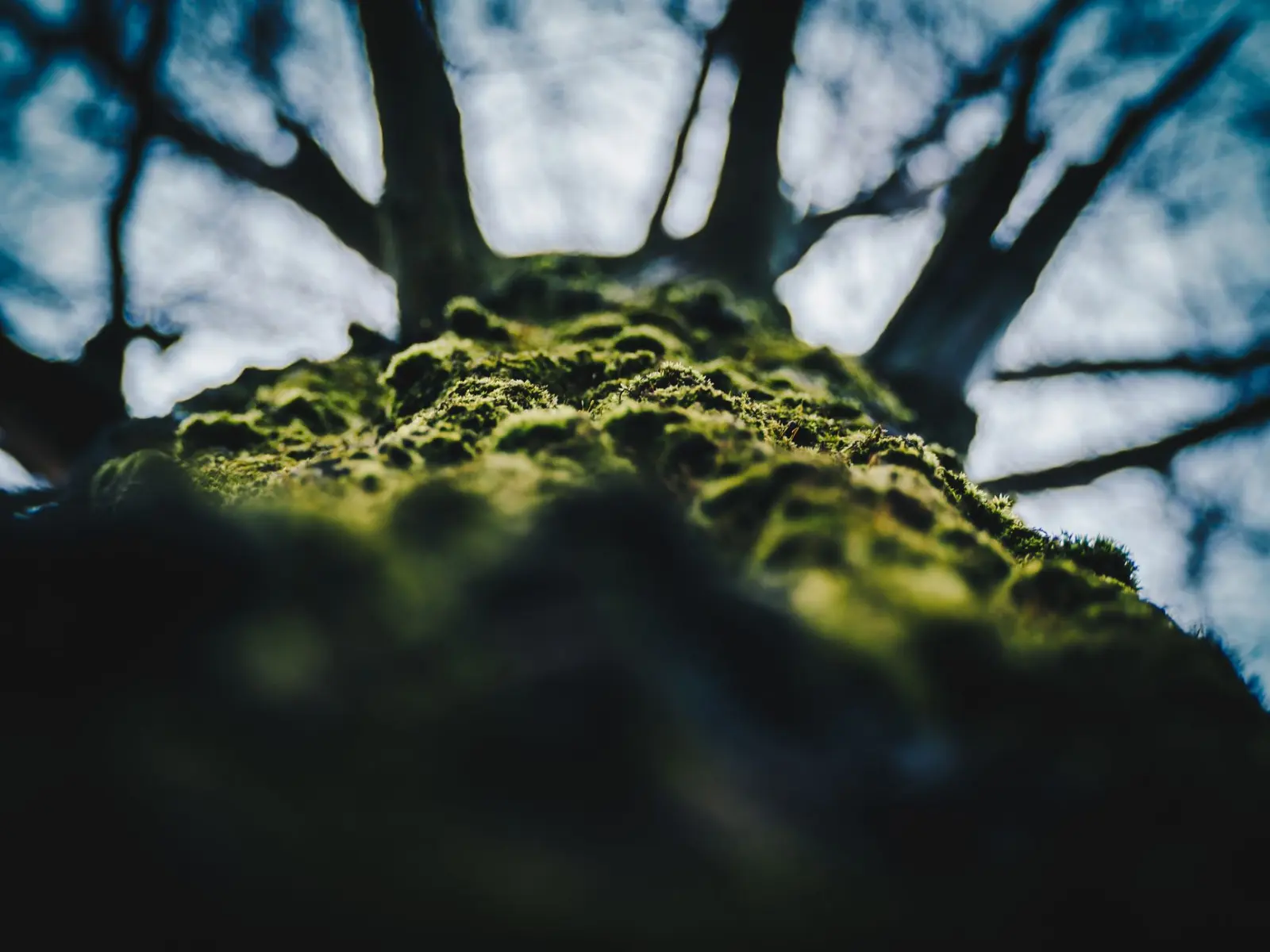
Spending time in rainforests, you notice moss everywhere – draped across branches, carpeting the forest floor, clinging to tree trunks in thick mats. What strikes you most is how perpetually saturated they appear, even when it hasn’t rained for days. There’s a reason for this. Mosses don’t have the conventional root systems or vascular tissues that most plants rely on to move water upward against gravity. Instead, they’ve developed a fundamentally different approach to water management that works remarkably well in the humid, often-wet conditions of tropical forests.
The key to understanding how rainforest mosses hold water lies in their cellular structure. Unlike flowering plants, mosses lack true roots and instead use thread-like structures called rhizoids to anchor themselves and make minimal contact with soil or bark. The real water-holding happens in the leaf cells themselves. Moss leaves are typically only one or two cells thick, and their cell walls are composed of cellulose and pectin – materials with a strong affinity for water molecules. When water is present, these cell walls absorb and bind water through a process called capillary action, essentially trapping moisture within the plant tissue.
The Capillary Network
What makes moss leaves particularly effective at water retention is their surface structure. Most rainforest mosses have leaves with a dense arrangement of cells that create tiny spaces and channels. These microscopic gaps act like a capillary network, similar to how a paper towel soaks up spilled liquid. Water doesn’t just sit passively in moss cells – it moves through these channels via capillary forces, distributing moisture throughout the plant even when only part of the moss is in direct contact with water. This is why you can see moss on a high branch that hasn’t been rained on directly, yet remains moist for weeks.
The cell walls themselves are the primary storage mechanism. Because moss cells are thin-walled and lack the protective waxy cuticle that many terrestrial plants have, water can freely enter and exit through the cell surface. Once inside, the water is held by hydrogen bonding to the cellulose fibers. This creates a kind of internal reservoir that keeps the moss hydrated even as water slowly evaporates from the surface. The thicker the moss mat, the more water-holding capacity it has, which is why old, established moss patches on rainforest trees can hold surprisingly large volumes of water.
Dealing with Excess and Scarcity
In a rainforest environment, water is rarely in short supply, but the challenge isn’t always about having enough – it’s about managing the constant influx. Heavy rains can saturate moss to the point where gas exchange becomes difficult. Mosses need oxygen and carbon dioxide to photosynthesize and respire, and when completely waterlogged, these gases can’t reach the cells efficiently. Most rainforest mosses have adapted by having a slightly hydrophobic outer layer on some leaves or by maintaining air pockets within their structure. This allows them to remain moist without becoming completely waterlogged, striking a balance between water retention and gas exchange.
Seasonal dry periods in rainforests, though less severe than in temperate zones, do occur. During these times, moss dries out more quickly than you might expect, especially on exposed branches or in the upper canopy where air circulation is better. However, mosses don’t die during these periods – they enter a state of dormancy or desiccation tolerance. The dried moss can lose up to 90 percent of its water content and still recover fully once moisture returns. This resilience comes from the same cellular structure that holds water so effectively; the cell walls protect the delicate protoplasm inside, and the plant can essentially “pause” its metabolism until conditions improve.
Why Structure Matters More Than Size
It’s easy to assume that larger moss plants hold more water, but that’s not the full picture. A small, densely branched moss species can hold proportionally more water than a larger, looser-growing species. The branching pattern, leaf arrangement, and cell wall composition are far more important than overall size. I’ve observed that creeping mosses with tightly overlapping leaves often stay moister longer than upright mosses with more spread-out growth, even when both are growing on the same tree. The geometry of the plant determines how effectively water can be captured and retained within the structure.
The presence of specialized water-storing cells in some moss species adds another layer of sophistication. Certain rainforest mosses have enlarged cells with thin walls that serve primarily as water storage compartments, separate from the photosynthetic cells. These cells fill during wet periods and slowly release their contents as the surrounding tissue dries. This is a more active form of water management than simple capillary retention, and it’s particularly common in mosses that grow in more exposed microhabitats where drying is a real risk.
Understanding how rainforest mosses hold water reveals something important about adaptation in humid tropical environments. These plants aren’t fighting against moisture the way desert plants do; they’re managing an abundance of it while maintaining the delicate balance needed for photosynthesis and growth. The structural simplicity of moss – no roots, no vascular system, no protective cuticle – is actually perfectly suited to a world where water is plentiful and the challenge is staying hydrated without drowning. Their water-holding capacity isn’t a remarkable feat of engineering so much as an elegant match between plant structure and environmental conditions.