
Wallaman Falls sits in the Mackay region of North Queensland, and the forest around it is dense, wet, and considerably more demanding than most casual visitors anticipate. I’ve walked these trails numerous times across different seasons, and the experience varies dramatically depending on when you arrive and how prepared you actually are – not how prepared you think you are.
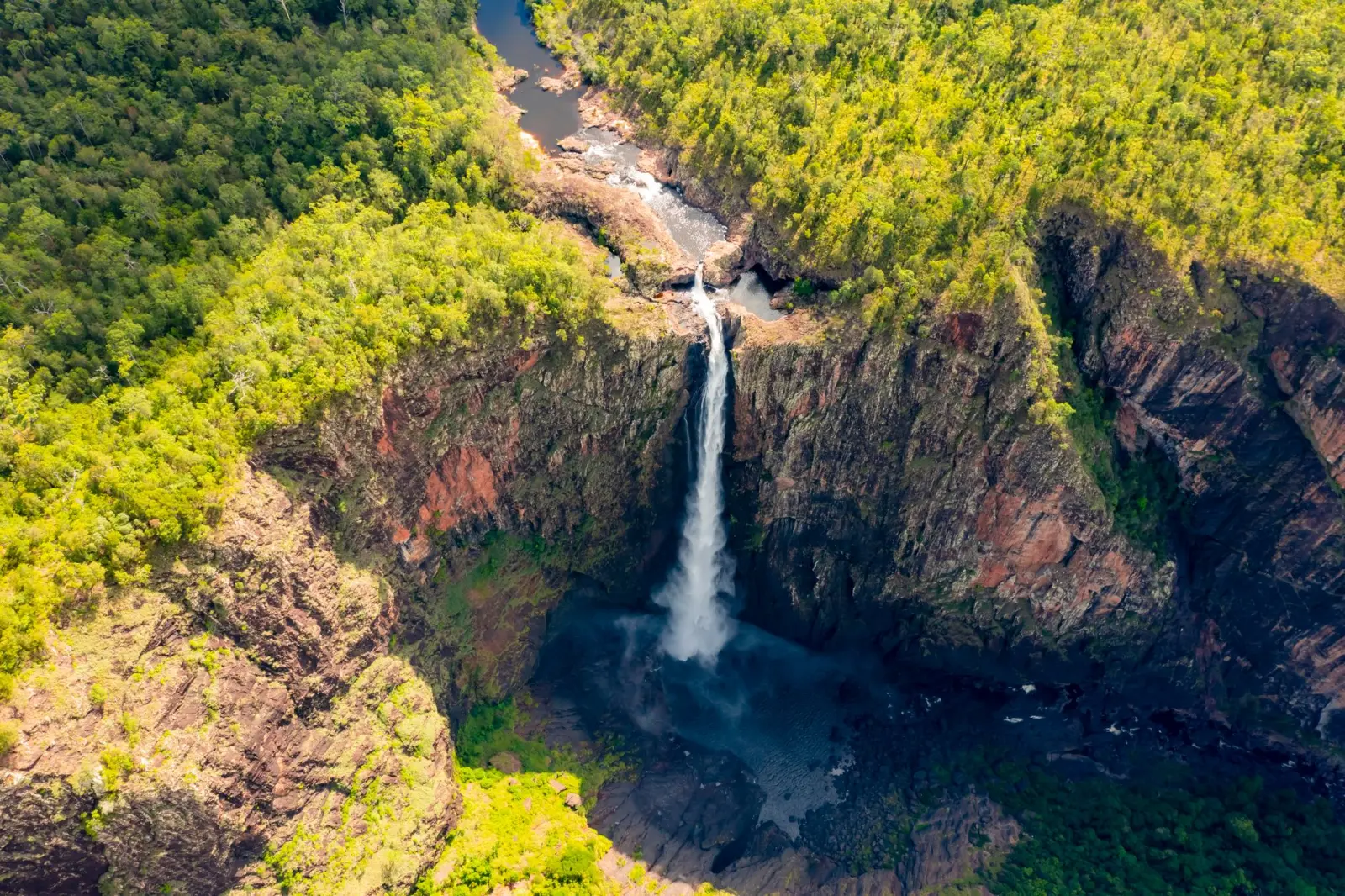
The falls themselves drop 268 metres, which makes them Australia’s tallest single-drop waterfall. That scale is impressive from the lookout, but it’s the forest that defines whether your visit becomes memorable or frustrating. The rainforest here is subtropical, which means it’s thick with vegetation, prone to sudden moisture changes, and home to a range of wildlife that most visitors never see but should respect.
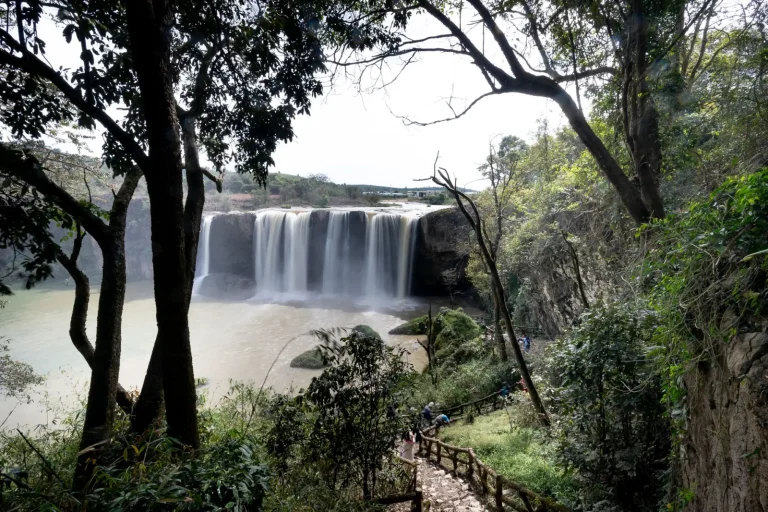
The main walking track to the base of the falls takes roughly 1.5 to 2 hours one way, depending on your pace and how often you stop. The distance isn’t extreme, but the terrain is relentless. The path descends steeply through the forest, and what seems manageable on the way down becomes noticeably harder on the return climb. Many people underestimate this return journey, particularly in the afternoon heat or if they’ve already spent time at the base photographing or swimming.
Seasonal Realities
Wet season, roughly November through March, transforms the forest. The track becomes slippery, water crossings that are minor in drier months become genuine obstacles, and the air is so humid that exertion feels amplified. I’ve seen fit visitors struggle significantly during this period, not because the walk is technically harder, but because the environment works against you. Your clothes stick, your grip weakens, and fatigue sets in faster. The falls themselves are spectacular during wet season – the volume of water is substantial – but the forest floor is treacherous and visibility can be reduced by mist.
Dry season, May through October, is considerably more forgiving. The track dries out, crossings are straightforward, and the air is clearer. This is when most people visit, which means the track can be well-worn and occasionally congested. The falls have less water volume, but the experience is more comfortable overall. Early morning visits during dry season tend to be the most pleasant, before midday heat and before the track becomes crowded.
Shoulder months – April and October – can be unpredictable. I’ve had excellent walks in April and terrible ones in October, and vice versa. Weather patterns shift quickly, and a morning that starts clear can become overcast and humid by midday. The advantage is fewer visitors, but the disadvantage is less predictability.
What the Forest Actually Demands
Footwear matters more here than on most Australian walks. The track is rocky, rooted, and often wet. Proper hiking boots with good ankle support and aggressive tread are worth the weight. I’ve watched people attempt this walk in trail runners or even casual sneakers, and while some make it, the risk of ankle injury is real. The rocks are sharp, the roots are unforgiving, and a twisted ankle in the middle of a rainforest means a difficult exit.
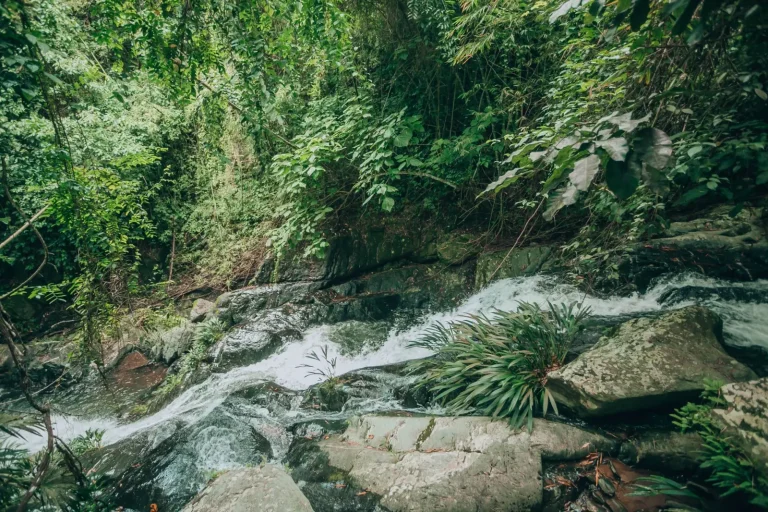
Water consumption is consistently underestimated. People arrive with a single 500ml bottle and assume the creek water is drinkable. The creek is accessible, and yes, water is available, but relying on it without proper filtration or treatment is risky. I carry at least 2 litres and refill if I’m planning to stay at the base for any length of time. The forest doesn’t feel hot until you’re working hard, and by then dehydration is already affecting your judgment and energy levels.
Insects are present year-round. Mosquitoes are worst near water and during humid periods. Leeches appear after rain and during wet season, and while they’re not dangerous, they’re persistent and unpleasant. Insect repellent helps, but it’s not a complete solution. Long sleeves and long pants reduce exposure, though they add to heat stress during warmer months. This is a trade-off worth considering based on the season and your tolerance.
The Track Itself
The main trail is well-marked and maintained, but “maintained” is relative in a subtropical rainforest. Tree falls block sections occasionally, and after heavy rain, erosion creates new gullies. The track is steep enough that your knees will feel it on the descent and your legs will feel it on the ascent. There’s no way around this – it’s simply the nature of the terrain. Taking your time and using trekking poles reduces impact, particularly on the return journey.
Side trails branch off, and some lead to viewpoints or alternative routes. These are less maintained and require more attention. I’ve explored several, and while they offer different perspectives of the forest, they’re not essential unless you have specific time and energy. Most visitors stick to the main track, which is sensible.
The base of the falls is a natural pool, and swimming is possible when water levels aren’t too high. The water is cold and the current can be strong depending on recent rainfall. I’ve swum there multiple times, but I’m cautious about it. The rocks are slippery, the water depth changes suddenly, and the pool’s behaviour shifts with water volume. It’s not inherently dangerous, but it requires respect and awareness.
Timing and Logistics
An early start makes a significant difference. Arriving at the trailhead by 7 or 8 in the morning means you’re walking in cooler conditions and you’re back to your vehicle before midday heat peaks. The walk feels entirely different when you’re not racing against daylight or managing afternoon fatigue. Parking at the trailhead is usually available, but during school holidays or weekends, it fills up. There’s overflow parking nearby, but it adds distance to your walk before the walk even starts.
The round trip typically takes 4 to 5 hours if you’re moving steadily and spending 30 to 45 minutes at the base. If you’re slower, less fit, or want to linger, add another hour or more. This isn’t a quick outing. People who treat it as a casual morning walk often find themselves still on the return track at 3 or 4 in the afternoon, which changes the experience significantly.
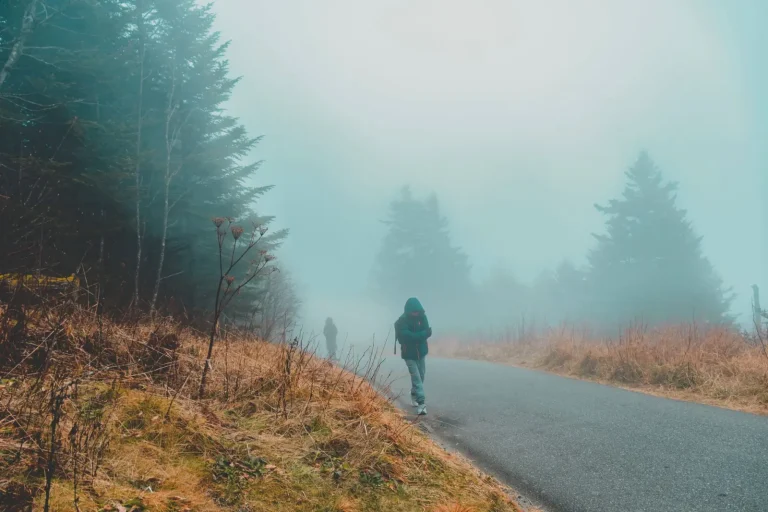
Weather can shift rapidly. I’ve started walks under clear skies and encountered mist and drizzle halfway down. This isn’t dramatic, but it does affect visibility and footing. Checking the forecast helps, but it’s not definitive. A light rain jacket or pack cover is worth carrying, even if the forecast looks clear.
The forest around Wallaman Falls isn’t technically difficult, but it’s physically demanding and requires genuine preparation. Most people who struggle here aren’t unfit – they’ve simply underestimated the combination of steep terrain, distance, humidity, and the forest’s refusal to cooperate with casual expectations. Respect the conditions, arrive early, carry adequate water, and take your time. The falls are worth the effort, and the forest itself is worth paying attention to.